WORLD NEWS
It has been calculated that the 26 kg vest that travelled around the Moon can reduce radiation from strong solar storms by about 60%.
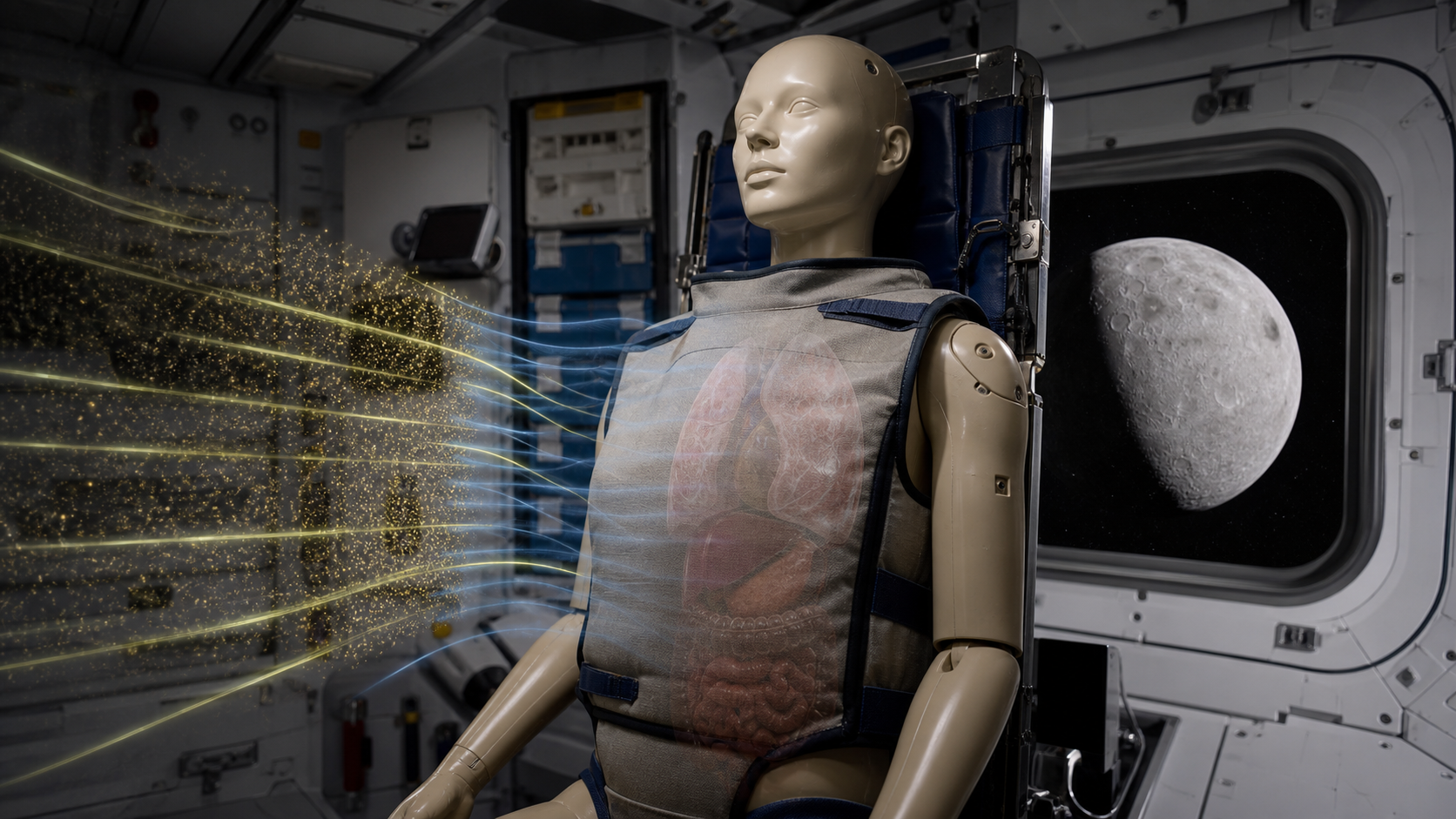
Analysis has shown that the approximately 26kg AstroRad vest tested on the Artemis I unmanned lunar flight can reduce the absorbed radiation dose by about 60% during a solar storm as strong as 1972. In calculations that included the 1989 level, the decrease was approximately 40%.
A large solar storm did not actually occur during the flight. The researchers simulated past solar storms using measurements from two human dummies and Van Allen University transit data, so the vest should not be interpreted as blocking 60% of all cosmic radiation.
How did they compare?
On board Artemis I were two human dummies named Helga and Zohar, modeled after the tissues and organs of a woman’s body. Both had radiation sensors inside them, and only Zohar wore a protective vest. The spacecraft orbited the moon for about a month in 2022 and returned to Earth.
Why do different organs have different degrees of protection?
Rather than covering the entire body equally, the vest concentrates the shielding material around radiation-sensitive tissues such as the lungs, stomach, bone marrow, breasts and ovaries. It is designed to protect areas with high acute and long-term risk while reducing weight. Measurement results and models also showed different reductions depending on organ location.
What does the number 60% mean?
About 60% is the absorbed dose reduction under specific conditions simulating the 1972 solar particle event. In the 1989 incident simulation, it was about 40%. As with galactic spacecraft, the effect will vary depending on the different types of radiation coming in all the time, the duration of the mission, and the spacecraft’s own shielding.
Why not put it on people right away?
The vest is heavy and can restrict shoulder, neck, and hip movement, so wearability needs to be improved. Actual astronauts conducted initial wearing tests while performing daily movements on the International Space Station. The next design should be checked not only for its protective performance, but also whether it can be put on and taken off quickly and whether it can last a long time.
What are the next steps?
The results of the study serve as a basis for the design of spacecraft interior shelters and personal protective equipment during solar storms. Use in actual manned lunar long-duration missions requires further validation under various body types, postures, and actual solar activity conditions. A vest does not replace spacecraft shielding and storm forecasting.
Primary sources and independent checks
Science Advances original paper