WORLD NEWS
Andromeda’s production of new stars has plummeted, a change seen in 500 million years of records.
A study analyzing Hubble Space Telescope data found that star formation in the Andromeda Galaxy has decreased over the past 500 million years, with a greater decline in the last 40 million years.
This does not mean that galaxies will suddenly die or that their stars will disappear, but that they are measurements of the most recent interval of long-term changes spanning billions of years.
How did we know the star formation rate in the past?
Researchers observed millions of stars in the southern disk of Andromeda with Hubble. The galaxy was divided into thousands of zones measuring about 300 light years on a side, and the brightness and color distribution of stars were used to reconstruct when stars were formed in each zone. When combined with the northern observation data, about two-thirds of the disk that creates stars was examined in the same way.
How much has it decreased?
According to the researchers’ calculations, 500 million years ago, Andromeda was creating stars equivalent to about one solar mass each year. 40 million years ago it was half that amount, and recently the rate has fallen further to about one-fifth the mass of the Sun per year. This is not a direct count of the number of stars, but rather an annual rate of the mass of material converted into new stars.
Where was the biggest change?
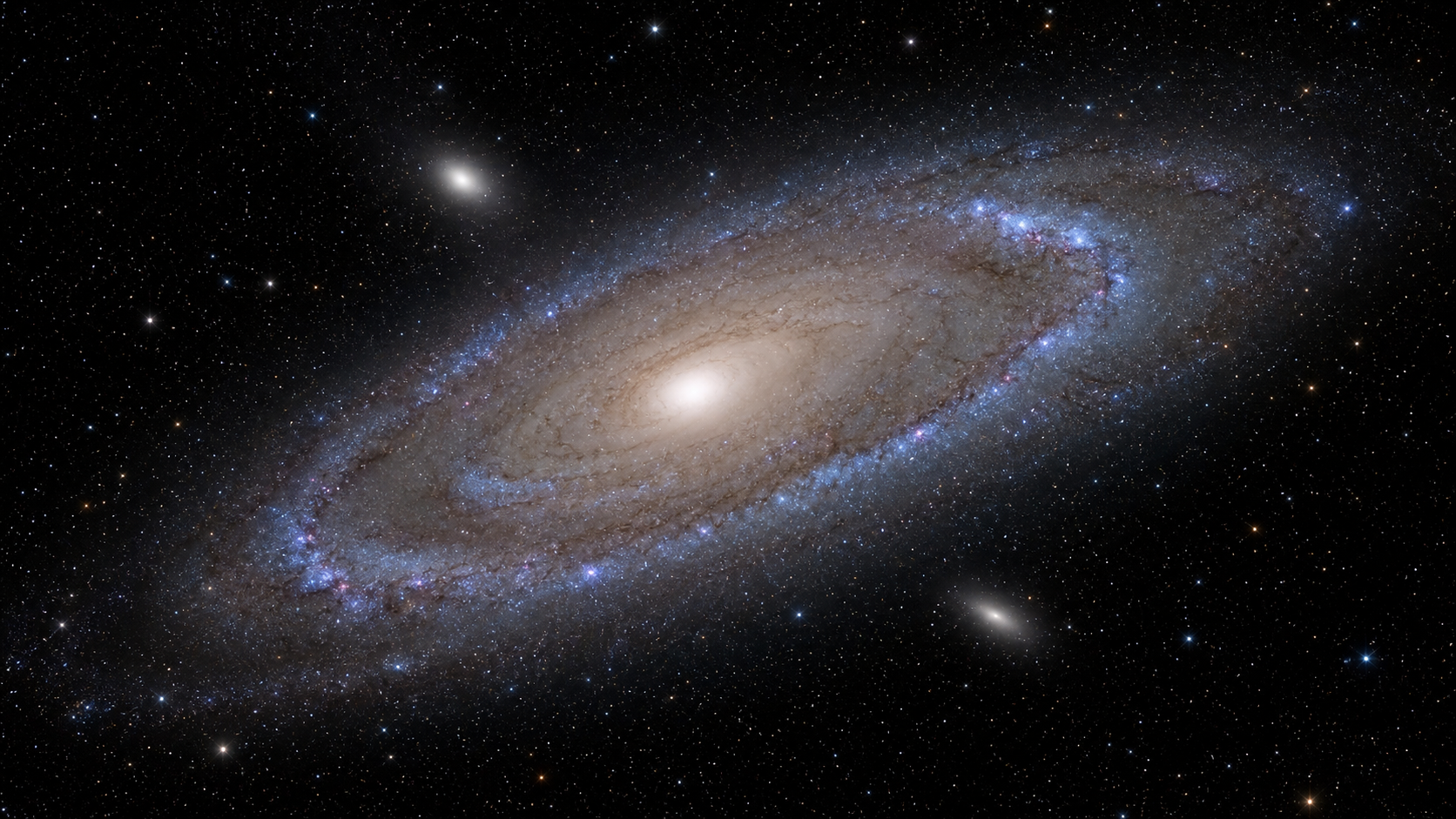
Much of the recent star formation has occurred in a ring about 32,000 light-years from the galaxy’s center. The overall decline was mainly due to weakening activity in this loop. Rather than saying that the gas completely disappeared and stopped, it was suggested that it was a natural process of calming down after an active period about 2 billion years ago.
Is the small galaxy M32 the cause?
The decline was particularly pronounced in the region close to Andromeda’s satellite galaxy M32. The researchers reviewed the possibility that past interactions may have had an effect, but did not confirm that this data alone was the cause. The fact that the locations are close and the timing is correct is not proof of a causal relationship.
Is the future of our galaxy the same?
Andromeda and our galaxy are similar in size, but have different star formation histories and gas environments. These results cannot be translated into an exact future timeline for our galaxy. Instead, reading large nearby spiral galaxies section by section provides a baseline for studying how galaxies transition from active to quiet periods.