WORLD NEWS
A skull fragment acquired in 1924 becomes Europe’s first identified megaraptoran
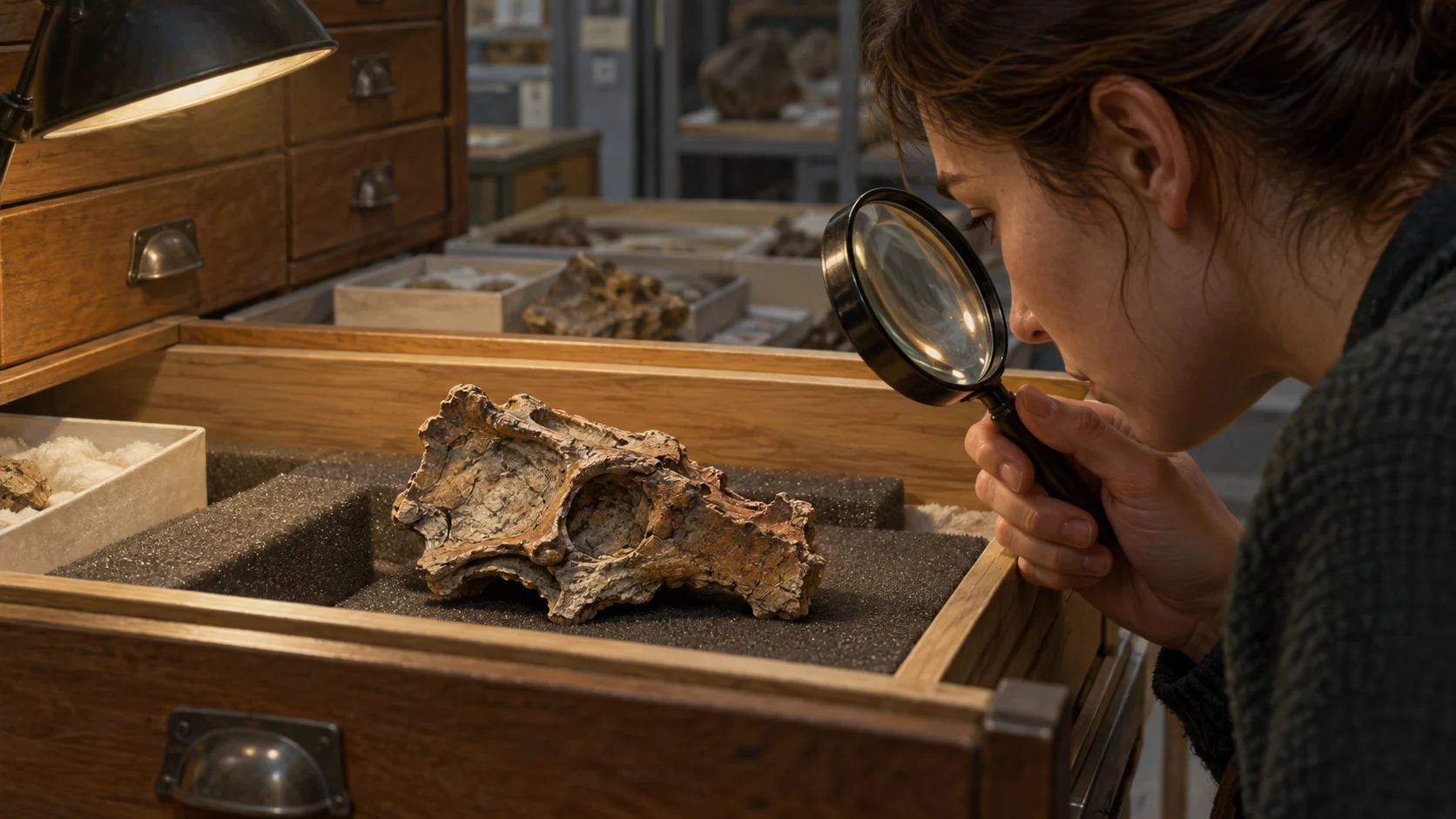
A rear-skull fragment acquired by London’s Natural History Museum in 1924 has been classified as Europe’s first identified megaraptoran dinosaur.
This is a reassessment of an old fragment, with body size, claws and possible feathers partly inferred from relatives rather than a newly excavated complete animal.
How can a small fragment support a new species?
The UCL-led team CT-scanned the Isle of Wight fossil and constructed a three-dimensional skull model. They compared its combination of features, including an oval spinal-cord opening and an hourglass-shaped rear crest, with other carnivorous dinosaurs. They proposed the new species Invictibellatrix amberina. UCL presented the research on 14 October; BBC and Live Science subsequently covered it.
A warrior’s name does not establish its sex
The animal is described as living about 120 million years ago in the Early Cretaceous. Comparisons with relatives suggest a length of 3–4m and height of roughly 1.5m. Possible 10–20cm claws and feathers are different from features preserved directly in this specimen. The genus name’s meaning, unconquered female warrior, expresses the researchers’ naming intention; it does not identify this individual as female.
Why does the European record matter?
Megaraptorans were two-legged carnivores with large arms and curved claws. The classification adds evidence of their presence in Europe, helping researchers connect fossils across continents when studying their distribution. It does not track an individual animal’s journey, and why the group disappeared from northern regions remains unresolved. Climate change or competition with other predators are possible explanations.
What has the museum discovery established?
We checked IFLScience’s direct researcher interview and compared BBC’s reporting with UCL’s account for the acquisition year, locality, size estimates and CT analysis. This is reporting confirmation, not replication through another team’s excavation. Direct access to the full journal paper was restricted, so this account stays within the institutional explanation and reporting. More complete skulls or body bones could refine size and evolutionary interpretations. The practical lesson is that long-held museum collections can still yield new research.
Primary sources and independent checks
Research institution: 14 October classification, specimen and size estimates; direct full-paper access was restricted: UCL News
Independent direct reporting: Morrison interview and author email statement; not independent replication: IFLScience
Additional reporting check: 1924 acquisition, CT and size estimates; the IFLScience interview supplies the independent reporting check: BBC News
Read in other languages
한국어 · English · Español · 日本語 · Tiếng Việt