WORLD NEWS
Marine food reached dinosaur food webs on ancient beaches, tooth isotopes show
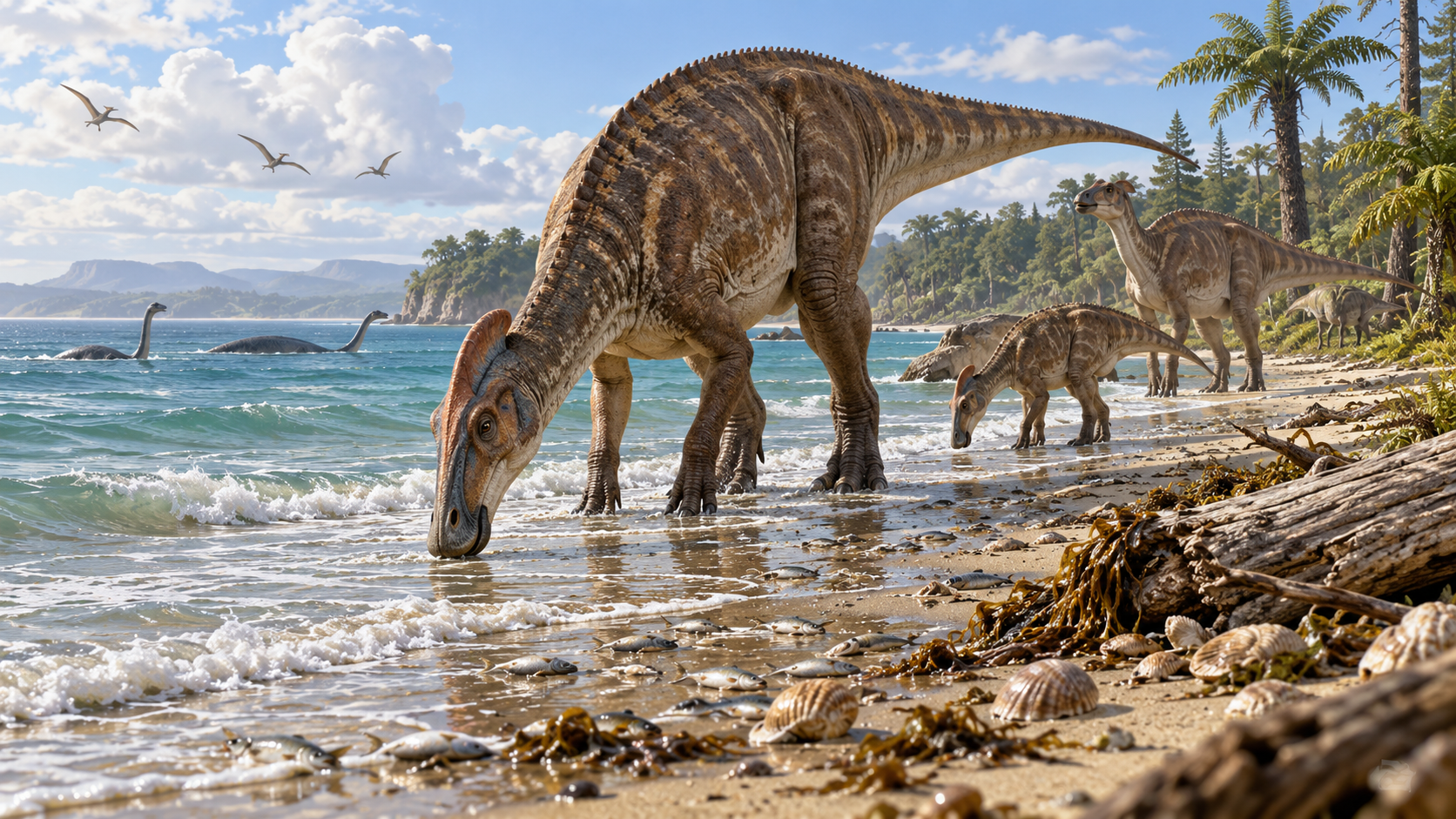
About 75 million years ago, marine material washed onto beaches along North America’s inland sea appears to have entered terrestrial food webs.
The evidence is a difference in carbon isotopes preserved in tooth enamel, not a direct observation of which dinosaur ate which seafood.
How coast and inland were compared
Researchers compared teeth of dinosaurs, crocodilians, turtles and fish from coastal deposits with fossils farther inland. Enamel carbon isotopes record the broad carbon sources in an animal’s diet over time.
Why beach carrion is proposed
A marine signal appeared in both herbivores and predators near the coast, suggesting the resource entered low in the food chain. Animals may have eaten stranded fish or invertebrates, or eaten other animals that had consumed them.
What the evidence cannot show
Isotopes cannot identify the prey species, frequency of feeding or a behavior scene. Coastal plants and water cycles may also affect signals, so other sites and time periods need testing.
Why the finding matters
Reconstructing dinosaur ecosystems as purely terrestrial can miss nutrients arriving from the sea. The next test is whether the same pattern occurs at other latitudes and in Jurassic or early Cenozoic coasts.
Primary source and independent checks
Primary source: Frontiers in Ecology and Evolution 원 논문
Institutional explanation: Frontiers 공식 연구 설명
Independent check: EurekAlert 독립 배포 확인
Read in other languages
한국어 · English · Español · 日本語 · Tiếng Việt