WORLD NEWS
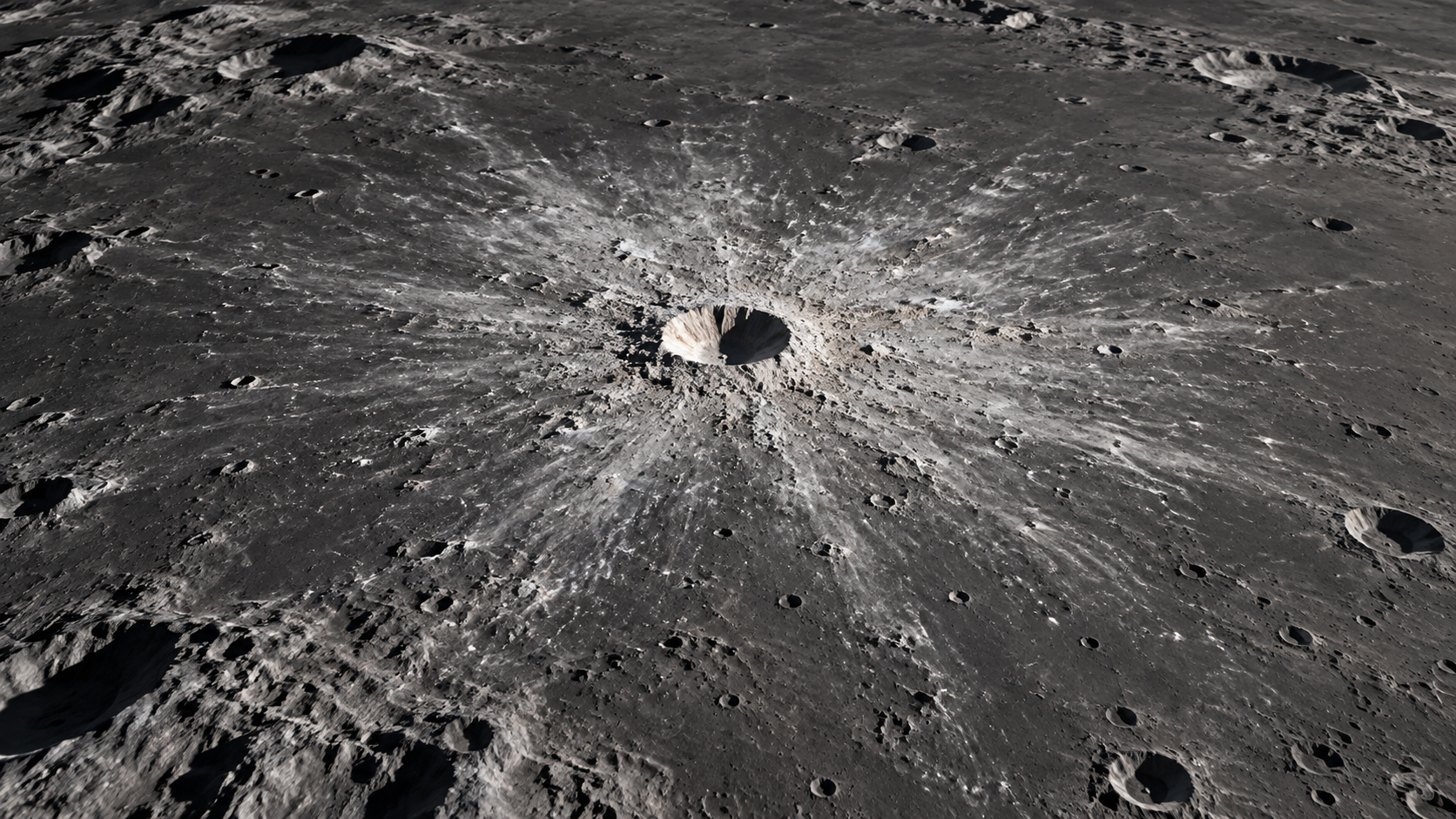
A 222 m lunar crater formed in 2024 disturbed soil more than 3 km away
Repeated wide-angle images constrain formation to April 11–May 22, 2024. It is the largest new crater identified since LRO operations began in 2009.
High-resolution images give an average depth near 43 m, while thermal maps show cooler nighttime terrain extending beyond 3 km.
How it was found
LRO repeatedly maps the Moon under similar lighting. Automated comparisons located the change, and meter-scale narrow-angle images measured the crater and ejecta.
Why distant ground cooled
The impact overturned and loosened old fine regolith, changing nighttime heat storage. Diviner therefore detected altered surface properties well beyond visibly bright ejecta.
Once per century is not a schedule
The 132-year value is a statistical impact-rate estimate. It does not mean impacts arrive regularly or that this object was tracked beforehand; Earth’s atmosphere also removes many small objects.
What comes next
Two papers examine crater shape and distant regolith modification. Monitoring must test how long the cold signature lasts and whether similarly broad effects occur around other fresh craters.
Primary source and independent checks
Primary source: Science Advances paper
Institutional explanation: Lunar and Planetary Institute check
Independent check: UCLA thermal-analysis explanation
Read in other languages
한국어 · English · Español · 日本語 · Tiếng Việt