WORLD NEWS
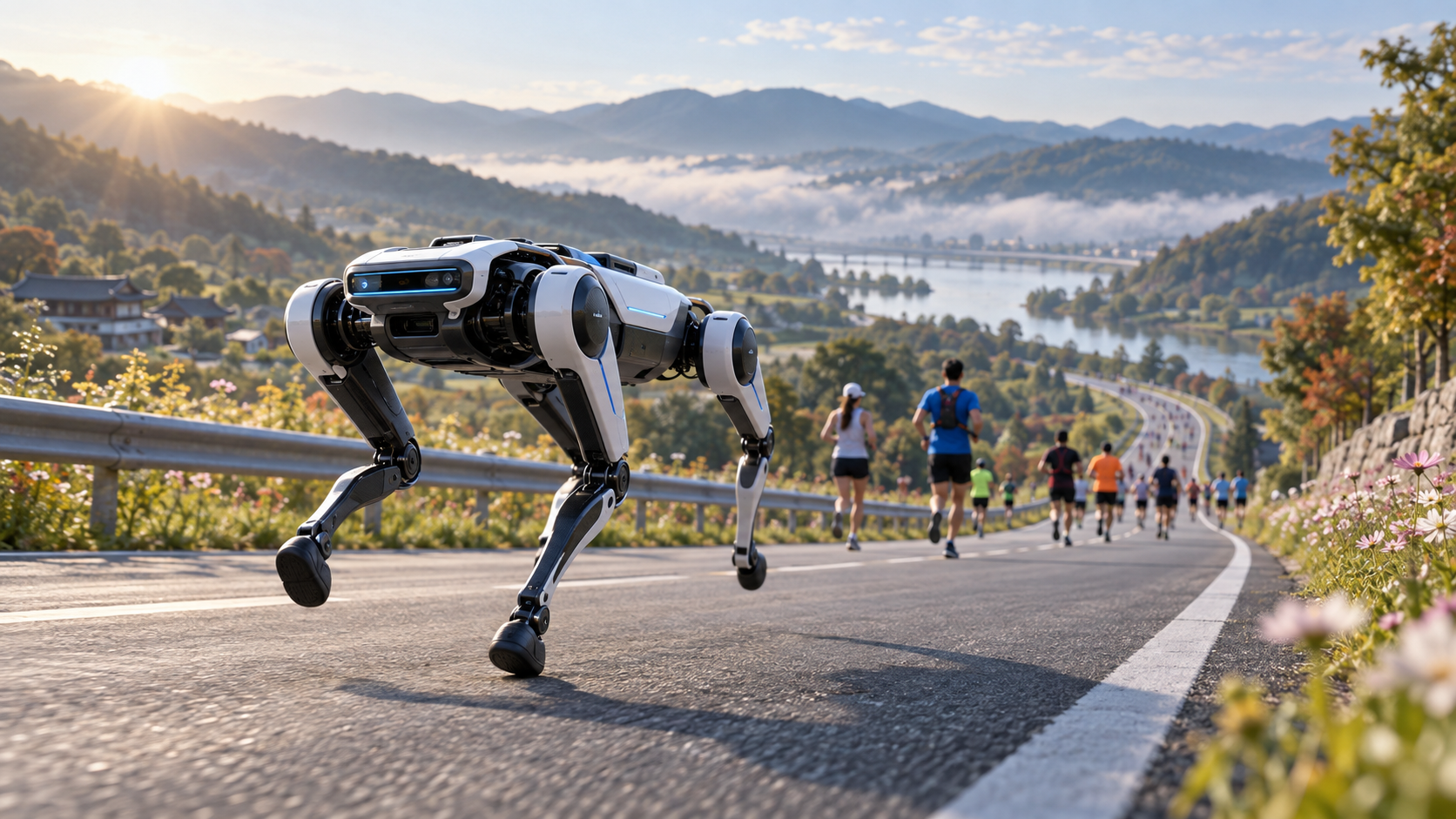
A quadruped robot finished 42.195 km on one battery
It averaged 2.64 m/s over a course with 286 m of elevation change and slippery sections.
It used 1,280 Wh of a 2,016 Wh battery, about 63%; the authors estimate roughly 25 km of range remained under comparable conditions.
Why legs consume energy
Unlike wheels, legs continually support body weight and lose energy at each contact. The team combined light legs, optimized motor electronics and learned gait rules.
What the efficiency means
Its normalized cost of transport was 0.25, below the cited human-running value of 0.37. This engineering ratio is not a direct comparison of calories or race speed.
Possible use
Longer range could help mountain or disaster robots. Payloads, harsher terrain, weather and communications still require separate tests.
What comes next
Repeat runs, battery ageing, repairs and autonomous decisions must be measured. This remains one platform in one verified event.
Primary source and independent checks
Primary source: Nature paper
Institutional explanation: Nature Portfolio release
Independent check: KAIST event record
Read in other languages
한국어 · English · Español · 日本語 · Tiếng Việt