WORLD NEWS
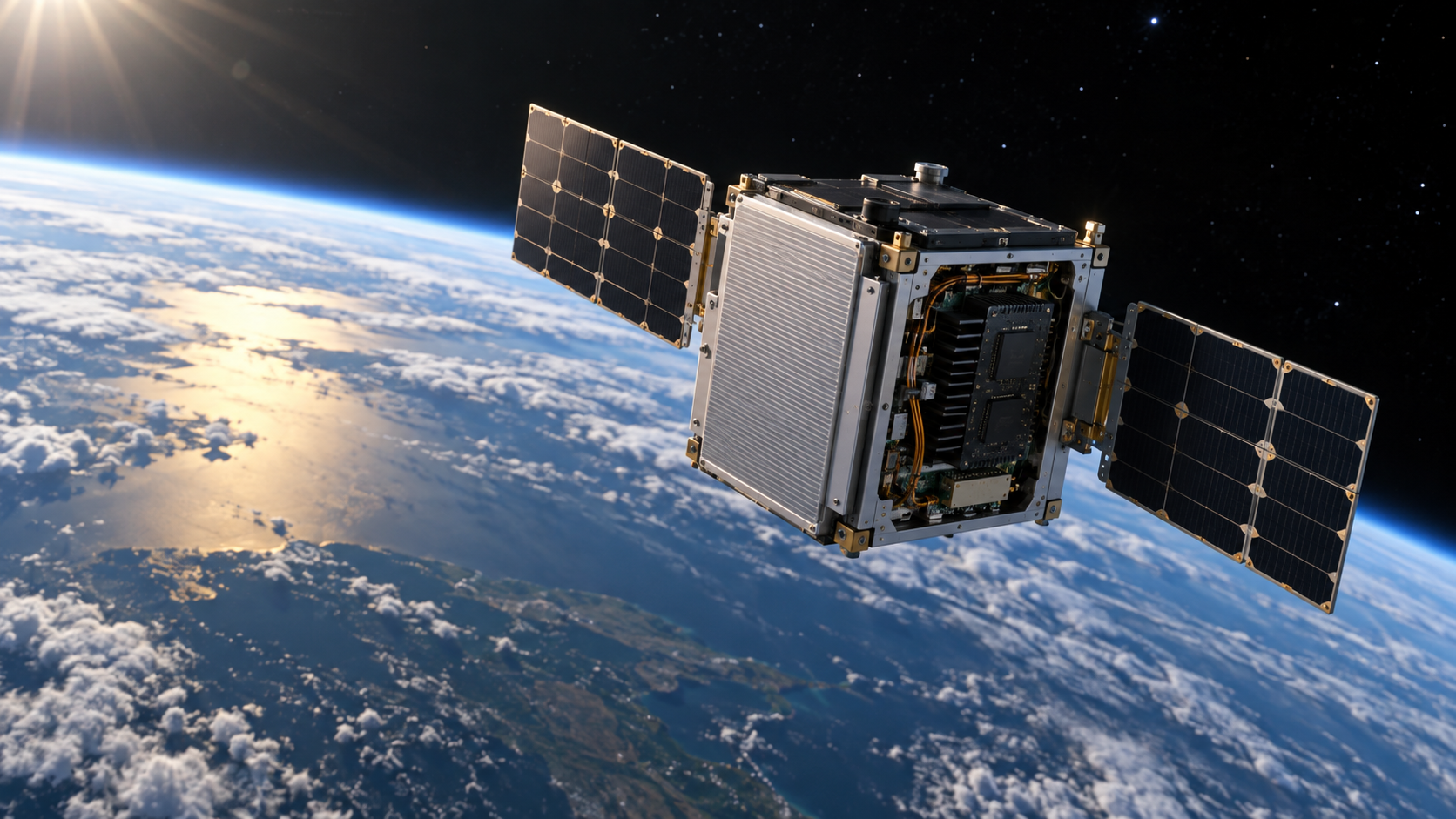
Google is preparing its first AI test satellite with four TPUs
Google said on 24 September that a compact satellite built with Planet will carry four AI accelerator chips into low Earth orbit next week.
At roughly 1 kW and about one conventional server’s compute, the payload is a test article, not the start of large-scale orbital AI service.
What will be tested
The roughly ten-minute ride to orbit can expose the spacecraft to about 10g and components to 50–100g. In orbit, radiation can flip bits and vacuum removes airflow, forcing heat pipes and radiators to reject heat. The mission will collect data across those conditions.
What ground tests showed
The team shook the satellite on three axes and ran AI workloads while exposing Trillium TPUs to a proton beam at UC Davis. Google says the chips survived more total ionizing dose than expected over five years, but that is a company test, not proof of long-term orbital operation.
Why compute in space
Google estimates near-continuous sunlight in low orbit could provide up to eight times the solar power available on Earth. Power alone does not make a data centre: launch cost, radiator area, radiation faults, unserviceable hardware and communications still matter.
How the roadmap changed
In 2025 Google described two Planet-built prototypes by early 2027. It now separates an earlier single-satellite TPU test from a 2027 two-satellite laser-link test. They are different milestones.
Is the launch fixed
EFE and independent launch schedules list 1 October from Vandenberg on Transporter-18. Rocket dates can move with weather and technical reviews; as of 25 September, launch and orbital success had not occurred.
What to watch next
After launch, watch for separation, communications, error rates, power, radiator temperature and workload results. Even success leaves power, networking, debris and economics to solve before any large orbital data centre.
Primary sources and independent checks
Official release: Google official update
Earlier official research plan: Google 2025 research plan
Independent report: EFE independent report
Read in other languages
한국어 · English · Español · 日本語 · Tiếng Việt