WORLD NEWS
A comet photobombed a galaxy survey — 28P’s bare nucleus appeared beyond Saturn
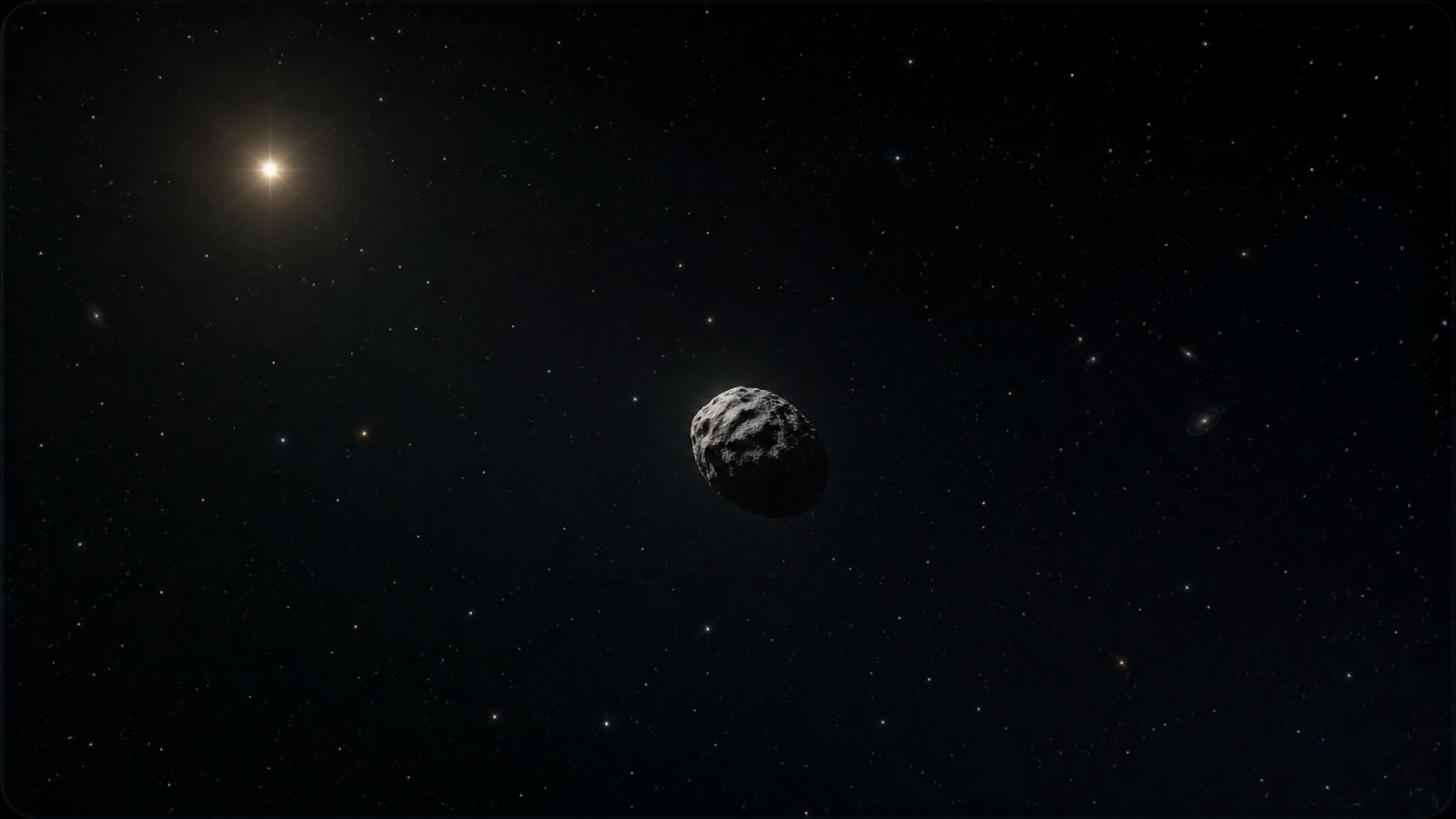
Comet 28P/Neujmin unexpectedly appeared in a public Subaru Telescope image taken for a galaxy survey in 2016, and researchers identified it years later. At the time, the comet was more than 10 AU from the Sun, outside Saturn’s orbit, and its dark core was visible without the coma, a cloud of gas and dust.
It was not the discovery of a new comet or an event that observers immediately recognized in 2016. This is a study that traced the position of a periodic comet whose orbit was already known from past public photos, and the inferred differences in surface grains and the spaces between them are interpretations drawn from reflected brightness, not the result of a close-up image of the nucleus’s surface.
How was it hidden in the photo?
Subaru Telescope’s ultra-wide field camera HSC captures the sky the width of about nine full moons at once. The original goal was the HSC-SSP survey of distant galaxies, but solar system objects may also accidentally enter the large screen. The researchers found 28P in the 2016 data by matching the exposure time and the already known comet orbit.
Why is being without a tail important?
As a comet approaches the sun, the ice evaporates, creating a coma and tail, and the light obscures the core. 28P is located more than 10 times the average distance between the Sun and Earth, showing little activity. So we were able to compare the light reflected directly from the nucleus, a rarity for ground-based telescopes.
Brighter from the front means
At the time of observation, the sun, the comet, and the Earth were almost in a straight line, returning in the direction from which sunlight came. At this time, the sharp increase in brightness is called the opposition effect. 28P’s increase was stronger than that of red and dark asteroids, suggesting the possibility of differences in the size of surface grains or gaps between grains.
What does the study not show?
The photo is a measurement of the reflected light from a distant comet. This is not a direct analysis of surface pores or grains, nor is it evidence that all cometary nuclei have the same properties. Possible explanations may vary depending on the observation angle and surface model, necessitating repeated observations of other comets.
What are you looking for next?
Public astronomical data may contain additional objects that are unrelated to the original research objective. The researchers hope to find other comets with known orbits in the same way and compare the brightness of their head-on reflections. Increasing the sample size will allow us to more reliably distinguish how the surface of comet nuclei has changed over the history of the solar system.
Primary sources and independent checks
PASJ original paper (DOI 10.1093/pasj/psag088)