WORLD NEWS
The river fell below the intake: a plant supplying half of Hungary is stopping
The Danube has fallen to a record low, pushing the Paks nuclear plant, which provides nearly half of Hungary’s electricity generation, into a full shutdown. On July 30, the operator said all four units would have to stop within 24 to 72 hours.
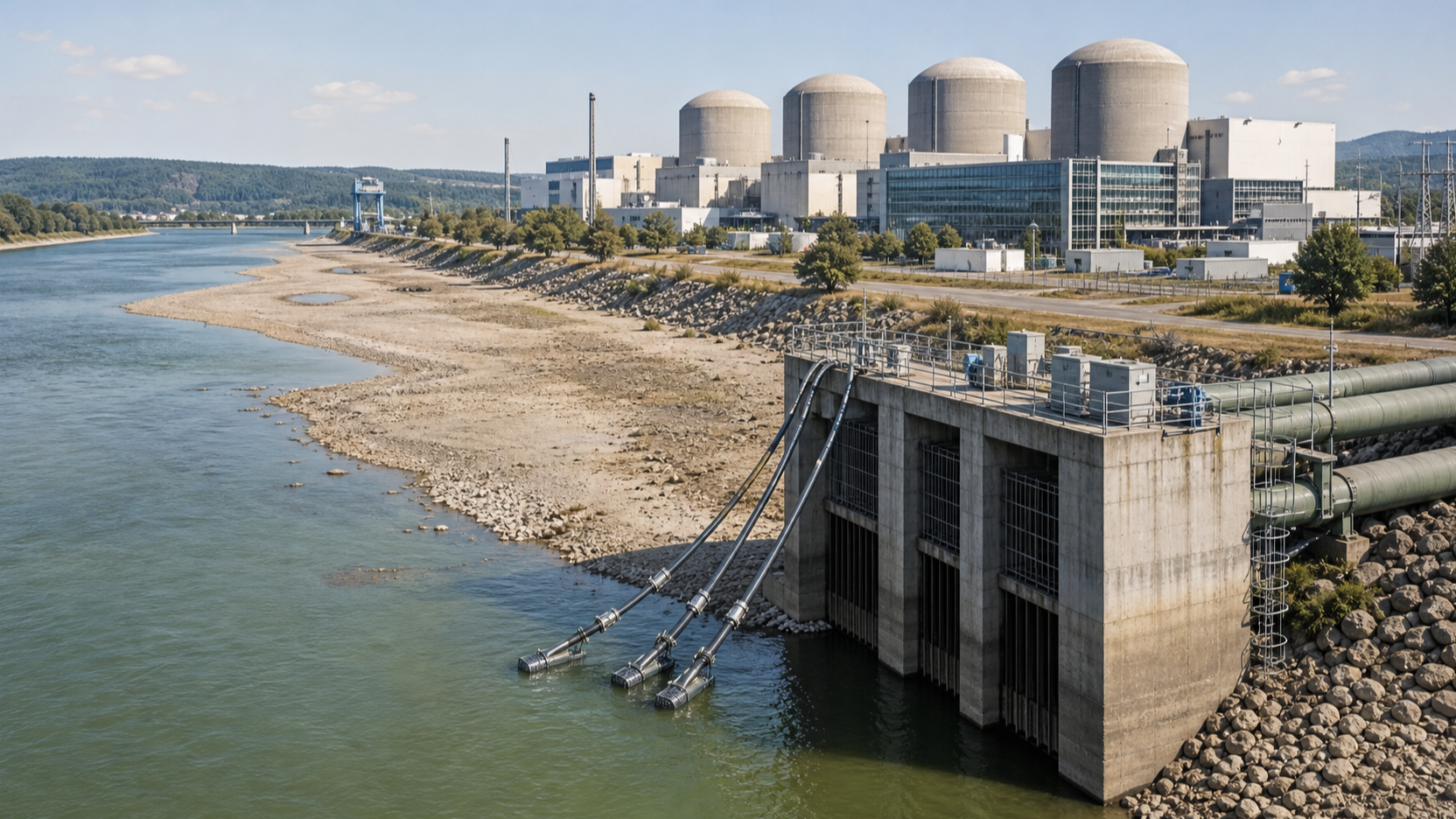
The river is not dry and this is not a nuclear accident. Water remains, but its surface is falling below the normal pump intakes; the operator says enough water remains for cooling after shutdown.
Why pumps cannot use water that is still there
The plant draws Danube water to remove heat. Long-term riverbed deepening and extreme dry weather have lowered the surface beneath fixed pump inlets. The immediate problem is intake height, not an empty river.
On July 30, the level was 28 centimetres below the previous 2018 record. It was also more than one metre below the 100-year minimum considered when the plant was designed over four decades ago.
How much of the plant has stopped
Paks has four units with about 2,000 MW of normal output. The operator cut Unit 4 to half power on July 31, then stopped the remaining turbine-generator on Unit 1 at 5:45 a.m. on August 1.
The full shutdown is a sequence, not a single switch. Its exact completion time can change with river levels and plant conditions, so the operator’s updates remain the current reference.
Can a stopped reactor still be cooled safely?
Four running units need 100 cubic metres of river water per second. Once all four are shut down, removing residual heat needs no more than 2.5 cubic metres per second, about one-fortieth as much.
The operator says the river can supply that amount and mobile emergency pumps are ready. Twelve can run continuously, four are held in reserve and 13 more are on standby. Stopping is the protective action.
Does -130 cm mean the river has negative depth?
No. The -130 cm reading published for the morning of August 1 is measured against an arbitrary zero on the official Paks gauge. It does not mean the river’s physical depth is negative.
The hydrological service forecast roughly -135 cm for the morning of August 3. Forecasts are updated several times a day, and uncertainty grows further into the future.
Why it happened and what comes next
The operator did not attribute the event to climate change alone. It cited both long-term deepening of the riverbed and recent climate extremes that produced exceptionally dry conditions.
Work to lower the intake system is under way. Restart could follow a few days after adequate levels return, but this episode reflects the Danube and Paks intake design. It does not mean every nuclear plant has the same vulnerability.
Official primary sources
Primary source: MVM Paks full-shutdown notice, July 30
Primary source: MVM Paks load-reduction update, July 31
Primary source: MVM Paks operating update, August 1
Primary source: Hungarian National Hydrological Forecasting Service, Paks gauge