WORLD NEWS
The queen vanished, but her scent stopped a power struggle for 12 weeks
Applying one odor chemical each day to a queenless naked mole-rat colony suppressed reproductive activation and succession fighting for 12 weeks.
Isopropyl myristate, also used in cosmetics, temporarily stood in for royal authority, but this laboratory animal result has no basis for extrapolation to people.
A mammal society organized like a beehive
Usually only one queen reproduces while other animals gather food and rear young. Removing her triggers fierce competition among high-ranking females.
Researchers analyzed 771 odor samples from 351 animals and found isopropyl myristate, or IPM, highly enriched in queens.
Odor alone suppressed reproduction
Opposite-sex pairs isolated from the colony became reproductively active. No pregnancies occurred in six pairs given queen-scented bedding or seven pairs exposed daily to IPM.
IPM activated olfactory pathways, raised prolactin and kept progesterone low in nonbreeding females.
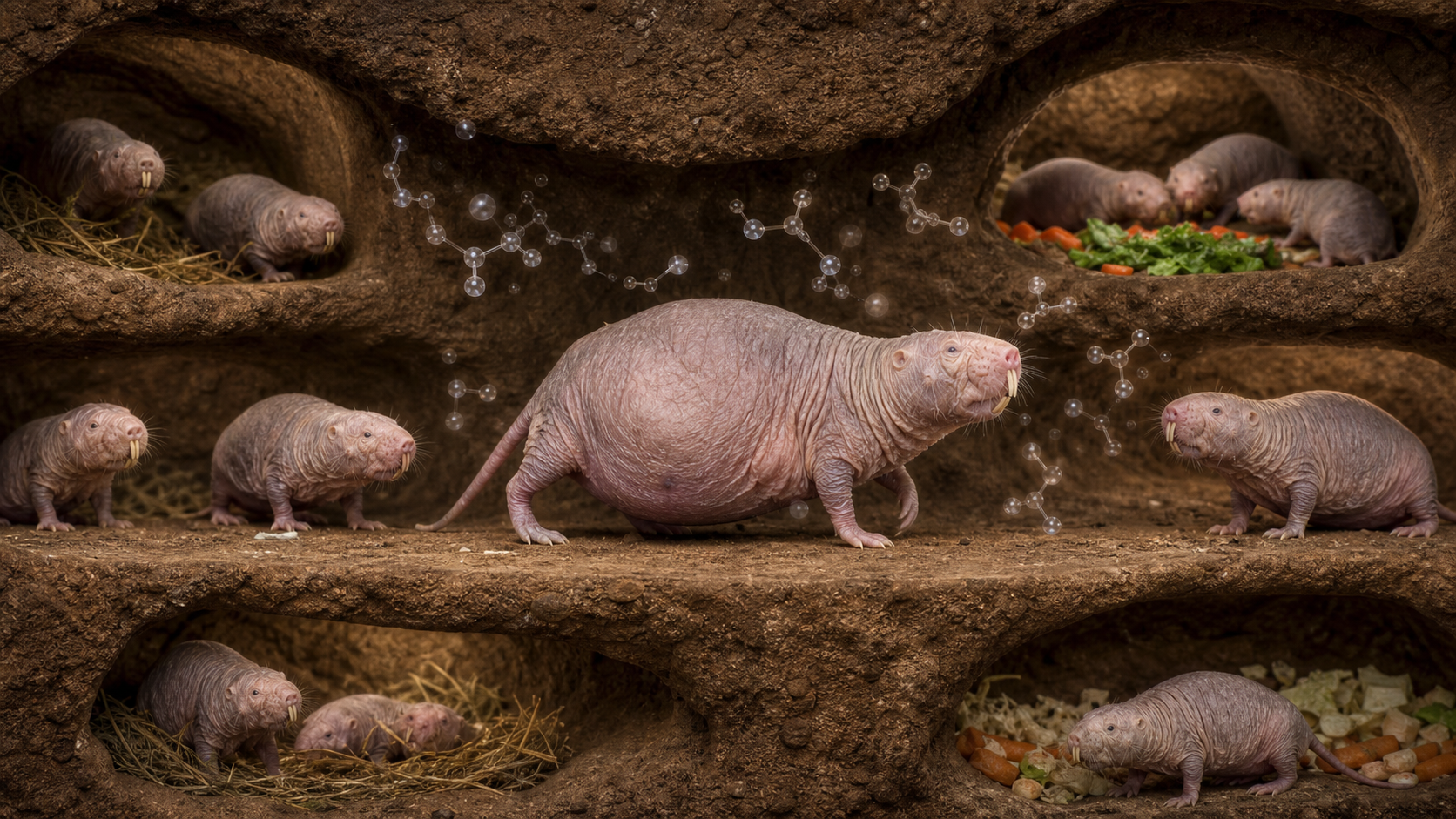
A queenless colony stayed quiet for 12 weeks
After removing the queen from a 19-member colony, researchers added IPM to the bedding daily. Aggression and dominance contests were absent during the 12-week treatment.
Conflict resumed after withdrawal, a rare example of one chemical coordinating physiology and behavior across a mammal society.
Humans can barely smell it
IPM is used as a cosmetic emollient and solvent and is effectively odorless to people. The effect depends on naked mole-rat sensory biology and social organization.
It does not imply that cosmetics alter human fertility or hierarchy, and the experimental exposure cannot be compared with everyday product use.
The wild-colony test is still missing
The work used managed colonies and isolated pairs. How IPM combines with contact, rank behavior and other odors underground in nature is unknown.
Researchers still need to identify its production pathway and receptors and ask whether other cooperative mammals use comparable signals.