WORLD NEWS
Perseverance reaches 45.22 km, setting an off-world driving record
NASA’s Perseverance reached a cumulative driving distance of 45.22 km on Mars on October 11, surpassing the surface-driving record for a vehicle beyond Earth.
This is distance accumulated since landing, not a one-day drive or evidence that life has been discovered.
The comparison is about endurance
Opportunity’s earlier total was 45.16 km from its 2004–2018 exploration. The difference between the rounded figures is about 60 metres. Perseverance reached its total in roughly five and a half years, while Opportunity needed almost 15. Different terrain and scientific assignments make this an endurance comparison rather than a controlled speed contest.
Earth chooses destinations; the rover finds a path
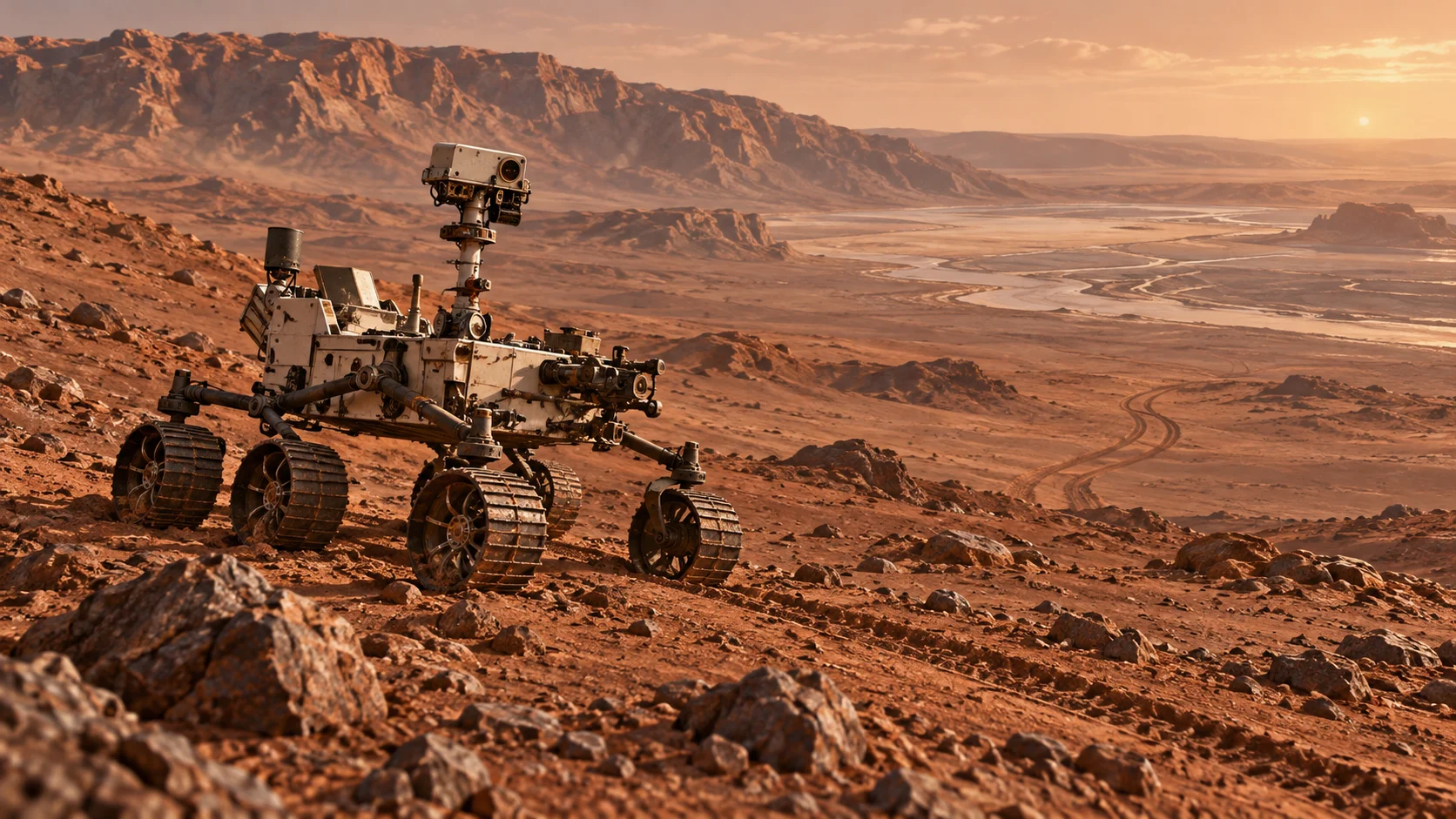
Planners on Earth select waypoints. AutoNav photographs terrain while the rover moves, builds a three-dimensional hazard map and chooses paths between those points. NASA says more than 90% of the cumulative distance used this terrain-assessment capability. That percentage does not describe all scientific decisions or an entirely human-free mission.
More driving opens more geology
The milestone came while the rover headed toward Idubi near the western rim of Jezero Crater. Scientists hope to find traces of ancient hydrothermal systems there. Greater mobility puts different geological settings within reach. Driving farther, however, does not itself establish that either ancient life or a hydrothermal system has been found.
Track mission plans separately from results
NASA says an extension beginning in October is planned to continue rim exploration through roughly late 2028. This is an operating plan, not a guarantee of trouble-free driving until then. Follow mission updates for later odometer readings and separate rock-analysis results. These figures refer to October 11; NASA announced them on October 12 and independent reporting followed on October 13.
Primary sources and independent checks
Primary: October 11 odometer reading, AutoNav scope and extension plans: NASA / JPL-Caltech
Independent science article: explains distance and navigation scope; based on NASA data, not a separate measurement: AstroSpace: Mariasole Maglione
Read in other languages
한국어 · English · Español · 日本語 · Tiếng Việt