WORLD NEWS
Physics Nobel honors Francis Halzen for turning Antarctic ice into a neutrino observatory
The 2026 Nobel Prize in Physics has gone to Francis Halzen, who helped turn Antarctic ice into an instrument for observing the universe.
It recognizes IceCube and high-energy neutrinos of astrophysical origin, rather than the first discovery of neutrinos themselves.
How ice becomes an observatory
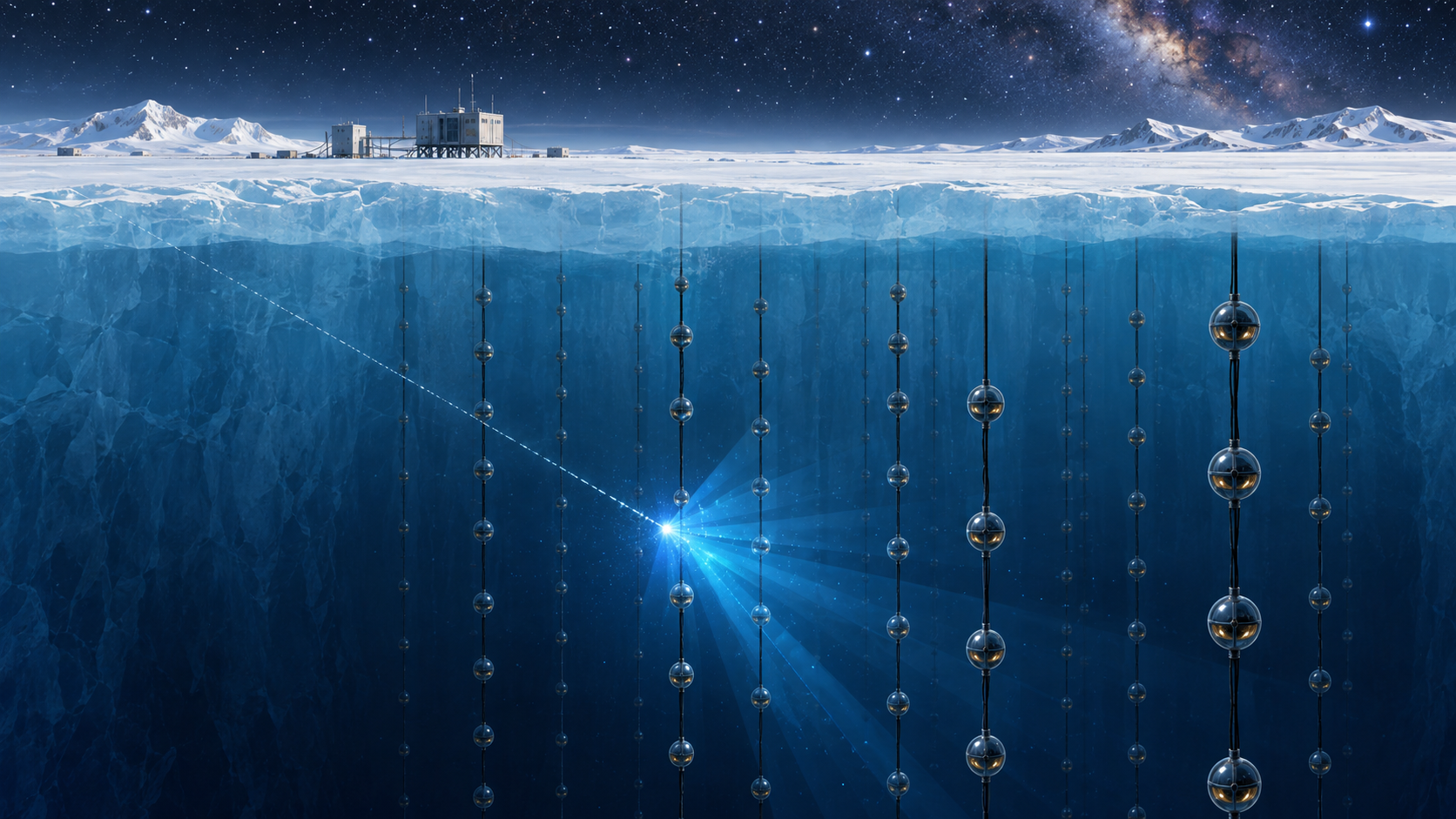
On October 6, the Royal Swedish Academy of Sciences announced the award for Halzen’s contributions to IceCube and the discovery of high-energy neutrinos from space. Neutrinos usually pass through matter. A rare interaction with an atomic nucleus in the ice can produce a process that emits light. Embedded sensors detect that light. Instead of gathering starlight with a lens, the observatory reads a particle’s trace.
Why a cubic kilometre matters
The detector uses roughly one cubic kilometre of ice: imagine a cube with sides one kilometre long. Cosmic high-energy neutrino interactions are rare, so a larger observing volume improves the opportunity to collect signals. Halzen presented his South Pole concept in 1988; IceCube, built by an international scientific and engineering effort, was completed in 2011. Its scale addresses scarcity of interactions, rather than magnifying an ordinary optical picture.
A different clue to cosmic accelerators
Charged cosmic particles can be deflected by magnetic fields, complicating attempts to trace their origins. Neutrinos offer a different route to investigating violent, energetic environments. That is the explanatory importance of the award. A detected event does not automatically establish one particular celestial source. Background events, uncertainty in direction and agreement with other observations still have to be evaluated together.
Questions the award does not settle
The prize goes to Halzen, but building and analysing the observatory required international collaboration. The announcement does not mean every cosmic source of high-energy particles has been identified. New IceCube data and analyses connecting signals to particular objects remain the next records to follow. The award was checked against the official release and independent AP reporting; this article does not announce a new detection event or endorse an unconfirmed cosmic theory.
Primary source and independent checks
Primary source and official explanation: Nobel Prize
Primary source and official explanation: UW–Madison
Independent reporting check: Associated Press
Read in other languages
한국어 · English · Español · 日本語 · Tiếng Việt