WORLD NEWS
Metal-bearing gas was detected around three galaxies within the first 700 million years
Stars make elements heavier than hydrogen and helium and distribute them through winds and explosions. JWST/NIRSpec measured absorption where galaxy light passed through foreground gas.
Lines were blueshifted by roughly 50–250 km/s from the galaxies’ systemic velocity, consistent with outflowing or strongly disturbed multiphase gas.
Why the timing matters
The galaxies appear within the first several hundred million years, around the midpoint of reionization. Star formation, metal production and gas redistribution were already operating together.
What the observation requires
O I, Si II, C II, Si IV and C IV absorption requires enriched, disturbed gas. It does not prove every component escaped the galaxy or identify a unique stellar source.
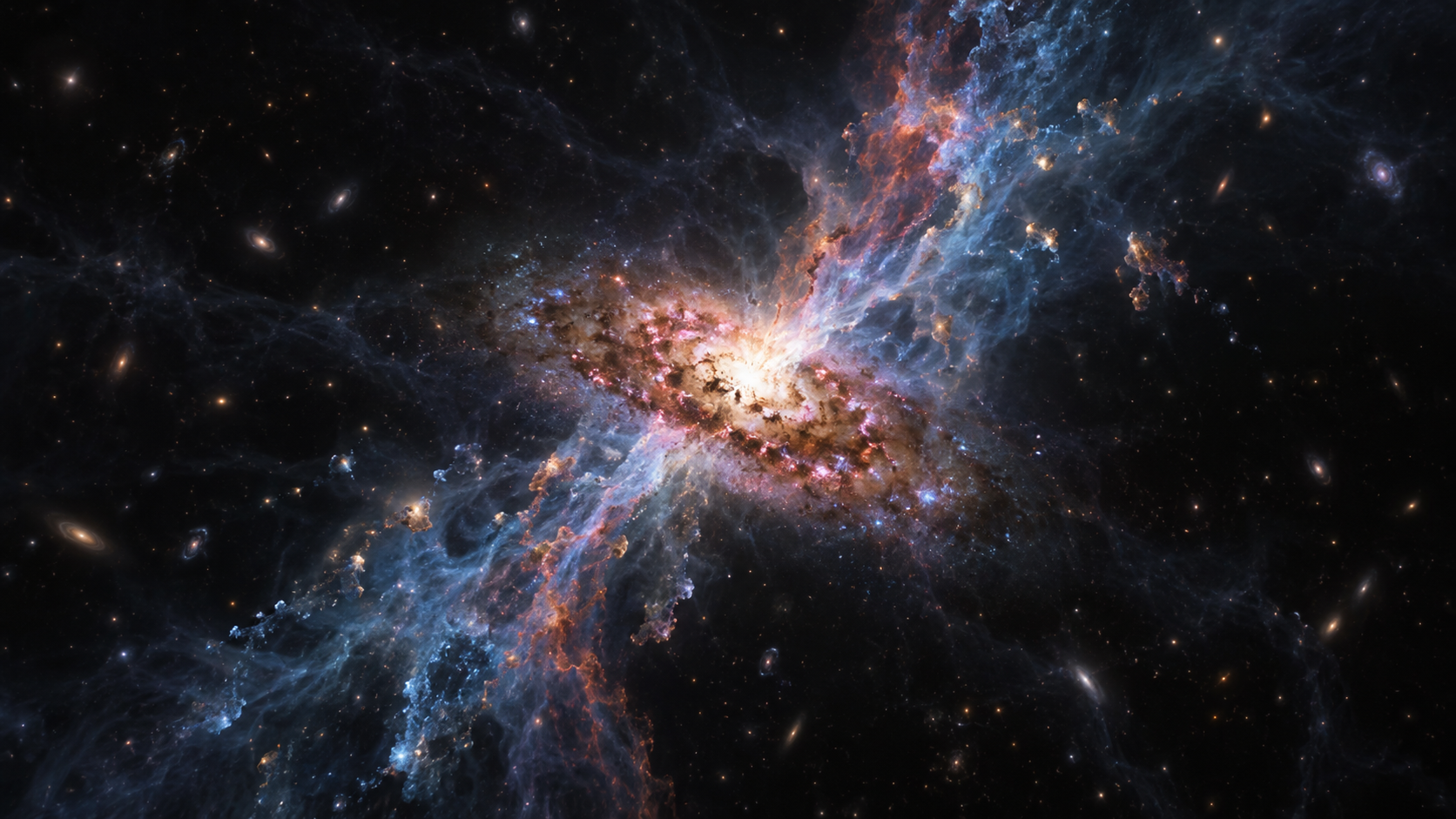
The three-galaxy limit
These targets are bright enough for detailed JWST spectra. Fainter galaxies and pristine regions may differ, and enrichment was probably patchy in space and time.
What comes next
Larger samples must measure frequency and mass dependence. Combining star formation, dust and surrounding gas can separate fresh outflows from recycled material and locate surviving pristine pockets.
Primary source and independent checks
Primary source: Nature Astronomy paper
Institutional explanation: University of Arizona explanation
Independent check: Nature Astronomy research listing
Read in other languages
한국어 · English · Español · 日本語 · Tiếng Việt