WORLD NEWS
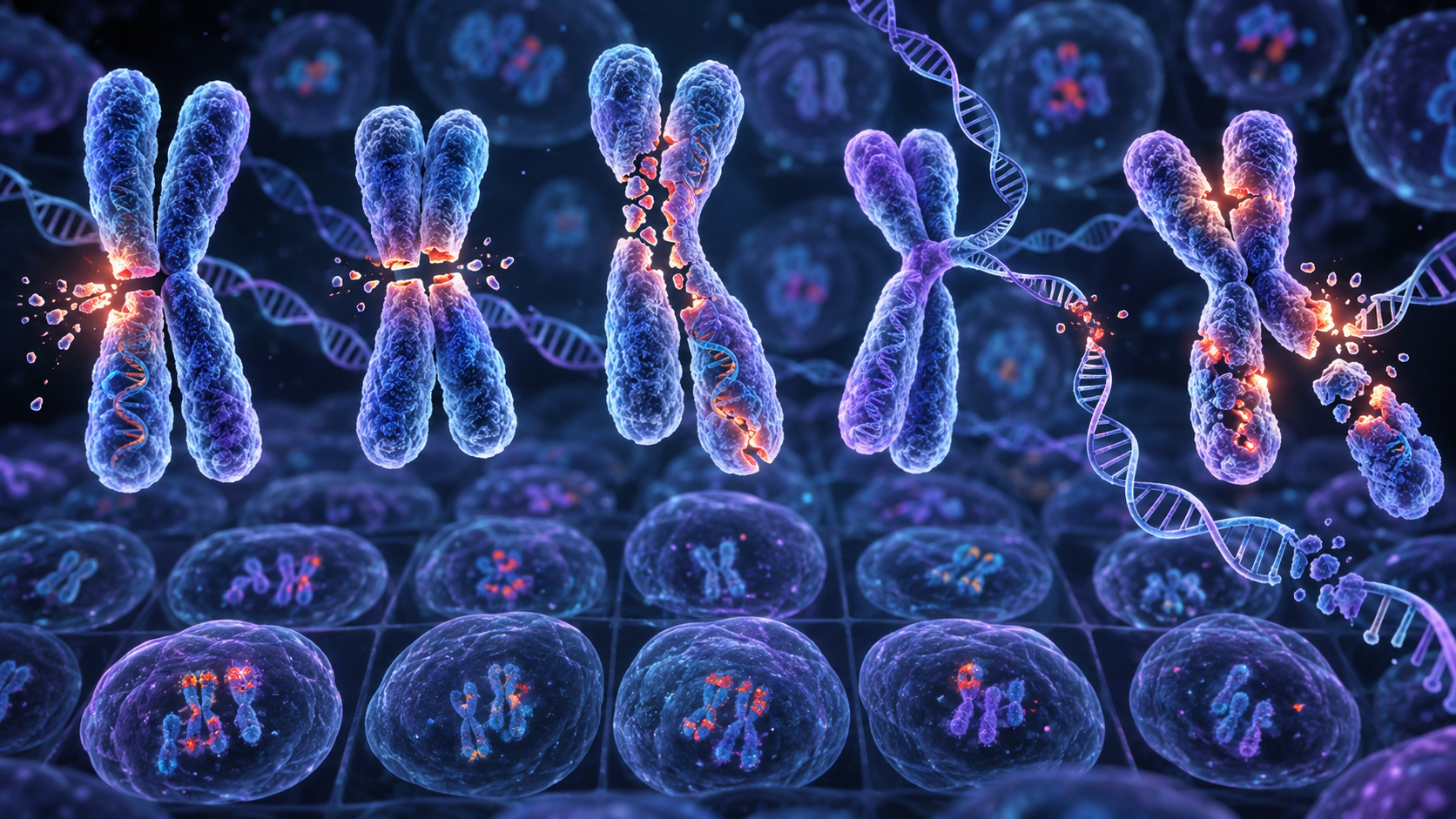
Single-cell maps split chromosome “break-prone sites” into several classes
Researchers mildly disrupted DNA replication with aphidicolin and jointly analysed break positions and replication timing in 480 single cells.
They recovered known common fragile sites and rare breaks hidden in population averages, then grouped them by location and replication pattern.
Why bulk maps miss rare breaks
Mixing many cells emphasizes sites that recur. Cell-by-cell maps retain events seen in only one or two cells and connect frequency with the surrounding replication state.
Not every site breaks for one reason
Some overlapped large, late-replicating genes; others related to sparse replication origins or boundary regions. One explanation based only on late replication was insufficient.
Limits for cancer claims
Replication stress and rearrangements matter in cancer, but this study did not measure tumours or patient outcomes. Cell type and drug conditions can change the map.
Next check
The classes need replication in other cells and natural stresses. Comparing them with real tumour rearrangements can test which rare breaks persist in disease.
Primary source and independent checks
Primary source: Nature Communications paper
Institutional explanation: RIKEN research release
Independent check: JST science release index
Read in other languages
한국어 · English · Español · 日本語 · Tiếng Việt