WORLD NEWS
Ryugu’s parent body formed within the Solar System’s first two million years
Analysis of samples returned by Hayabusa2 indicates that the body supplying Ryugu’s material formed within roughly two million years of the Solar System’s beginning, more than 4.565 billion years ago.
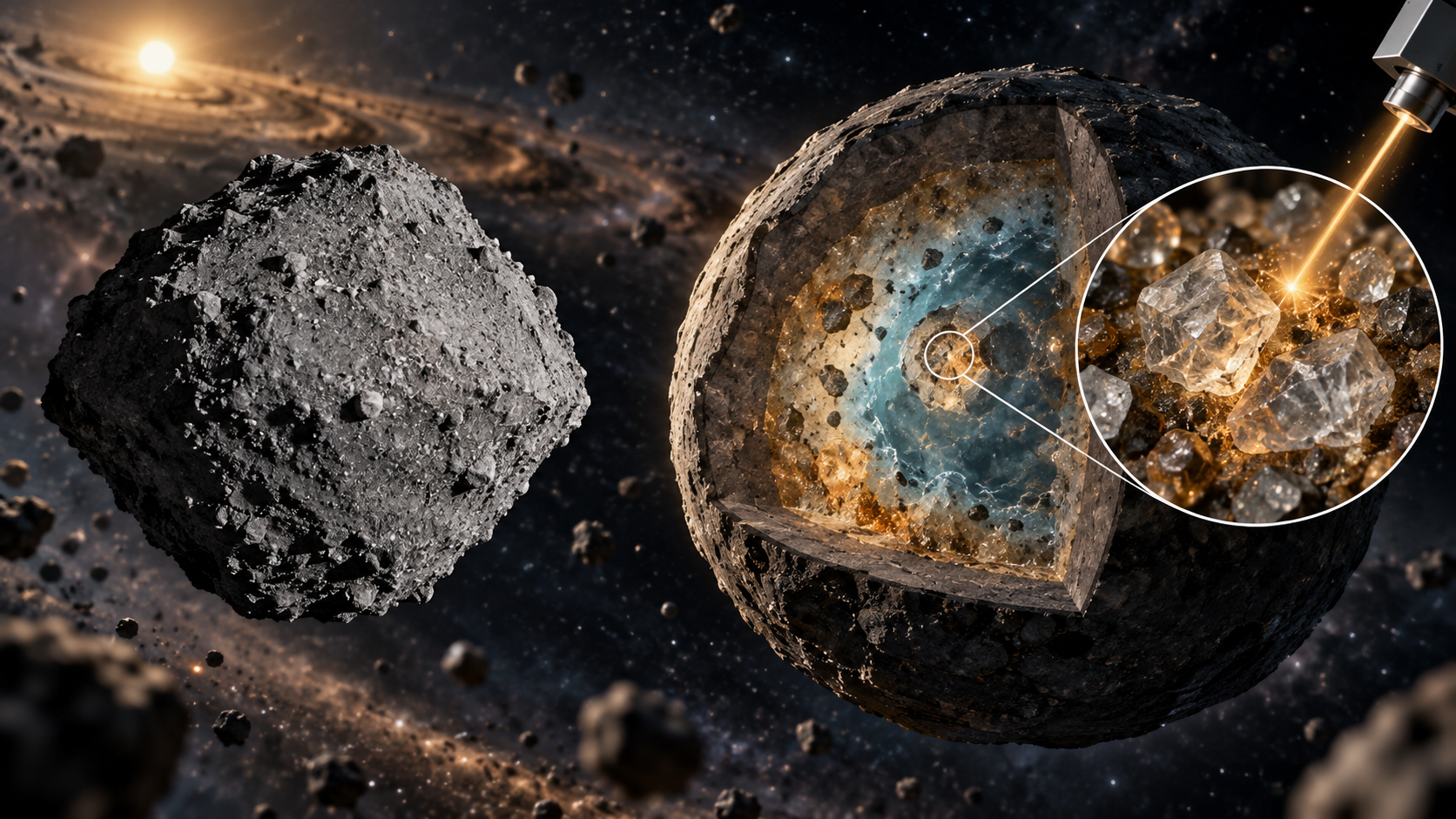
The asteroid seen today did not keep the same shape for all that time. The early parent body was disrupted and its fragments later reassembled into Ryugu.
What was measured?
Manganese–chromium dating in carbonate grains provided an age, while oxygen isotopes indicated formation in water at about 90°C.
Why temperature matters
An ice-rich small body takes time to warm internally. Matching the mineral age and temperature to thermal models let the team work backward to accretion.
What changes?
Ryugu and Ivuna-type meteorite parents appear older than many chondrule-rich carbonaceous bodies, supporting more than one generation of early planetesimals.
Limits
The estimate depends on sampled grains and thermal-model assumptions. It is a model-supported lower age, not a directly observed birth date.
Next test
Comparable measurements in Bennu samples and more meteorites can test when and where carbon-rich parent bodies diverged.
Primary source and independent checks
Read in other languages
한국어 · English · Español · 日本語 · Tiếng Việt