WORLD NEWS
Plant channel AKT5 finally linked to leaf-stalk growth in crowds
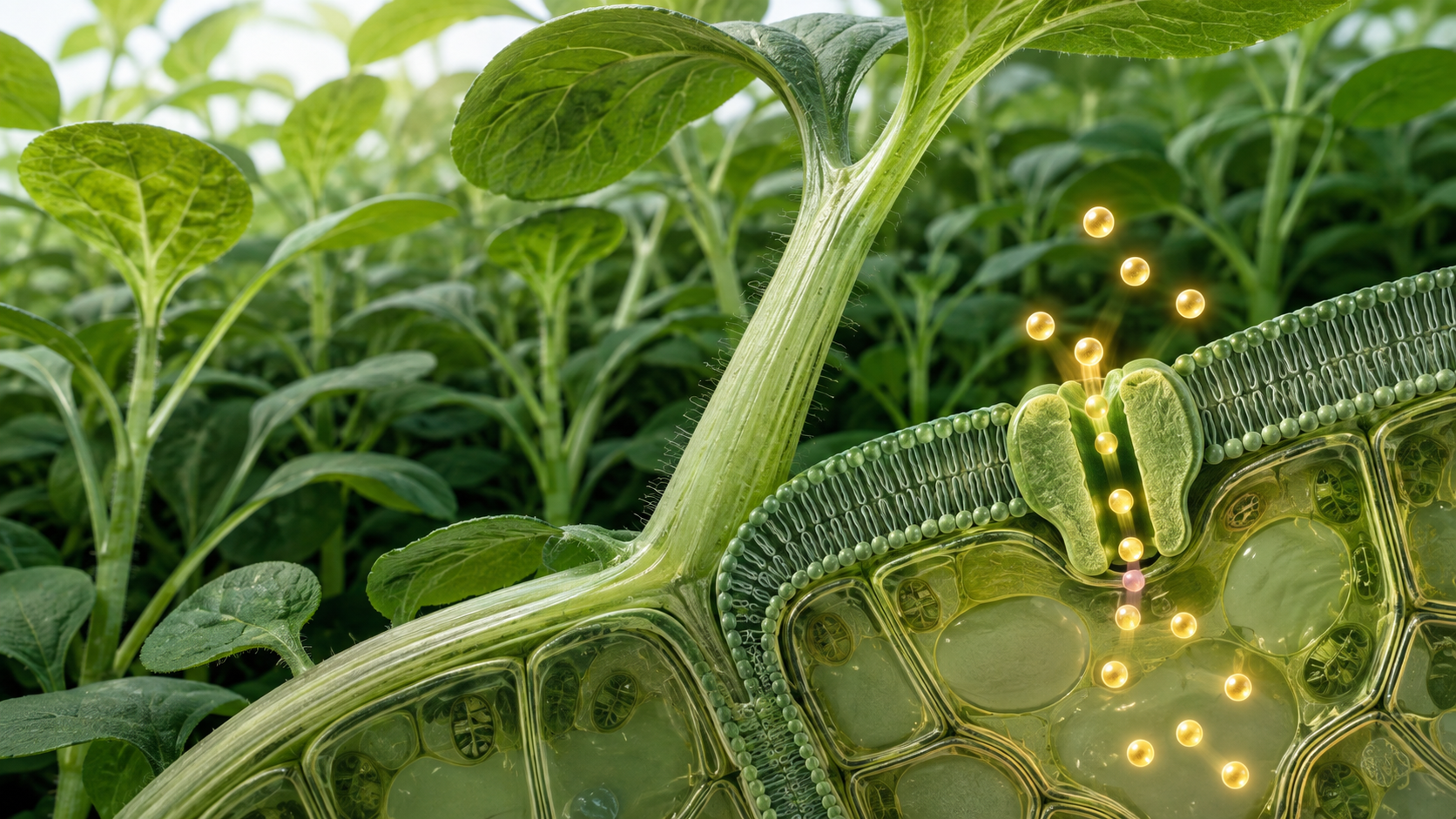
AKT5, a plant protein with no assigned function for decades, is a potassium channel that helps leaf stalks elongate and position leaves in crowded growth. The combined structural and plant study appeared in Science Advances on September 2.
Most experiments used Arabidopsis. The result does not show that switching AKT5 on will raise crop yields under field conditions; crops, water use, disease and final harvest still require testing.
How was it shown?
Structures, electrophysiology and knockout plants converged: phosphorylated AKT5 formed an inward potassium channel and was abundant in young petioles.
What changed in plants?
Plants without AKT5 had shorter petioles and more compact rosettes, with a larger biomass penalty when grown densely.
Why does potassium matter?
Potassium helps draw water into cells and build pressure for elongation. AKT5 is one regulator in that process, not a complete explanation of growth.
Can farmers use it now?
No. Field crops must be tested for yield, water demand, stem strength and disease, and excess activity could disturb ion balance elsewhere.
What comes next?
Researchers need crop equivalents, real-field stress tests and a map of how environmental signals control AKT5 phosphorylation.