WORLD NEWS
Ryukyu scops owls responded more strongly to other pairs’ copulation calls, suggesting a territorial warning
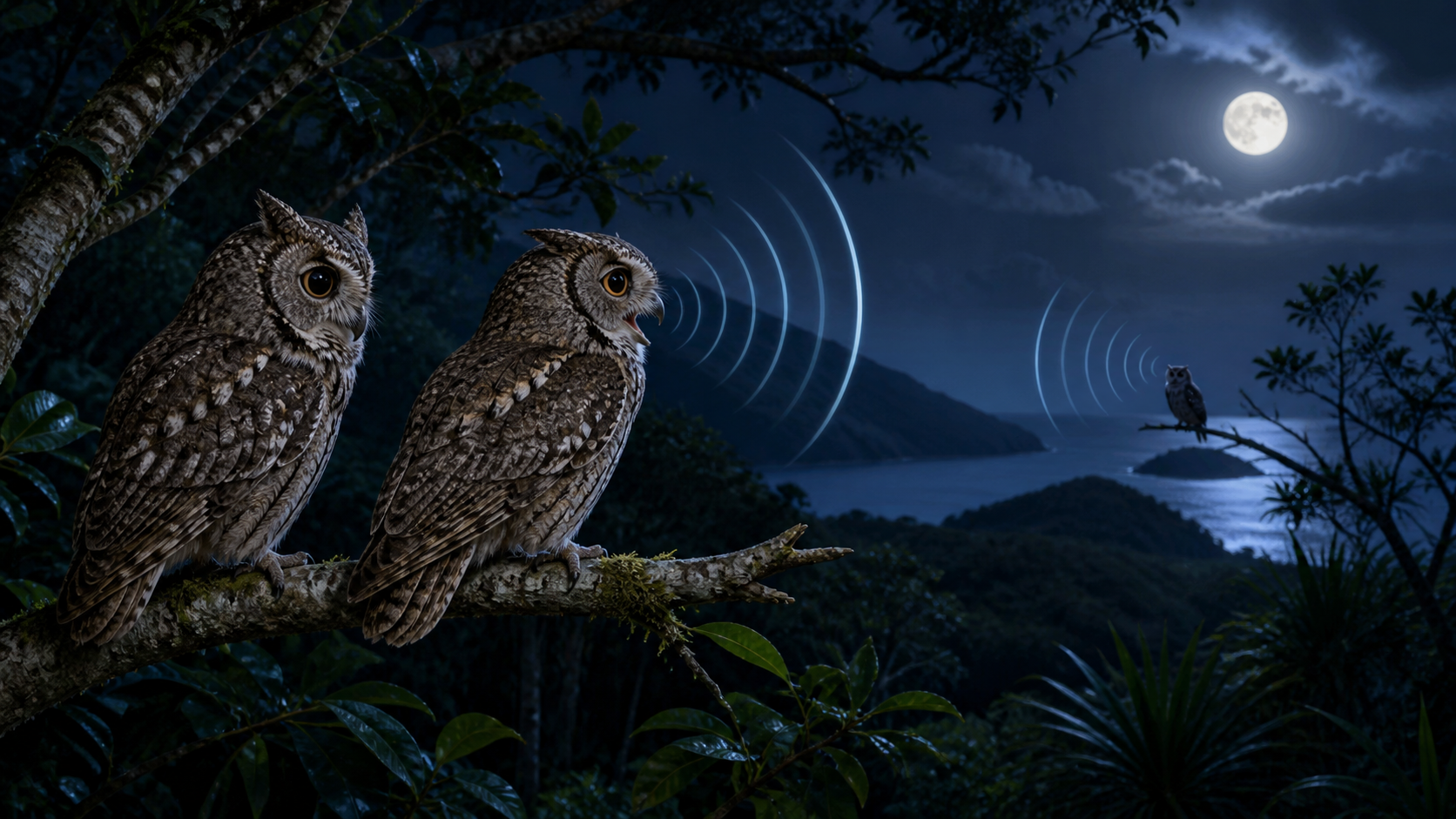
When Ryukyu scops owls on Japan’s Minamidaito Island heard recordings containing copulation calls from non-partners, both females and males called back more strongly. The researchers also found that copulation calls became more frequent when an intruder was present, supporting a possible territorial-warning function.
This does not mean that all birds cry during mating for the same reason. This is a playback experiment involving one subspecies on one island, and further research is needed to determine which functions among territorial assertion, pair bonding, and signaling to the other sex are significant.
What did the researchers play?
The researchers prepared recordings of various sounds made by Ryukyu owls, including those that included mating sounds and those that did not. After playing them to birds on Minamidaito Island, the researchers measured how quickly and often the owls called back and how closely they approached. Responses to recordings containing mating sounds were strong in both males and females.
Why was it interpreted as a territorial signal?
Mating sounds are noticeable sounds that are heard not only by mates, but also by nearby individuals. The observation that both sexes responded and that mating call frequency increased in the presence of intruders fits with the warning hypothesis of mate defense and paternity defense. However, behavioral responses do not directly read intent.
What was new about the study?
The researchers explain that this is the first study to examine the response to birds’ mating sounds in male and female birds. Studies of bird vocalization have often focused on song and courtship. The results show that even short, rare sounds can convey information about social relationships and territorial competition.
Does this apply to other animals as well?
A separate review in 2026 summarized that vocalizations during and immediately after copulation in vertebrates may have multiple functions. However, different species have different lifestyles and reproductive systems. The results cannot be directly transferred to the behavior of mammals or other birds.
What will the next study confirm?
It remains to be seen whether the same response is replicated on other islands and subspecies and how actual territory invasion and reproductive success vary. Experiments that change the height, length, and individual characteristics of copulatory sounds are also needed. What has now been confirmed is that these birds distinguish mating sounds from other sounds and change their behavior.
Primary sources and independent checks
Animal Behaviour original paper