WORLD NEWS
Metal festival fans endured cold-water pain longer, but the full 122-person result was not significant
In a study of 122 metal fans at Germany’s 2023 Wacken Open Air, an exploratory analysis excluding heavy drinkers found that the during-festival group kept a hand and forearm in 2°C water longer than the pre-concert group. However, the prespecified analysis using all 122 participants found no statistically significant difference in pain perception.
This does not mean metal music treats pain or makes pain itself feel weaker. The participants were two different groups, pain onset and unpleasantness did not change, and the finding is limited to an exploratory analysis at one festival after heavy drinkers were excluded.
Who was compared, and how?
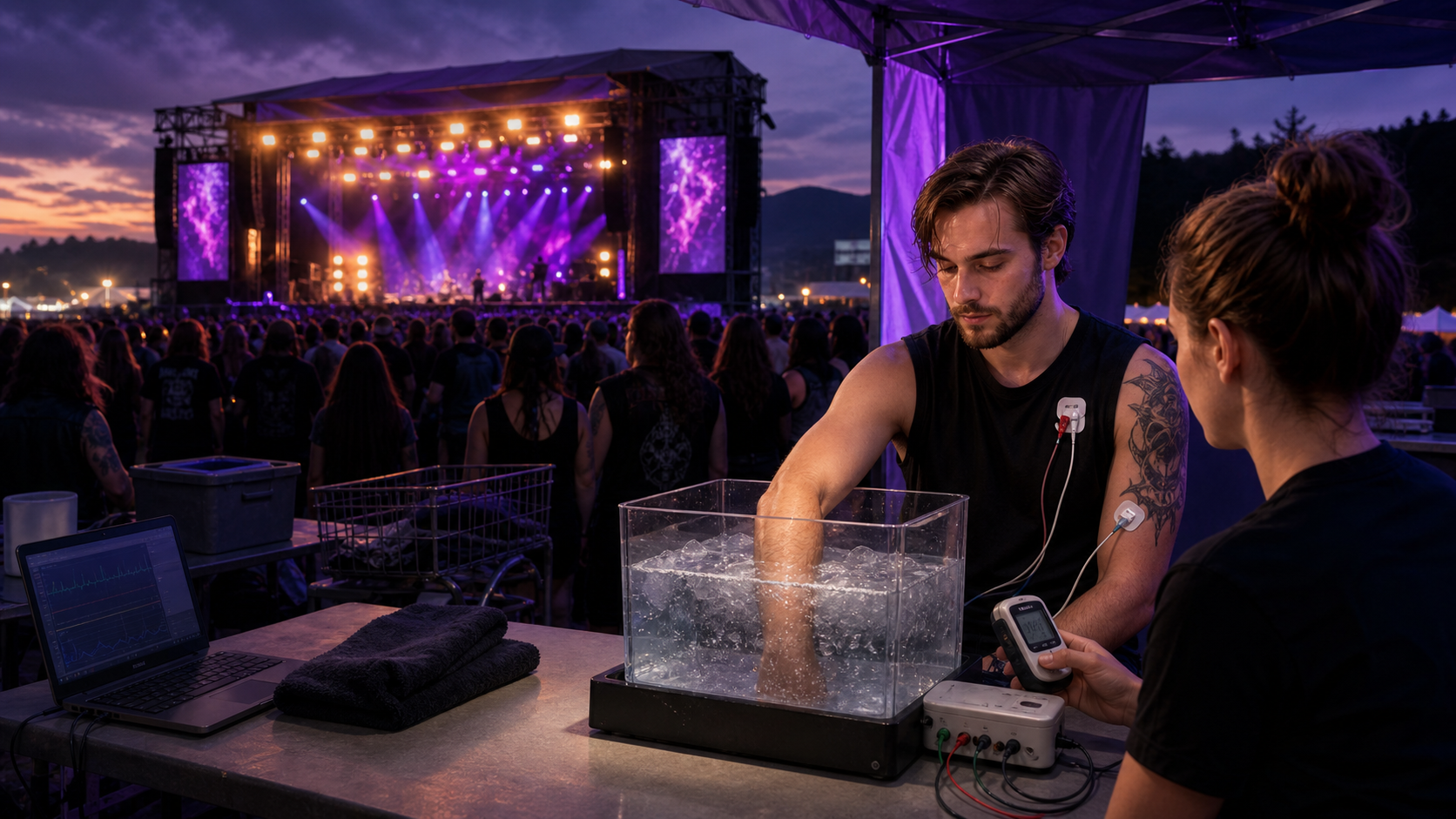
Researchers compared 60 fans tested before live performances began with 62 tested on festival days three and four. After an ECG recording, participants placed their nondominant hand and forearm in 2°C water. Researchers recorded pain onset, withdrawal time, unpleasantness and heart-rate variability, stopping the task at four minutes to prevent tissue injury.
What changed, and what stayed the same?
The confirmatory full-sample analysis found no group difference. Only an exploratory analysis of 95 people remaining after a predefined heavy-drinking cutoff found a longer interval between pain onset and hand withdrawal in the during-festival group. The effect size was moderate, while pain onset, unpleasantness and heart-rate variability did not differ.
Why was alcohol considered separately?
Alcohol can alter pain responses differently by person and dose. Researchers did not recruit anyone showing visible intoxication and asked participants to report drinking that day. Because alcohol was not confirmed with breath or blood testing, memory errors and underreporting remain possible.
Can this be called a metal-music effect?
No. The same people were not measured before and after performances, and there was no random assignment. The study could not separate concerts from friendship, camping, sleep, expectations or festival atmosphere. Explanations involving oxytocin and resilience are hypotheses because neither hormones nor a validated resilience scale was measured.
What should the next study test?
Future work should follow the same participants before and after performances and measure alcohol objectively. It should test other genres, other festivals and other pain tasks such as heat or pressure. Any benefit for people with chronic pain would require a separate, safely controlled clinical trial.
Primary sources and independent checks
Scientific Reports original paper
Max Planck Institute research release