WORLD NEWS
Halve the muscle you lose while losing weight? Experimental antibodies changed composition, not body weight
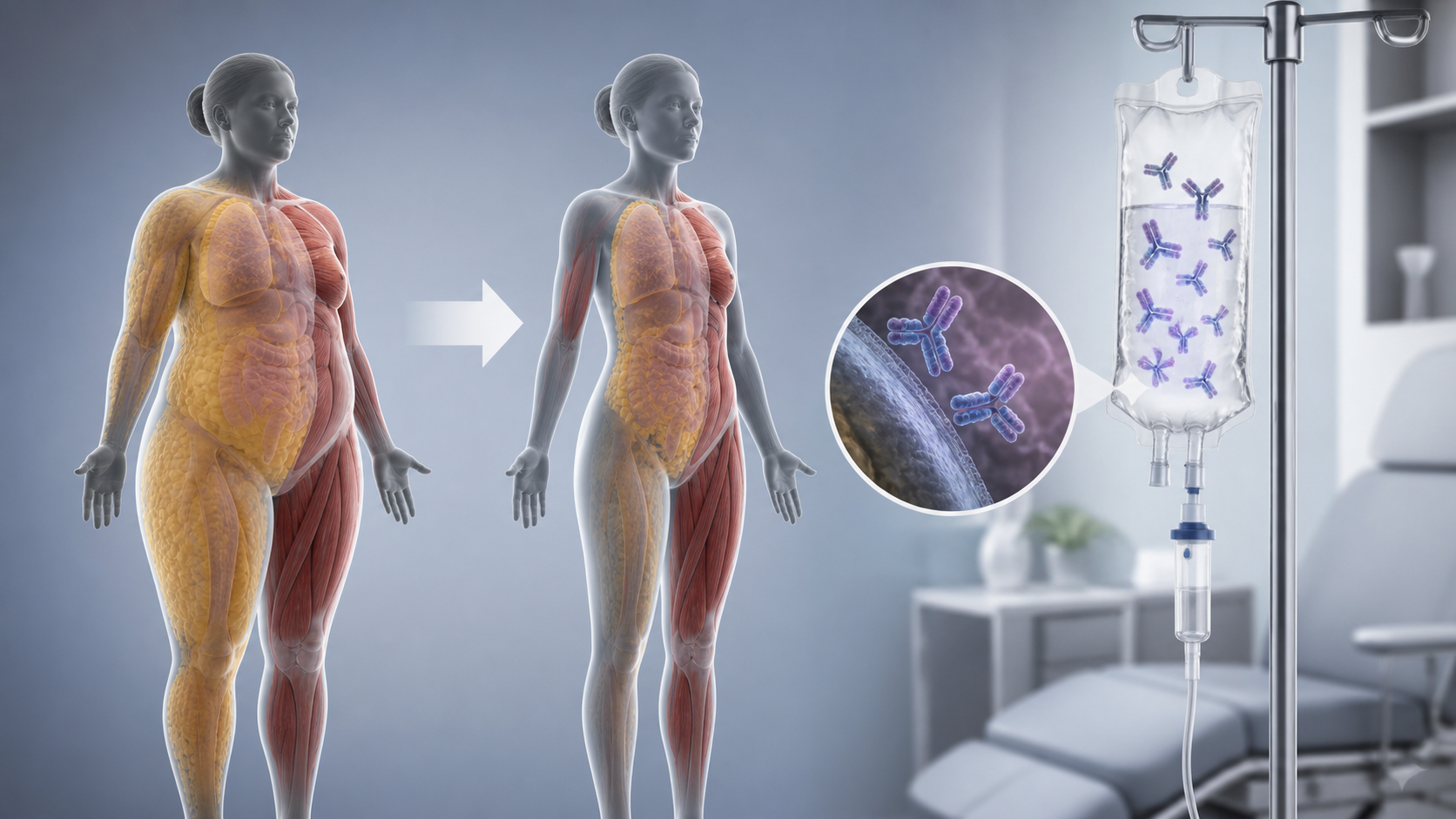
Phase 2 trial results showed that when the experimental antibody apitegromab was administered simultaneously while losing weight with tirzepatide, the proportion of lean body mass lost was reduced by about half.
It does not mean that strength has improved or that the drug has been approved, but these are early clinical results that measured the body composition of 102 American adults over 24 weeks.
Who was tested and how?
The study recruited 102 obese adults from seven U.S. institutions. All received tirzepatide and were randomly added to apitegromab or placebo. Comparisons were made over 24 weeks in a double-blind manner in which neither participants nor researchers knew the allocation group.
What are 14.6% and 30.2%
This is the percentage of lean body mass, not fat, of the total weight lost. It was 14.6% in the antibody group and 30.2% in the placebo group. Lean body mass includes not only muscle but also organs and body water, so these numbers should not be read as pure muscle mass.
Did you lose more weight?
The overall weight loss in the two groups was similar, with the differences mainly occurring in which tissues were lost. Apitegromab targets the myostatin pathway, which inhibits muscle growth. It is not a drug that replaces fat loss, but rather a test of its potential to modify body composition loss.
Was the strength also preserved?
No significant improvement was noted in some functional measures. Longer, larger trials are needed to determine whether lean body mass preservation seen in images actually translates into reduced walking, stair climbing, and falls. Adverse reactions and long-term safety cannot be confirmed based on this scale alone.
Can I get a prescription now?
Apitegromab is an investigational drug administered intravenously and is not approved for muscle-preserving use during weight loss. It is also not a basis for individuals to replace protein or exercise with medication. Next steps should confirm functional benefits in older adults and other populations.