WORLD NEWS
Radio telescopes became a real-time radar for objects 37,000 km away
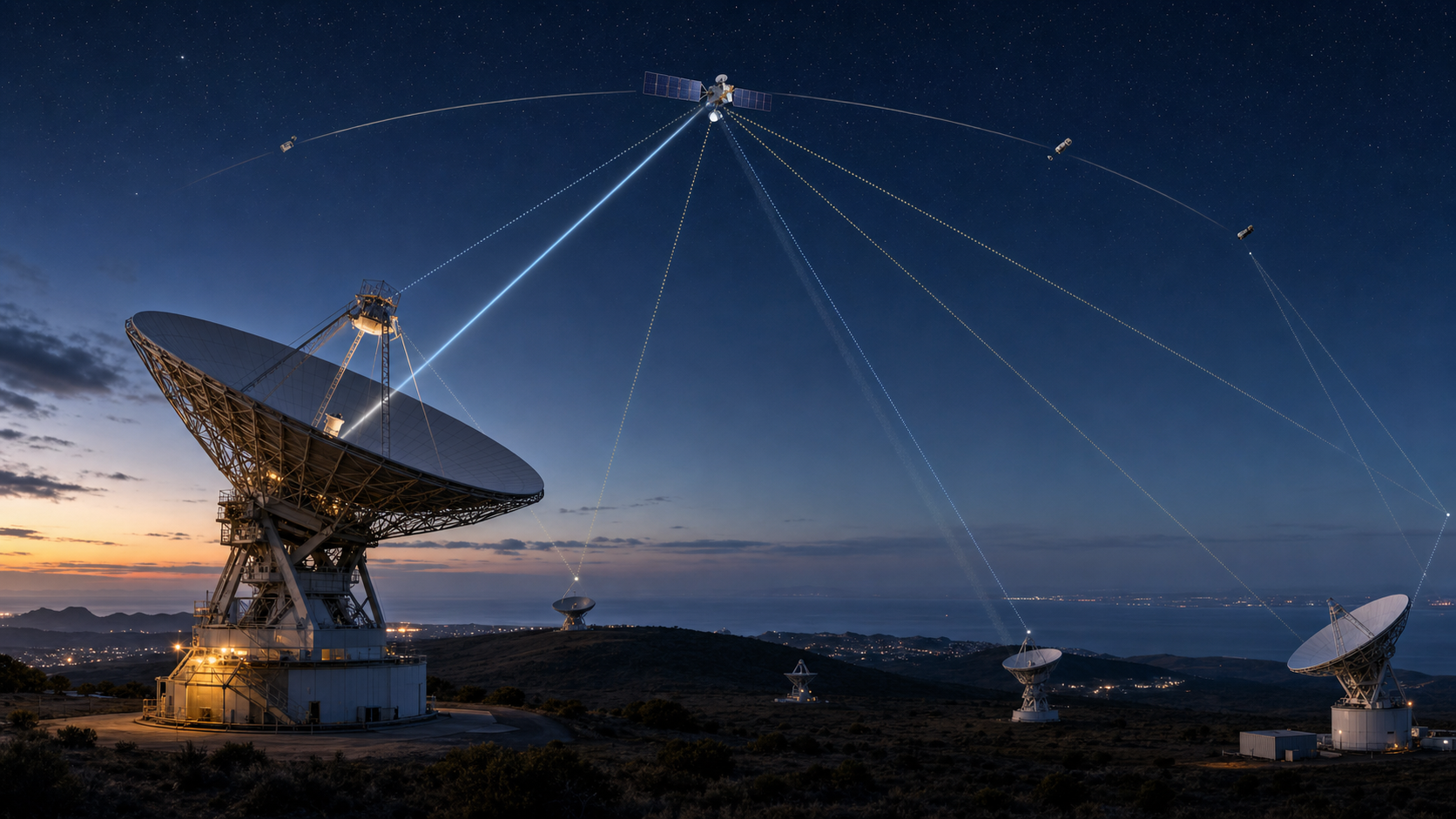
A UK-US-Australian team linked large radio telescopes and a satellite communications antenna to existing radar as remote receivers, publicly demonstrating real-time detection and measurement of satellites and debris near geostationary orbit about 37,000 km from Earth.
The long-baseline multistatic radar, or LBMR, combines existing scientific and commercial facilities instead of requiring another giant dedicated receiver.
Which facilities became radar receivers
The team used the 76-metre Lovell Telescope at Jodrell Bank, the e-MERLIN radio-telescope network and a 30-metre Goonhilly satellite communications antenna. At ESA ECSAT in the UK, government, industry and defence observers saw detections and measurements processed in real time.
Birmingham and Manchester describe it as the first live public demonstration of this type of configuration. The original UK Space Agency project award was GBP 452,000.
Listening for faint returns from high orbit
Small objects in geostationary orbit return far weaker radar signals than similar objects in low orbit. LBMR lets sensitive antennas in separate places receive reflections from one powerful transmitter.
Separation provides more viewing geometry and signal than a single receiving site. The telescopes are not firing a new beam; they are precisely listening to faint reflections from an existing radar transmission.
Why reusing existing facilities matters
The University of Birmingham says combining radio telescopes could improve sensitivity by more than ten times and reveal smaller, more distant objects. Geostationary orbit holds communications, weather and government satellites tied to critical services.
An international network of existing telescopes and communications antennas could expand awareness of collision risks, inactive satellites and uncooperative objects faster than building dedicated systems alone.
Ten times is not a guaranteed performance
The figure is a potential sensitivity gain for the configuration, not a result guaranteed for every target or radio environment. The public material does not say a specific hostile object was tracked; it confirms a demonstration of satellite and debris detection and measurement.
This was a technology demonstration. Public sources did not report minimum detectable size, orbit-determination accuracy, false-alarm rate or continuous availability.
What is needed for an operational network
Next steps require target-level measurements, independent performance tests and repeated demonstrations. Telescope scheduling, international data sharing, civil-military boundaries and operating cost also remain unresolved.
The next decisive evidence will be published orbit accuracy and a plan for sustained operation.
Official Primary Sources
University of Birmingham: live demonstration and sensitivity
University of Manchester: Lovell Telescope and e-MERLIN demonstration