WORLD NEWS
Healthy-diet scenarios show how global farming could look different by 2050
Nature published a multi-model study on 15 July 2026 combining healthy diet adoption, higher farm productivity, and halved food waste. The key point is that the scenario cuts land-use-change net CO2 by 85% relative to 2020, but this is a model experiment under specific assumptions, not a forecast.
LSHTM’s summary says the same scenario could reduce agricultural land use by up to 6% from 2020, lower livestock production value by 42%, lower ruminant value by 70%, and raise vegetable, fruit, nut, and legume value by 57%. The bigger story is that diet choices can reshape land use, farm income, and climate accounting.
What Was Analysed
The researchers used 10 global economic models to test what happens by 2050 if EAT-Lancet-style healthy diets are widely adopted, farm productivity improves, and food waste is cut in half. It is not one prediction of the future, but a scenario test of how the food system responds to changed conditions.
The Nature paper and PBL page connect land use, production volume, production value, livestock, and crop categories. That matters because diet change becomes a question of land allocation and agricultural economics, not just nutrition.
The Main Numbers
LSHTM reports agricultural land use up to 6% below 2020 and livestock production value 42% below 2020 in the scenario. Ruminant value falls by 70%, while vegetables, fruits, nuts, and legumes rise by 57%.
The climate number is also large: land-use-change net CO2 is 85% below 2020. PBL’s figures such as 17% lower production and US$1.6 trillion lower value are comparisons with a business-as-usual 2050 path, so the baseline has to be kept separate.
Why It Matters
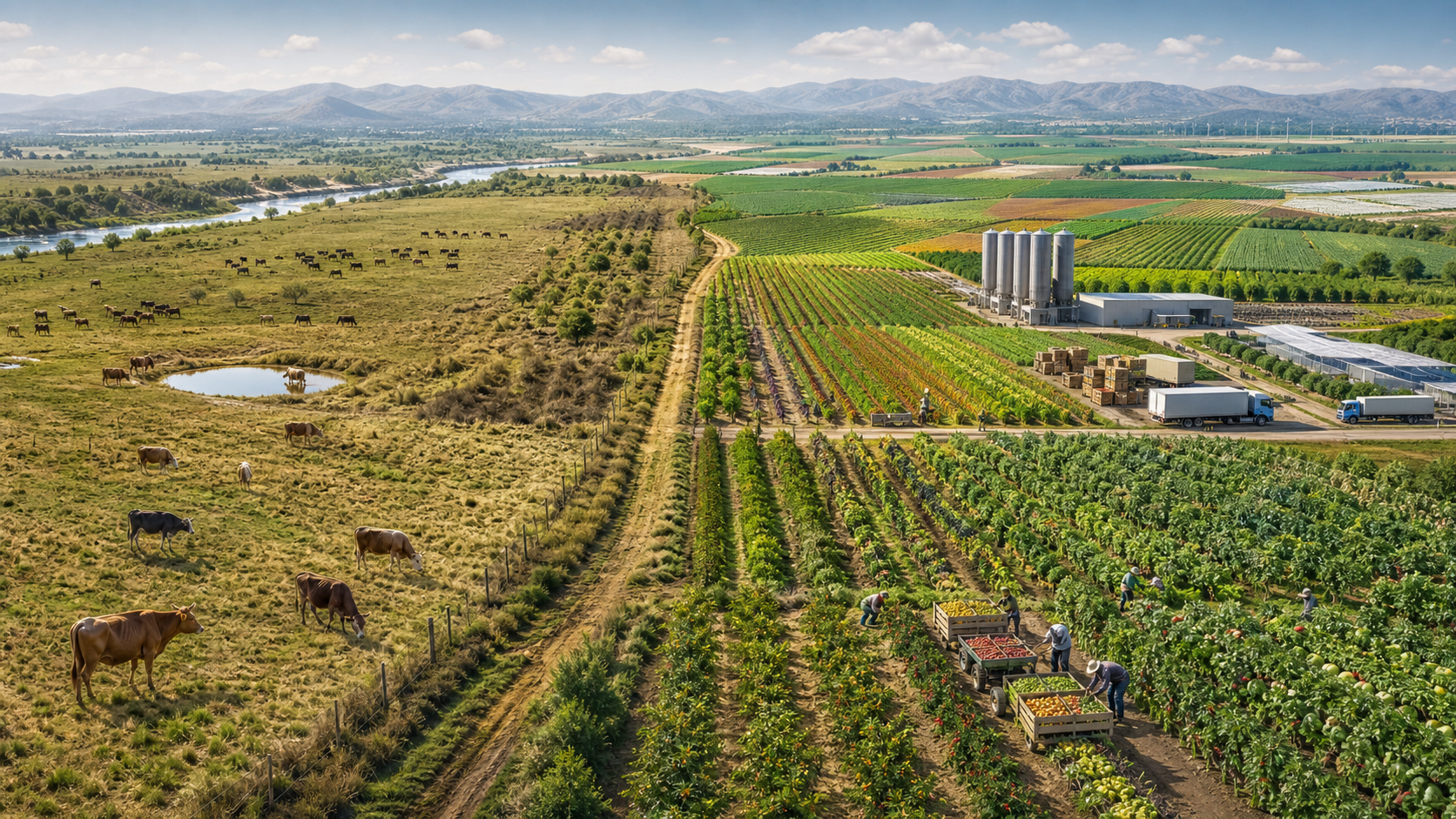
The study reframes healthy diets as a farming-system question. In the models, production centred on ruminant livestock contracts while fruit, vegetable, nut, and legume production expands.
That shift would affect farmers, logistics, prices, trade, and land-use decisions. It turns diet policy into a broader question of food-system transition, with winners, losers, costs, and timing that need policy design.
What To Be Careful About
The biggest caveat is the assumption of a costless consumer preference shift. Real outcomes depend on food access, price, culture, cooking time, farm investment, and regional income differences.
So 85% is not a promise or a projection. It is the result of models under a combined diet, productivity, and waste-reduction scenario.
Next Checks And Sources
The next question is whether food prices, subsidies, and farm-transition policies can make any part of this scenario realistic. Readers should use Nature for the model setup, LSHTM for the 2020-based numbers, and PBL for the business-as-usual comparison.
Official Sources
Nature article: 10 global economic models, 2050 scenario, and land/value shifts
LSHTM release: 85% land-use-change net CO2 cut and livestock/crop figures
PBL page: 2050 production/value differences versus business as usual and model participation