WORLD NEWS
NASA’s Juno has measured heat a few metres below Io’s surface
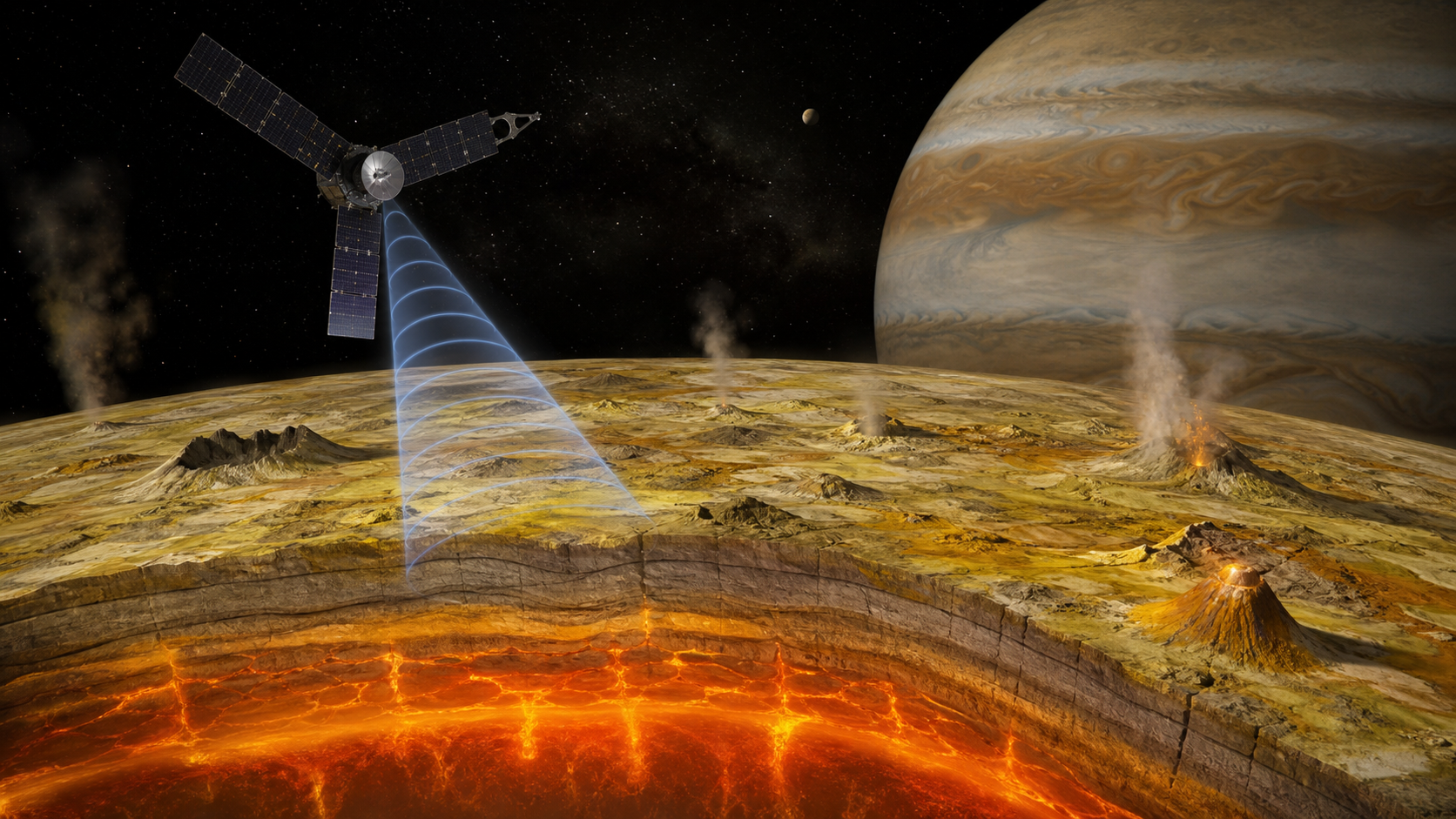
NASA JPL said on 22 July 2026 that the Juno spacecraft made the first measurements of temperatures below the surface of Jupiter’s moon Io. The key point is not another volcano image, but microwave evidence that can help separate global interior heating from young lava flows cooling beneath a thin crust.
What Juno Observed
Juno passed close to Io on 30 December 2023 and 3 February 2024, coming within about 930 miles or 1,500 kilometres. JPL says its Microwave Radiometer detected temperatures rising by more than 40 Fahrenheit degrees just a few feet below the surface. NASA Photojournal describes related microwave channels as probing roughly 6 to 20 feet, or 2 to 6 metres, into the crust.
Why It Is New
Io is known as the most volcanically active body in the Solar System, but many observations focus on eruptions and hot spots at the surface. These measurements begin to show how heat is distributed below that surface. That helps test whether tidal heating is spread broadly through Io or whether the signal comes from young lava flows cooling under a shallow crust.
Two Possible Readings
One JPL interpretation is a background heat flow of 1 to 3 watts per square metre, as much as 30 times Earth’s average. Another is that cooling lava flows lie under a 30 to 35 foot, or 9 to 11 metre, crust across about 10% of Io’s surface. Either way, the observation gives a new handle on how internal heat reaches shallow layers.
Limits And Next Research
The result comes from two Juno close passes and specific microwave channels. Distinguishing global heat flow from broad young lava fields will require comparison with terrain, infrared data, and records of volcanic activity. The best reading is that scientists have begun directly probing Io’s subsurface heat, not that they have fully mapped its interior.
Official sources
NASA JPL release: flybys, temperature rise, and interpretations
NASA Photojournal: microwave depth and image context
JGR Planets paper: observational analysis and science conditions