본문으로 이동
ONEPRESS

WORLD NEWS

The IMF sees 3.0% global growth in 2026. Check the Hormuz assumption behind it
Global briefing

GLOBAL LANGUAGES

Briefings by language

Only translations that preserve official sources and action checks are linked.

AI BRIEFING

AI Briefing

Start with the main thread drawn from this article. When no separate AI summary is approved, this section uses only the article and its excerpt.

One-line summary The July outlook projects 3.0% growth in 2026 and 3.4% in 2027, but assumes the Strait of Hormuz starts reopening in mid-July. New clashes make that assumption the...

A ONEPRESS economic image showing how a global forecast reaches household and small-business decisions. Checked: 2026-07-14 02:10 KST Basis: IMF July World Economic Outlook Update and the IEA-IMF-World Bank-WTO joint statement The IMF figure of 3.0% is neither a declaration of collapse nor an all-clear. It projects global growth of 3.0% in 2026 and 3.4% in 2027.

A ONEPRESS economic image showing how a global forecast reaches household and small-business decisions. Checked: 2026-07-14 02:10 KST Basis: IMF July World Economic Outlook Update and the IEA-IMF-World Bank-WTO joint statement The IMF figure of 3.0% is neither a declaration of collapse nor an all-clear. It projects global growth of 3.0% in 2026 and 3.4% in 2027. Growth is slower than last year as war and energy costs weigh on activity, while corporate earnings and AI investment provide part of the cushion. The key is the assumption under the headline.

A ONEPRESS economic image showing how a global forecast reaches household and small-business decisions. Checked: 2026-07-14 02:10 KST Basis: IMF July World Economic Outlook Update and the IEA-IMF-World Bank-WTO joint statement The IMF figure of 3.0% is neither a declaration of collapse nor an all-clear. It projects global growth of 3.0% in 2026 and 3.4% in 2027. Growth is slower than last year as war and energy costs weigh on activity, while corporate earnings and AI investment provide part of the cushion. The key is the assumption under the headline. The IMF assumes that the Strait of Hormuz begins reopening in mid-July and returns to prewar conditions by March 2027. Renewed clashes and blockade language on July 13 mean readers should track whether that assumption materializes rather than treating the forecast as fixed. For households and small businesses, the combination of fuel, exchange rates, borrowing costs and import prices matters more than one global decimal.

Three-line summary
WORLD NEWS The IMF sees global growth in Check
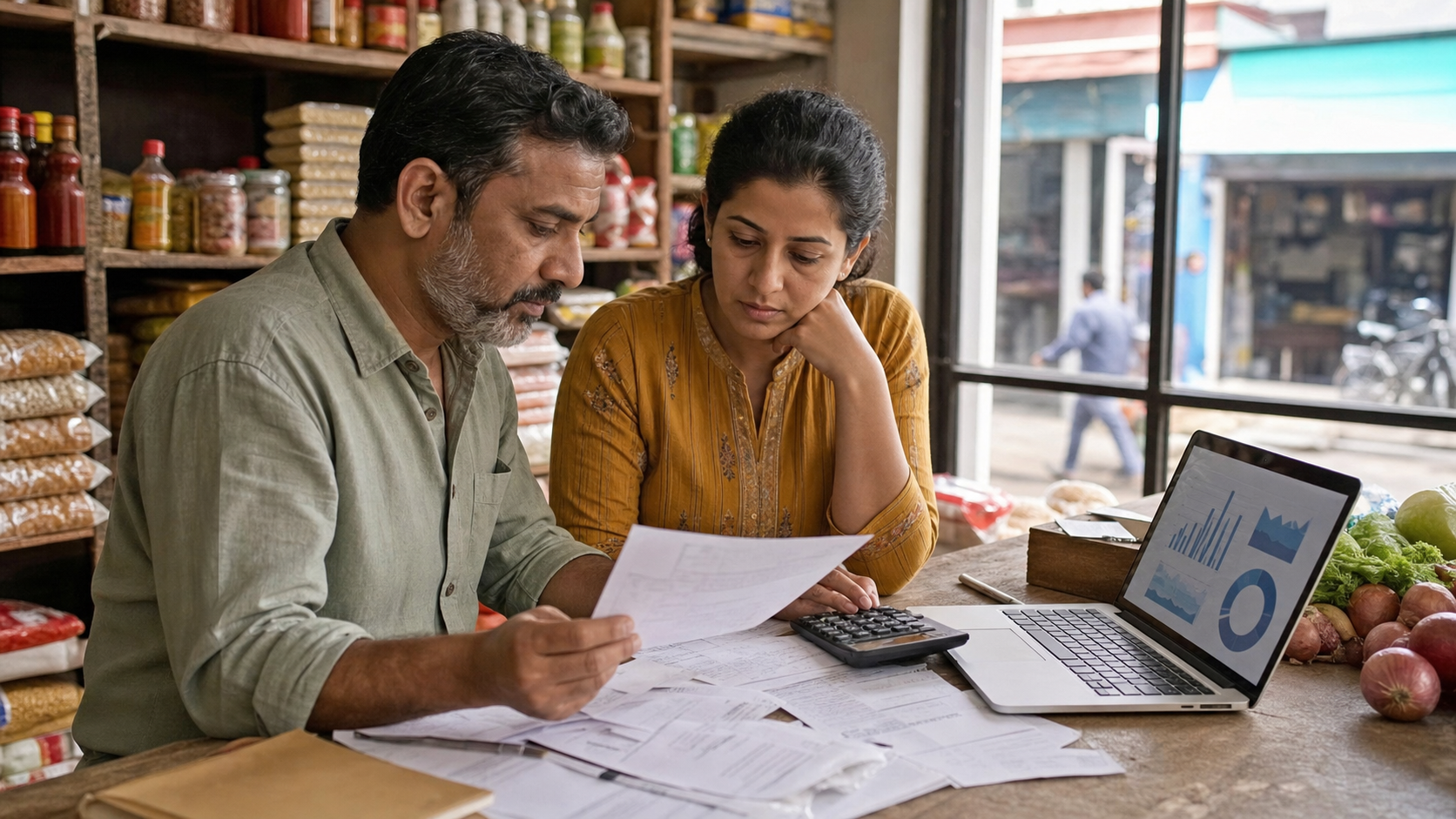
Two neighborhood shop operators recalculating costs with invoices and a laptop
A ONEPRESS economic image showing how a global forecast reaches household and small-business decisions.
  • Checked: 2026-07-14 02:10 KST
  • Basis: IMF July World Economic Outlook Update and the IEA-IMF-World Bank-WTO joint statement

The IMF figure of 3.0% is neither a declaration of collapse nor an all-clear. It projects global growth of 3.0% in 2026 and 3.4% in 2027. Growth is slower than last year as war and energy costs weigh on activity, while corporate earnings and AI investment provide part of the cushion.

The key is the assumption under the headline. The IMF assumes that the Strait of Hormuz begins reopening in mid-July and returns to prewar conditions by March 2027. Renewed clashes and blockade language on July 13 mean readers should track whether that assumption materializes rather than treating the forecast as fixed.

For households and small businesses, the combination of fuel, exchange rates, borrowing costs and import prices matters more than one global decimal. The report is best used as a map of transmission channels, not a retail price prediction.

What changed

  • Global growth is projected at 3.0% in 2026 and 3.4% in 2027.
  • The global economy has been more resilient than feared, but energy and trade risks remain.
  • Faster AI adoption is an upside, although gains may be concentrated.
  • The timing of Hormuz normalization is a central forecast assumption.

What to check now

  1. Households should separate transport, foreign-card spending and imported-food exposure when oil and currencies rise together.
  2. Borrowers should watch market rates and central-bank inflation responses, not the growth figure alone.
  3. Small businesses should identify whether materials, freight or currency is actually driving each cost increase.
  4. Investors should weigh AI growth potential against market concentration.

How to read this without overreacting

  • A global 3.0% rate does not describe every country or household.
  • The IMF outlook is a conditional scenario that can be revised.
  • Faster reopening is an upside risk; prolonged disruption is a downside risk.

Primary sources

Bottom line: The useful check is whether Hormuz, energy prices, interest rates and AI investment move as the IMF scenario assumes.