WORLD NEWS
A moth’s wings can smell: they are not just for flying
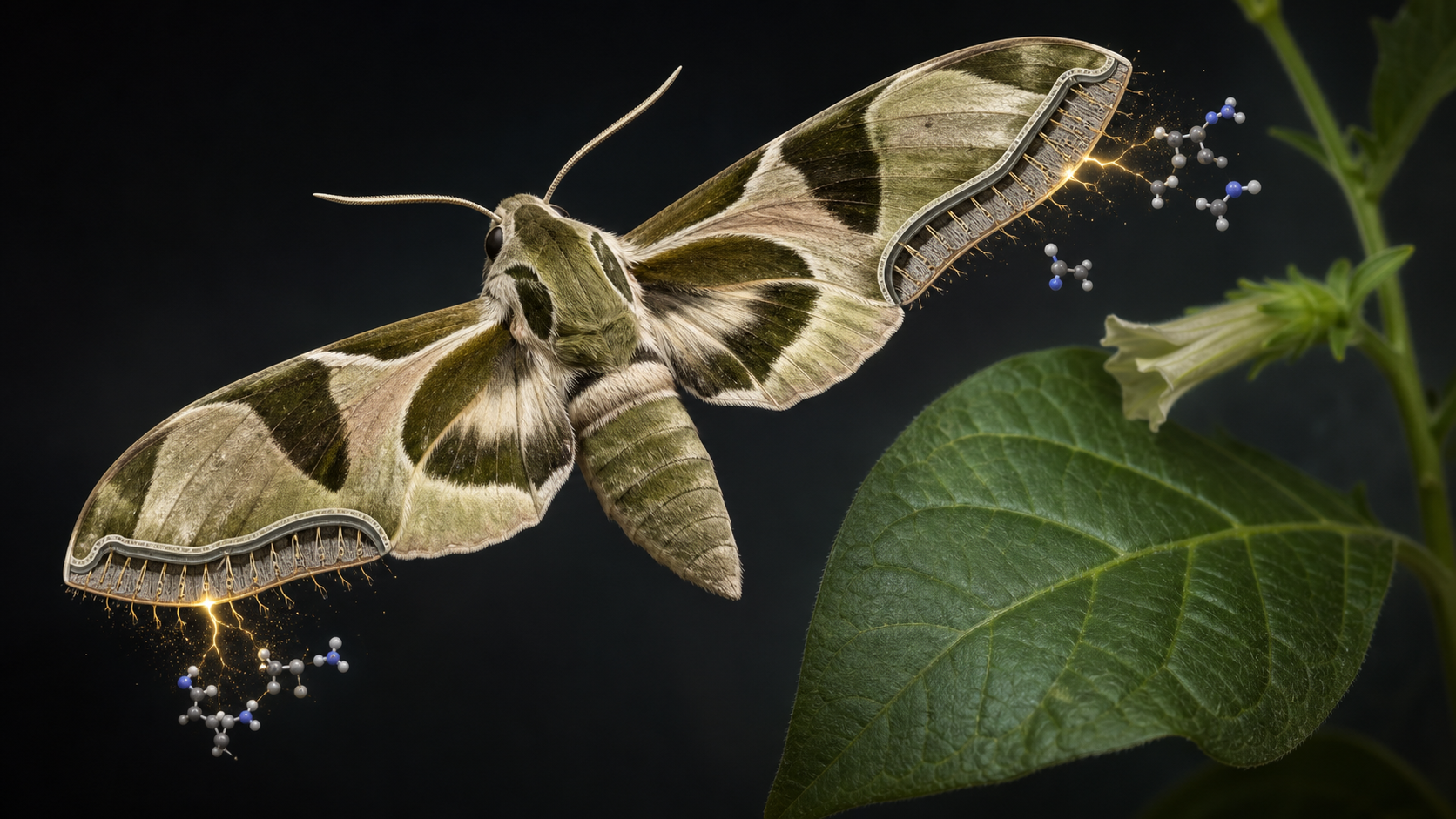
A tobacco hawkmoth’s wings are not just flight surfaces. Researchers recorded electrical responses when the wings encountered two volatile odours.
The study does not yet show that wing smell changes where the moth lays eggs, and it does not establish the same ability in every moth species.
Which smells did the wings detect?
The two chemicals were pyrrolidine and piperidine. Both are volatile amines, a class of compounds that can smell like rotting fish to people.
These compounds are associated with characteristic alkaloids in nightshade plants. Tobacco hawkmoths often choose plants from this family for laying eggs.
Is there really a nose on the wing edge?
Electron microscopy found an average of 21 to 32 sensory bristles along the margin of each wing. The bristles had tiny pores through which airborne molecules could enter.
The same structures also showed features used for sensing touch and movement. A bristle may therefore monitor airflow while also sampling chemicals.
How was the response tested?
The team blew several odours across isolated wings and recorded their electrical activity. Of the tested candidates, only pyrrolidine and piperidine produced clear responses.
The wing tissue also expressed genes used in taste and smell. Protein modelling then identified candidate receptors whose pockets could accommodate the two molecules.
Why smell with wings when antennae exist?
The antennae remain the moth’s main nose. The wings appear to be accessory sensors that collect extra information across a much larger body surface.
Plant odours detected by a wing might help a moth assess its surroundings before landing or laying eggs. That behavioural role remains a hypothesis.
What is confirmed, and what is not?
The pores, sensory genes and electrical responses to two odours are directly supported. The identity of the responsible receptor and a change in egg-laying choice have not been demonstrated.
The experiments involved one species, Manduca sexta. Other moths and butterflies need to be tested before this can be treated as a general feature of wings.
Official primary sources
Primary source: Journal of Experimental Biology original research
Primary source: The Company of Biologists official research release