WORLD NEWS
Two treatments made for two patients cut seizures by 26% and 90%
Two children with severe SCN2A-related developmental epileptic encephalopathy received antisense oligonucleotides designed separately for their own mutant gene copies. Seizure frequency fell 26% and 90% over two years.
One patient walked independently for the first time at age 15, but the evidence comes from only two uncontrolled n-of-1 studies and cannot be treated as a general cure.
The same diagnosis, but different medicines
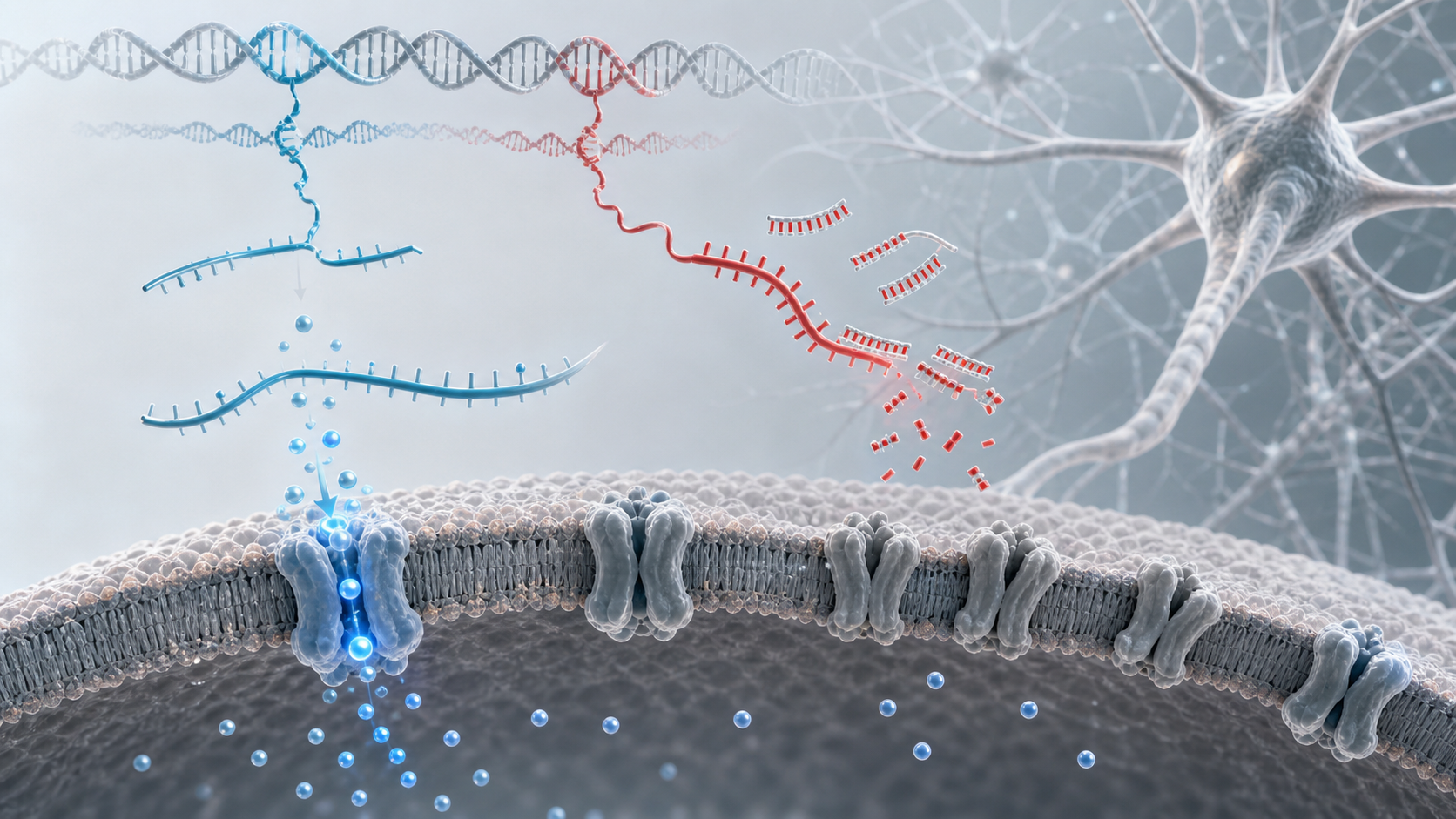
SCN2A disease can arise when a mutation in one gene copy makes neuronal sodium channels abnormally excitable. The researchers designed each ASO to recognize a harmless nearby genetic marker carried with that patient’s mutant copy while sparing the normal copy.
The spinal-fluid treatment does not permanently edit DNA. It reduces production from the mutant copy and had to be repeated every two to three months.
What changed in the two n-of-1 studies
The patients were 9 and 14 when treatment began. Seizure frequency fell 26% and 90%, and both reduced or stopped some antiseizure medicines.
The team also reported gains in language, motor function, sensory processing, and adaptive behavior. No ASO-related serious adverse events were reported.
Rare-disease drug development moved to the individual
Instead of making one medicine for everyone with a diagnosis, this model designs and tests a product around one person’s genome. It could create a path for mutations too rare for a conventional large trial.
A separate infant cohort suggested about 16% carried nearby markers compatible with this design strategy. That is a possible route to scaling, not evidence that it already fits every SCN2A patient.
Why the result cannot be generalized
Each child served as his own pre-treatment comparison, with no randomization or control group. Changes in development cannot be fully separated from fewer seizures, medicine adjustments, and growth, and long-term safety still needs follow-up.
The study shows that individualized treatment can produce measurable clinical change. It does not establish a widely available standard therapy.
What to watch next
The next tests are whether seizure and developmental gains persist, whether repeated intrathecal dosing remains safe over longer periods, and how quickly the same design method can be extended to more genetic diseases.
Official Primary Sources
Nature Medicine / PubMed original study
Rady Children’s Institute for Genomic Medicine study release