WORLD NEWS
A 13,800-year-old Alaska camp reveals cooking, sewing and settling in
Tools, hearths and possible dwelling traces at an Alaska camp about 13,800 years old offer a detailed view of early residents’ lives.
This does not date humanity’s first arrival in the Americas, and interpretations of the shelter and possible domestic dogs remain uncertain.
Three layers are not one continuous household
The University of Kansas describes three archaeological components at Shég’ Xdaltth’i’, dating to about 13,800, 13,000 and 12,700 years ago. These figures are not population counts or the duration of one family’s stay. The study examines tools, animal remains and activity areas in the oldest component to understand how people settled into this environment.
A complete house did not survive
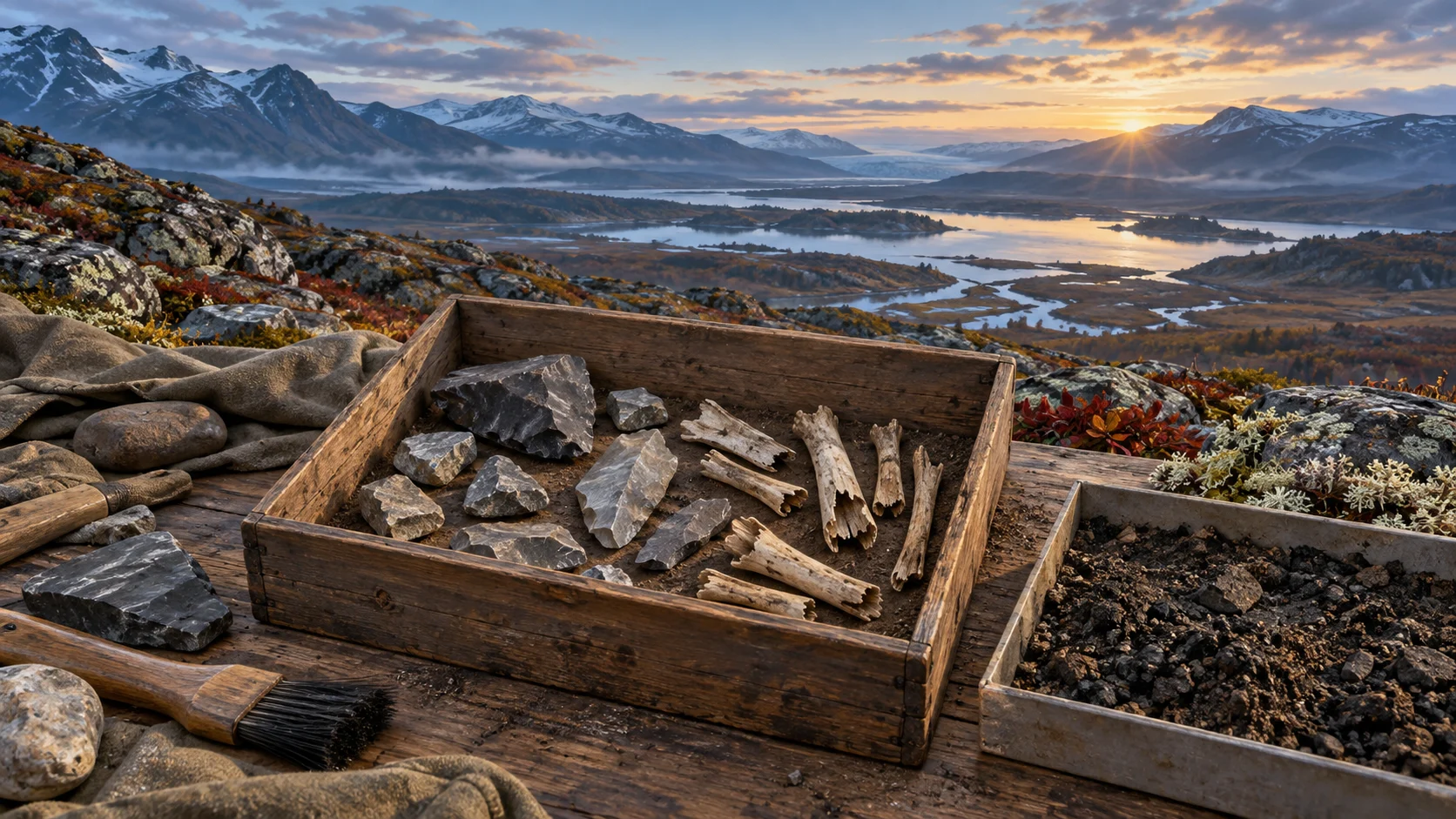
A hearth, small pit and soil discoloration from a possible post support a potential habitation structure. They are not an intact building. The university reports more than 80,000 archaeological specimens across excavations, not 80,000 finished tools or items all belonging to the oldest layer. Fragmentary bone needles offer clues to making and repairing clothing.
Similar tools do not prove lifetime round trips
Diamond-shaped bifacial stone tools suggest cultural links with similarly dated material across the Bering Land Bridge. They do not establish that one person crossed both ways during a lifetime. Wolf-like animal bones raise the possibility of dog keeping without proving domestication. Artifact form and a reconstructed travel route are different levels of inference.
Daily life matters more than a superlative
The October 14 university account was checked against Live Science’s October 16 email interview with the researcher and its discussion of a non-participating Wyoming specialist’s perspective. This is independent reporting, not another excavation. Access restrictions prevented review of the full original paper. Older Beringian sites exist; further excavations, dating and animal analyses remain the next checks.
Primary sources and independent checks
Research institution: three components, total excavation specimens and activity traces. Full paper not reviewed because of access restrictions; institutional account is not a substitute for full-text review: University of Kansas — Jon Niccum, 14/10/2026
Original researcher email interview and external Spencer Pelton perspective; independent reporting, not a new excavation. Uses qualified potential/possible scope rather than headline superlative: Live Science — Kristina Killgrove, 16/10/2026
Read in other languages
한국어 · English · Español · 日本語 · Tiếng Việt