WORLD NEWS
Remote footage adds a new view of bat-hunting crocodiles in Gabon’s caves
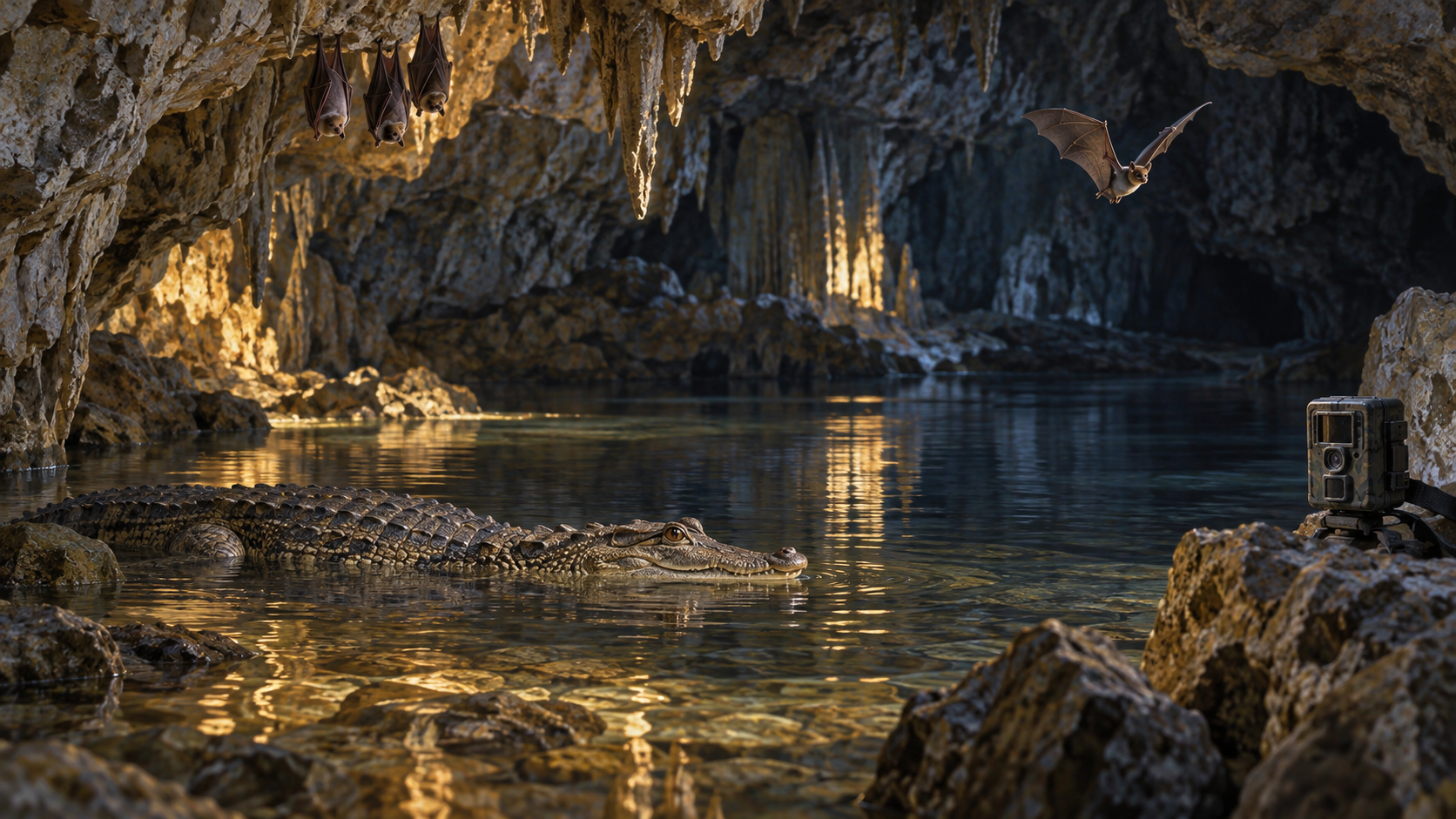
New documentary footage shows dwarf crocodiles catching bats in Gabon’s Abanda caves.
Earlier research already identified bats as prey; the new contribution is footage that helps examine how the animals capture them.
Known prey, difficult observations
National Geographic published researcher Matt Shirley’s account and an accompanying video guide. Live Science independently interviewed him about the filming in its October 1 report. Africa: Earth’s Wild Home began airing on October 2, and Japanese coverage revisited the footage on October 6. The independent report describes the remote footage as the first filmed view of capture. That does not mean the crocodiles have only now started eating bats.
Why an absent observer matters
Shirley explains that crocodiles do not readily display their normal hunting behavior with people nearby in the caves. Remote cameras can reduce the effect of the observer’s presence. Diet analysis had previously established that the reptiles ate bats; footage addresses a different question by showing aspects of approach and capture. A list of food items and a description of hunting behavior provide different kinds of evidence.
Cave adaptation is not a new-species announcement
The cave environment differs sharply from forest wetlands. The producer’s account also discusses genetic separation from nearby forest populations. The checked sources do not establish a formal recognition of these cave animals as a new species. Explanations connecting unusual skin coloration to the cave environment should likewise not be enlarged into a complete, experimentally settled mechanism. The story concerns ecological behavior rather than an exotic new taxonomic claim.
What a scene cannot establish
The released scenes cannot establish hunting frequency throughout the cave system or the behavior of every individual. Comparisons require filming duration, observation counts and differences among animals. Follow the researchers’ behavioral analyses and conservation records next. Links connect the producer’s account, independent interview and earlier diet study published online in 2016. We did not verify the entire older paper, and this article provides no instructions for entering caves or approaching wildlife.
Primary source and independent checks
Primary source and official explanation: National Geographic
Primary source and official explanation: African Journal of Ecology
Independent reporting check: Live Science
Read in other languages
한국어 · English · Español · 日本語 · Tiếng Việt