WORLD NEWS
A wild-rice gene restored root microbes and improved nitrogen-use traits in cultivated rice
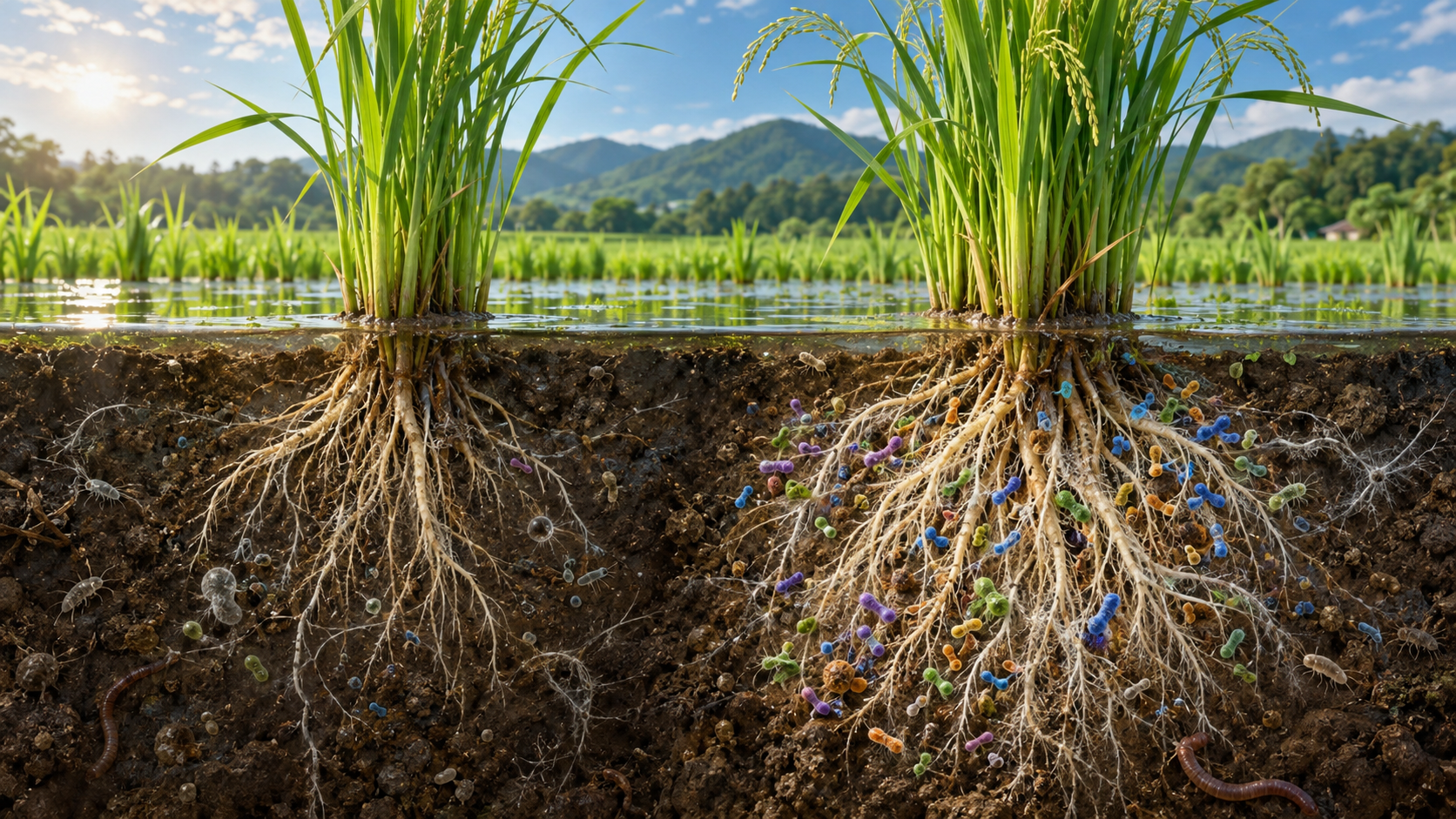
Experiments show that a wild-rice gene can help cultivated rice recover beneficial root microbes reduced during domestication.
From 113 candidates, researchers selected the receptor-like kinase gene OsRLK and tested it with knockouts, overexpression lines and a synthetic microbial community.
How candidates were found
Two recombinant inbred populations from wild rice crossed with japonica and indica rice were compared in fields. Rhizosphere profiles, quantitative-trait loci, genomes from 382 accessions and expression data narrowed the genes linked to ancestral microbes.
Which microbes changed
OsRLK was strongly associated with Acinetobacter linked to nitrogen uptake. When overexpression and knockout plants received the same synthetic community, root-community composition and nitrogen-related responses shifted with the gene.
What field trials showed
Overexpression lines improved yield-related traits under field conditions. One setting and genetic background cannot guarantee the same yield everywhere. Acinetobacter species and strains also differ, so a genus name alone does not prove a benefit.
What comes next
Breeding tests must show stable microbial recruitment across soils and quantify any real fertilizer reduction. Non-target microbes, greenhouse-gas effects, long-term yield and biosafety also need testing before commercial claims are justified.
Primary source and independent checks
Primary paper: Nature Microbiology 원 논문
Institutional or data check: NIOO 야생벼 미생물 연구 설명
Independent or context check: 중국과학원 식물연구소 질소 이용 연구 맥락
Read in other languages
한국어 · English · Español · 日本語 · Tiếng Việt