WORLD NEWS
Coast redwood photosynthesis slowed above 86°F
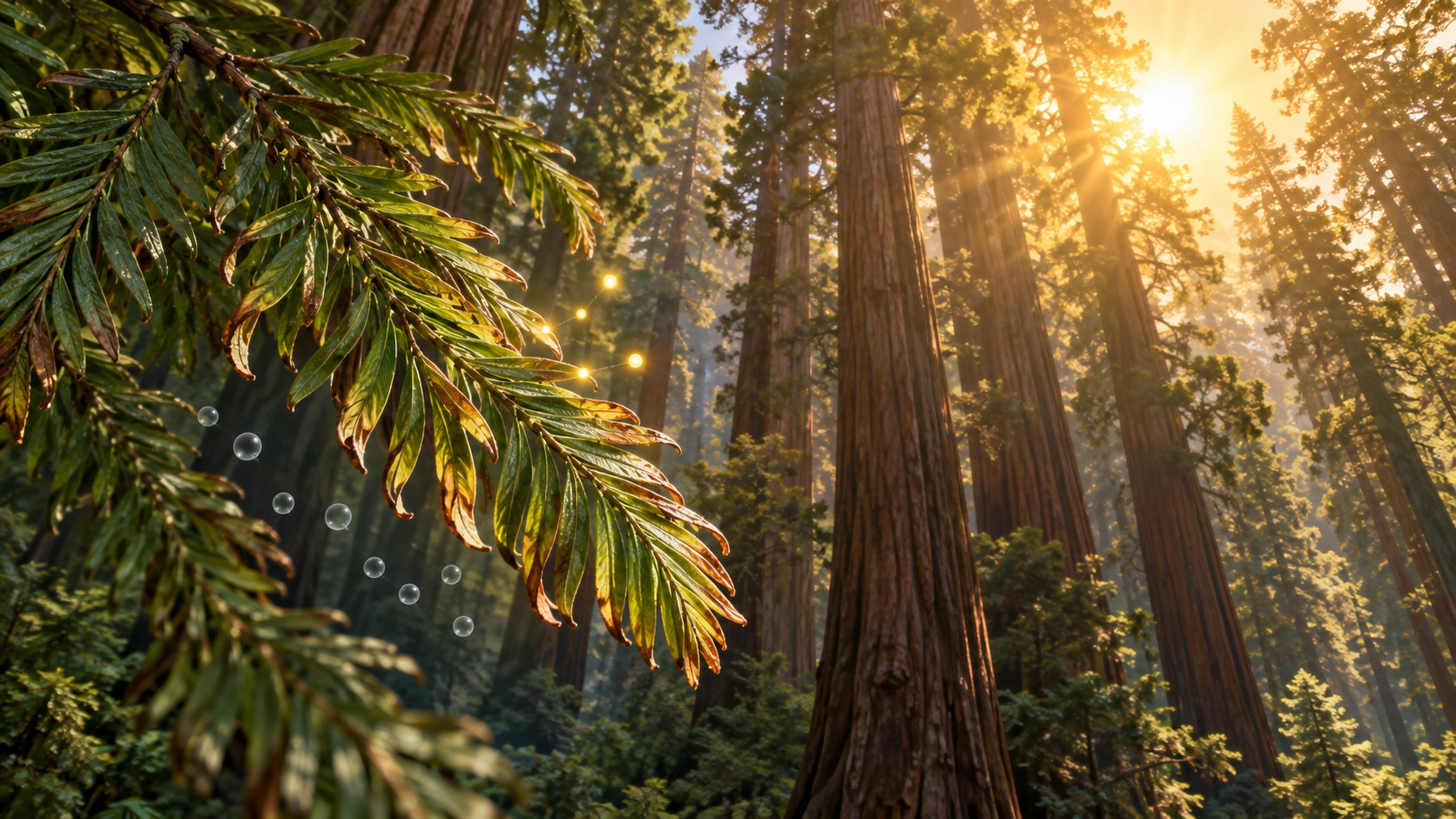
Coast redwoods, the world’s tallest trees, failed to cool some leaves adequately during hot conditions and slowed photosynthesis.
The evidence comes from three summers in one California forest plus leaf experiments. It does not calculate when the species dies or represent every habitat.
How it was measured
Researchers tracked leaf temperature and photosynthesis-related signals over three summers, including 2022 and 2024, in Mendocino County. In the laboratory they exposed leaves to temperatures up to 110°F to test whether performance declined even when carbon dioxide remained available.
Would more water solve it
On days above 86°F, some leaves were almost 20°F warmer than the air. Stomata can close and restrict carbon dioxide, yet laboratory tests also found reduced photochemistry and net photosynthesis while stomata remained open. Heat stress was therefore not only a water-supply issue.
Where the warning is strongest
Coast redwoods are adapted to cool coastal conditions averaging about 59°F. Trees at the already warmer, drier central, southern and eastern edges of the range may face greater disruption during heatwaves. The study did not directly measure long-term population loss.
Questions still open
Researchers do not yet know recovery time, the accumulated effect of repeated heatwaves on growth and reproduction, or the upper temperature for survival. Long-term comparisons across sites and tree ages are needed before setting management thresholds.
Primary source and independent checks
Primary source: JGR Biogeosciences 원 논문
Institutional explanation: UC Davis 연구 설명
Independent check: EurekAlert 서지·연구 범위 확인
Read in other languages
한국어 · English · Español · 日本語 · Tiếng Việt