WORLD NEWS
More than 1,000 photos still missed them: two Australian stick insects named as new species
A study released on 21 September split what Australia had treated as two Anchiale species into five.
The newly named species are Anchiale robusta and Anchiale mabiensis; this is a taxonomic reassessment of old specimens and observations, not a sudden rise in insect numbers.
How did they stay hidden?
The team combined DNA, museum collections, field surveys, captive populations and more than 1,000 citizen-science observations. A. robusta was familiar to enthusiasts but had carried another species name.
What is distinctive?
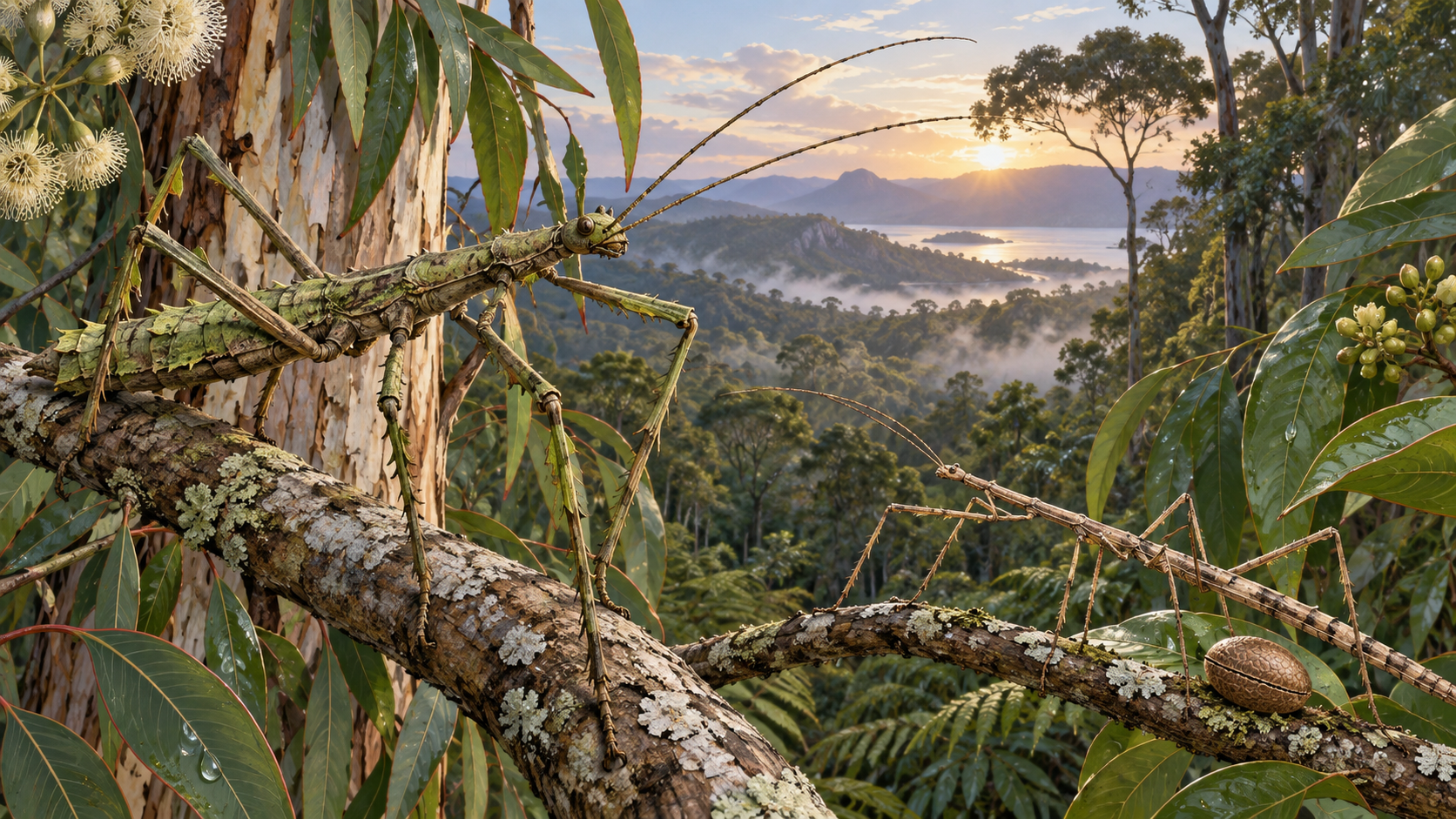
Female A. robusta are about 12–16 cm long. A. mabiensis lives in Queensland’s critically endangered Mabi rainforest and has an unusual egg lid that detaches at hatching.
Why does renaming matter?
A range once assigned to two widespread species is now divided among five species with smaller distributions. Conservation and forestry or agricultural management therefore need species-level reassessment.
What remains unknown?
A further Cape York candidate lacks enough specimens. The revision is a scientific classification based on morphology and genetics; population size and threat status still require field surveys.
Primary source and independent checks
Read in other languages
한국어 · English · Español · 日本語 · Tiếng Việt