WORLD NEWS
Voyager 1 set to reach one light-day from Earth on November 18
NASA says Voyager 1 is expected to reach a distance of one light-day from Earth on November 18, 2026.
Light or radio waves need 24 hours for a one-way journey across that distance; as of November 15, the milestone is still ahead.
How far is a light-day?
A light-day is the distance light travels through a vacuum in one day. NASA’s figure of about 25.9 billion kilometers measures the separation between Earth and the spacecraft, not how far the probe travels each day. It is also different from a light-year, which is the distance light covers in a year.
Why would a reply take two days?
Radio waves travel at the speed of light too. At this distance a command needs about a day to arrive, and a signal sent back needs roughly another day. That is about 48 hours of round-trip travel alone, rather than a guaranteed response time including onboard work and processing.
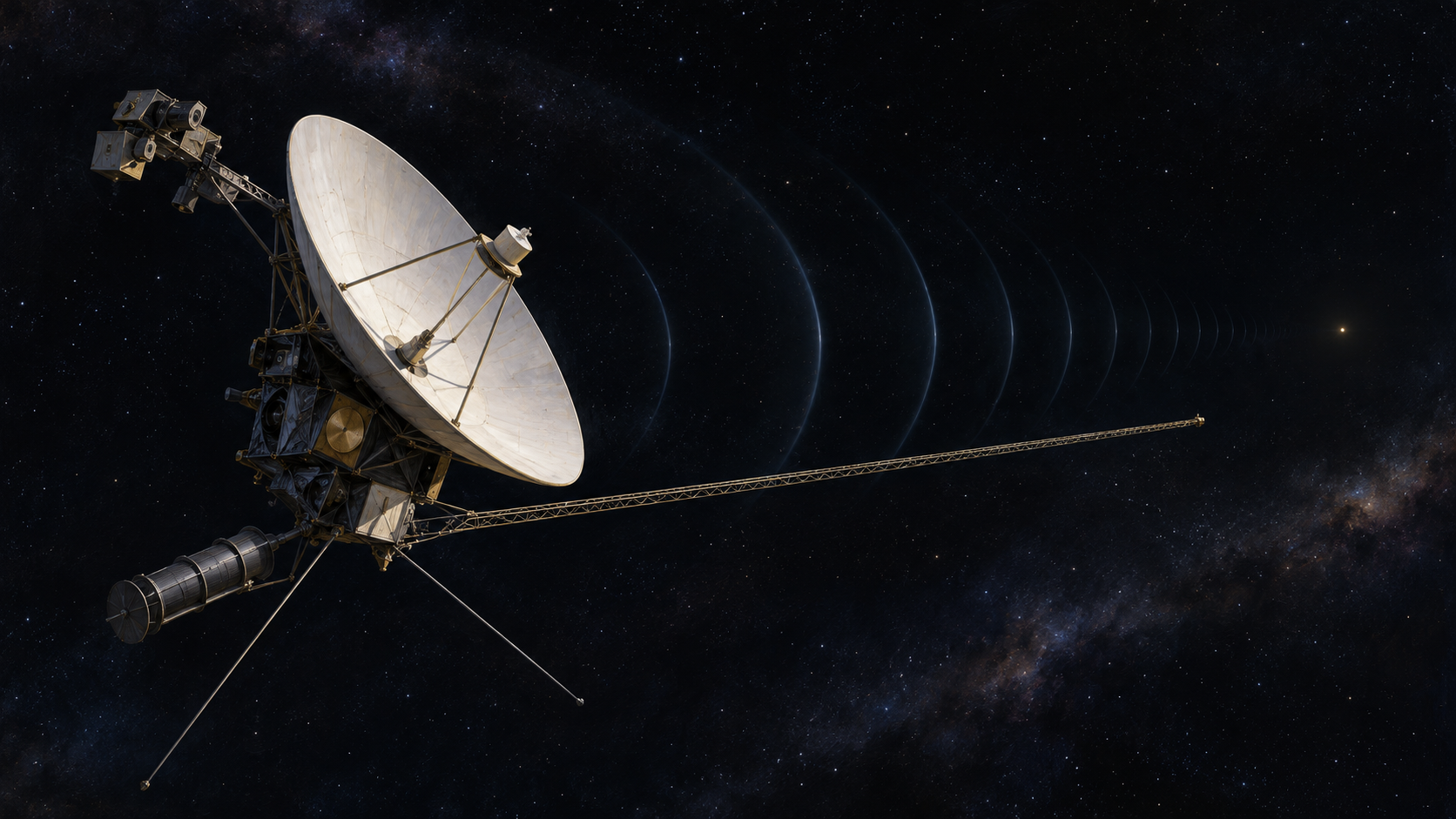
What a spacecraft launched in 1977 still tells us
Voyager 1 launched in 1977 and entered interstellar space in 2012, beyond the bubble of particles and magnetic fields created by the Sun. The new distance milestone is distinct from crossing that boundary. NASA says both Voyagers observe the environment outside it; AP independently interviewed the project manager about the challenges of keeping them running.
The celebration and the crossing have different dates
NASA’s flashing-light celebration takes place after local sunset on November 17. The distance milestone is expected on November 18, while the mission discussion is scheduled for noon US Eastern Standard Time on November 19, or 2 a.m. November 20 in Korea. The distance record does not establish how much longer the probe will operate; NASA’s mission updates and event notice provide the next checks.
Primary sources and independent checks
NASA primary notice: expected date, distance, events and interstellar space: NASA / JPL
Independent AP check: direct manager interview and one-way radio time: AP / CityNews