WORLD NEWS
A one-tonne Iron Age cache from the Danube held enough iron for about 500 swords
Rusty objects recovered near Deinham on Austria’s Danube have been identified as at least 500 iron semi-products traded roughly 2,200 years ago.
They weigh more than one tonne—enough iron for about 500 swords—but a lost boat cargo and its origin and destination remain interpretations rather than direct observations.
What was counted
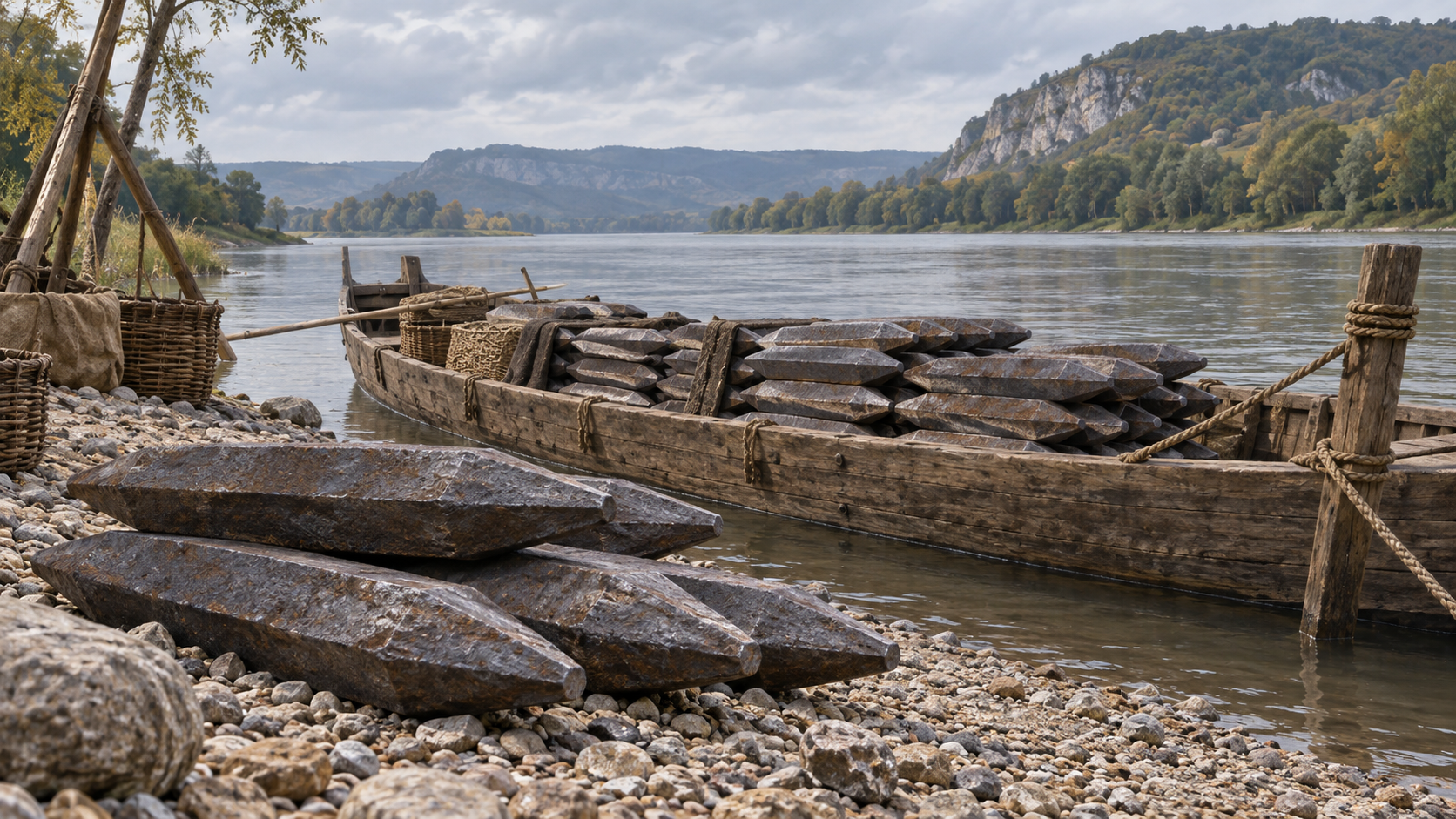
Researchers separated 193 complete bars and 307 fragments, establishing a minimum of 500 bipyramidal semi-products. Complete pieces averaged about 28.5 centimetres and 2 kilograms. Radiocarbon evidence and typology place the group in the third to second centuries BCE, during the La Tène period.
Why compare it with 500 swords
The assemblage weighs more than one tonne. Using roughly 1.5–2 kilograms of iron per sword, the team estimates that even allowing for manufacturing loss it could supply about 500. That does not mean every bar became a weapon: tools, fittings and thousands of nails were other possible uses.
What makes the cargo unusual
These were not finished goods but standardized intermediate forms that smiths could reheat and turn into many objects. Finding so many together is rare physical evidence that late Iron Age production, inland shipping and large transactions were connected along the Danube.
Discovery also removed context
Industrial gravel extraction exposed the objects in 2019. Reporting saved them for a public museum collection, but the bucket excavator disturbed their original layer and arrangement. No hull or companion cargo was documented in place, limiting what can be said about the loss event.
Is a shipwreck certain
The concentration beside a major transport route led the authors to propose a sunken cargo. A Bavarian production area is possible, but the exact workshop, traders and destination are unknown. What is established is the number, mass, approximate date and status as the largest known European Iron Age bar assemblage.
What could settle the open questions
Comparing chemistry and microstructure with iron from candidate production centres could narrow the source. More riverbed evidence could strengthen or weaken the shipwreck explanation. The cache demonstrates capacity for a large shipment; it does not measure Europe’s total annual iron output.
Primary source and independent checks
Primary paper: Antiquity paper
Research-institution explanation: University of Innsbruck research release
Independent scholarly coverage: Nature Research Highlight
Read in other languages
한국어 · English · Español · 日本語 · Tiếng Việt