WORLD NEWS
Positive and negative Indian Ocean Dipole phases did not change coastal phytoplankton equally
The 17 September 2026 study links the asymmetry to Kelvin waves that alter the thermocline, mixing and nutrients, with underwater topography amplifying local responses.
The two phases are not mirror images: an already nutrient-poor baseline can limit how much further biomass declines.
Evidence
Field observations, remote sensing and model products covered surface and subsurface biomass along a broad eastern coastline.
Positive phase
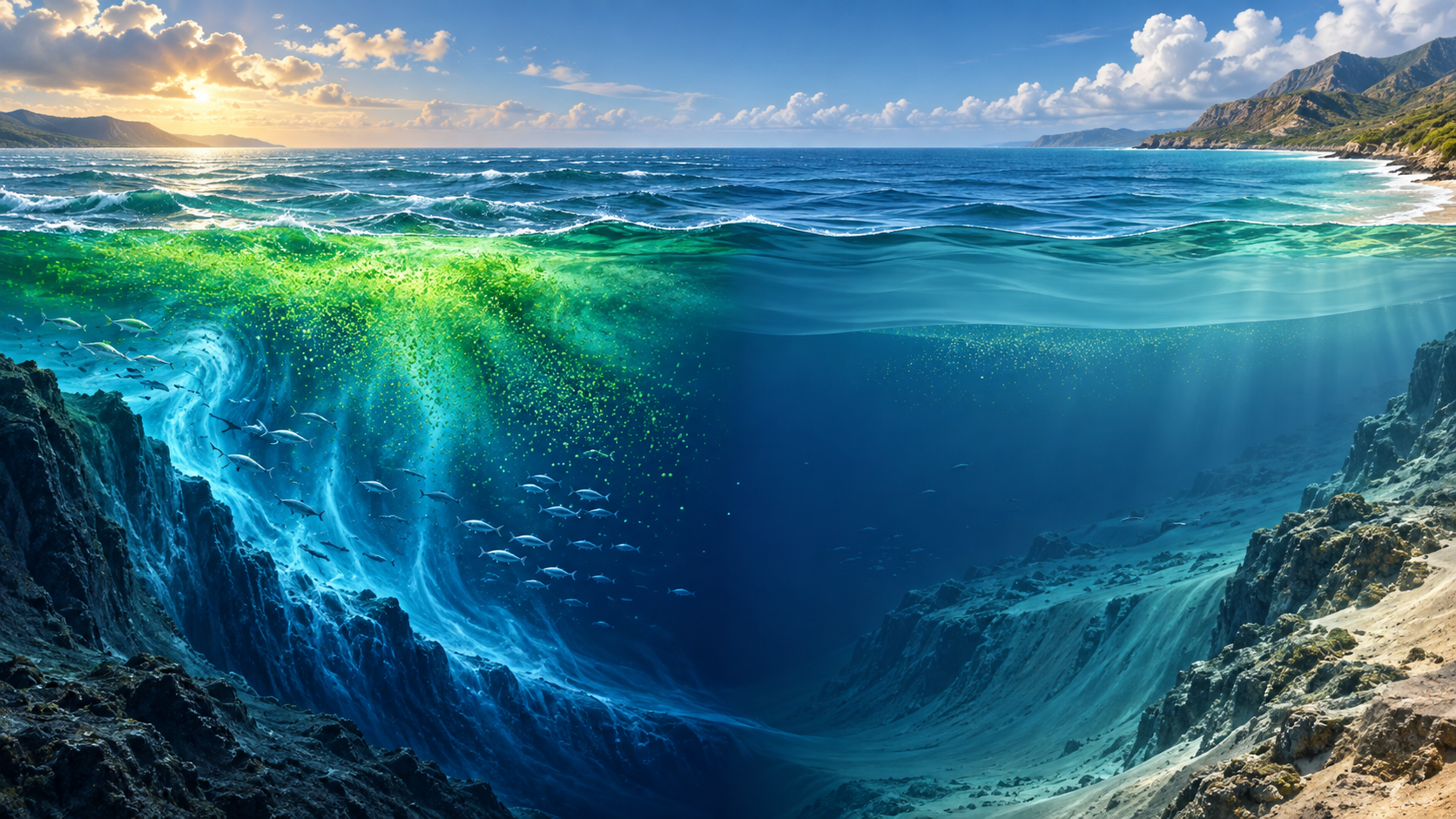
Easterly wind anomalies generate upwelling Kelvin waves, shoaling the thermocline and bringing nutrients toward the sunlit layer.
Negative phase
Downwelling waves deepen nutrients, but oligotrophic waters have a constrained baseline, producing a smaller response.
Limits
Biomass change is not the same percentage change in fish catch or carbon uptake. Species, food webs, seasons and topography matter.
Next check
More floats and cruises must measure nutrients and community composition and test whether IOD forecasts improve ecological prediction.
Primary source and independent checks
Columbia Climate School 관련 현장 연구
Read in other languages
한국어 · English · Español · 日本語 · Tiếng Việt