WORLD NEWS
Canada has warmed nearly twice as fast as the globe since 1970
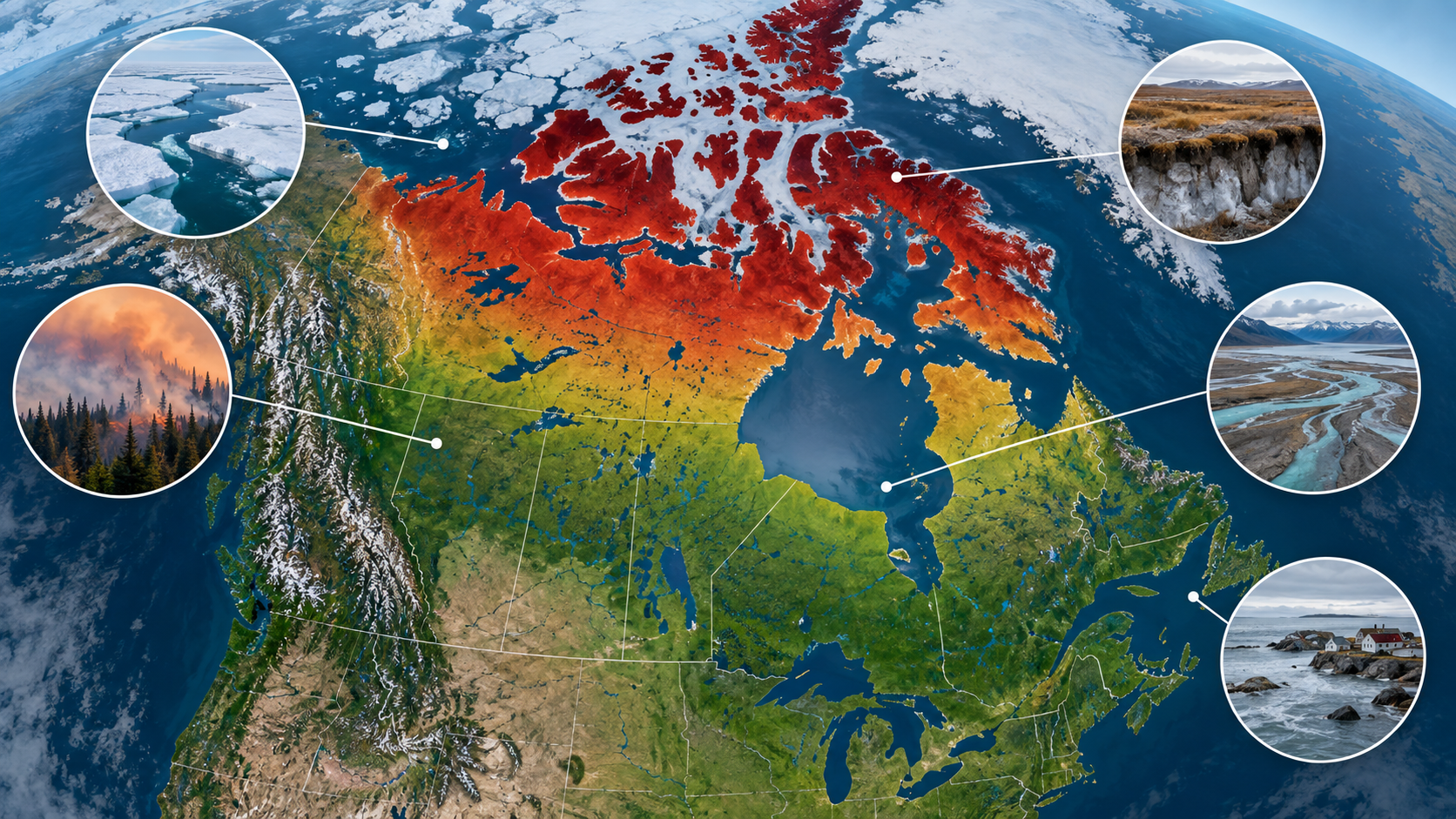
The assessment, reviewed by more than 100 experts, connects rapid warming with changes in ice, water and extremes. Canada’s trend since 1970 was nearly twice the global rate and its Arctic three times.
Those multipliers compare long-term trend slopes, not a single year, city, impact or weather event.
Observed change
Canada warmed 2.0°C since 1948 and northern Canada 2.6°C. The 2015–2024 mean was assessed at 2.2°C above pre-industrial conditions.
Why north is faster
Loss of bright snow and ice increases absorbed sunlight, while atmospheric and ocean feedbacks amplify high-latitude warming.
Connected changes
More extreme heat, less extreme cold, longer growing and fire seasons, earlier peak flows, shorter snow and ice seasons, glacier loss, thawing permafrost, warmer oceans and sea-level rise were assessed together.
Future
About 1°C further national annual warming is expected for 2021–2040. Late-century outcomes depend strongly on global emissions; some sea-level, glacier and permafrost change continues after surface temperatures stabilize.
Next check
Use the detailed regional and seasonal chapters, confidence levels and emissions scenario rather than applying the national average locally.
Primary source and independent checks
Read in other languages
한국어 · English · Español · 日本語 · Tiếng Việt