WORLD NEWS
A giant Andean volcanic sheet preserved the outline of a 21.9-million-year-old landscape
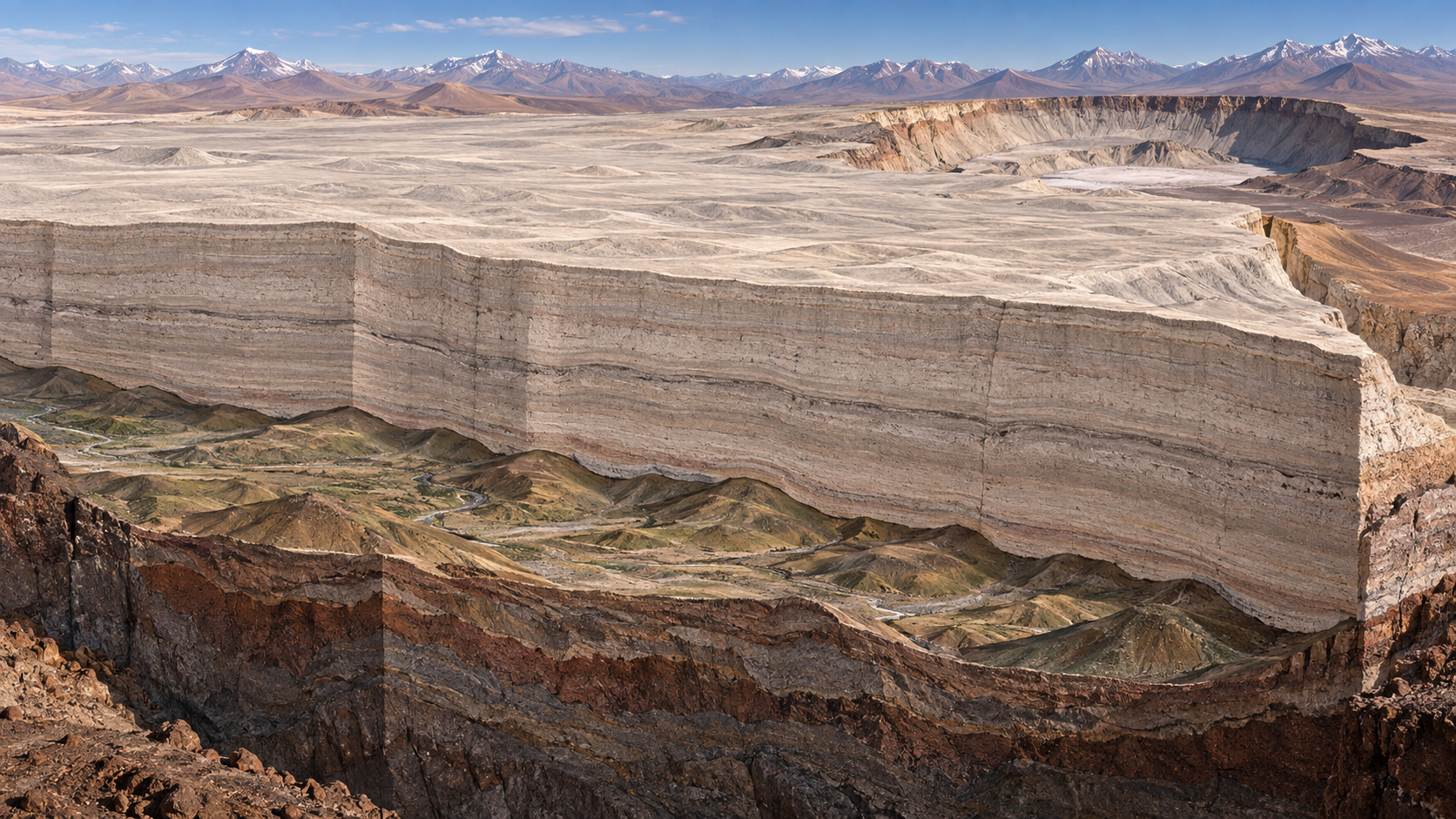
An eruption from the Lauca Caldera about 21.9 million years ago covered a huge region with ignimbrite up to 1 km thick. Its present shape let researchers infer the landscape below and a long-term uplift limit.
“Pompeii of the Andes” is an analogy for preservation. The result comes from river-and-uplift modelling, not direct images of a buried city or ecosystem.
Scale
The deposit covers about six times Santiago’s area and nearly three times Greater London, shielding underlying relief from later erosion.
Method
Hundreds of candidate landscapes were generated by varying river incision and uplift. Only relatively low-relief foothills could fit beneath the observed sheet.
Rate
The compatible terrain limited rock uplift to 0.26 km per million years, about 2.5 cm per century. This is a long-term upper bound, not uniform GPS motion.
Importance
The result supports slow, steady central-Andes growth over a sudden rise in only the last 6–10 million years, but it cannot settle every region or time interval.
Next
Apply the method to other giant deposits and compare with drilling, geophysics and mineral cooling records to test assumptions.
Primary source and independent checks
Read in other languages
한국어 · English · Español · 日本語 · Tiếng Việt