WORLD NEWS
Seattle coyote density was nine times higher than in Washington wildlands
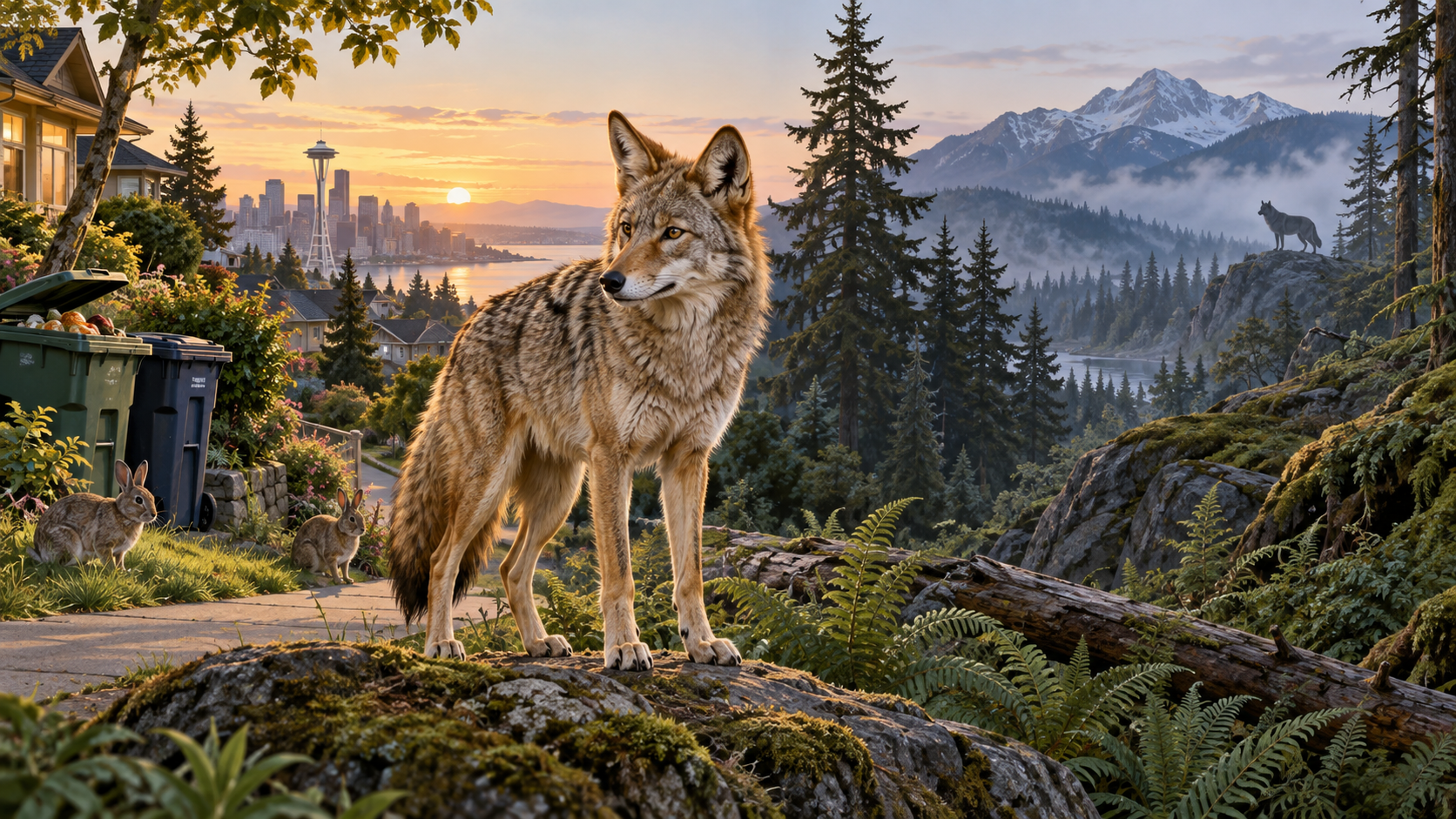
A genetic survey of scat estimated coyote density in Seattle at about nine times that of two more natural Washington study areas. The result challenges the simple idea that cities are always worse habitat for wildlife.
Researchers did not conduct a citywide head count. The estimate comes from repeated detections along sampled routes, so it applies to the sites and model used.
What was measured?
The team genotyped 842 scat samples and identified 213 coyotes, then used spatial capture–recapture modelling.
Why might cities help?
Large predators and hunting are scarcer, while urban diets were more than twice as diverse. Rabbit abundance remains an untested explanation.
A scale warning
Within Seattle, density declined as human density rose; across the broader city–wild comparison, Seattle was higher. Those are different comparisons.
Safety meaning
Coyotes usually avoid people but can become food-conditioned. Secure waste and pet food and never feed wildlife; density alone does not show attacks are rising.
What is unknown?
Long-term population change and the city’s carrying limit remain uncertain. Repeated DNA surveys could test the trend.
Primary source and independent checks
Environmental Research: Ecology 원 논문
Read in other languages
한국어 · English · Español · 日本語 · Tiếng Việt