WORLD NEWS
Teeth and an arm bone reveal a 100,000-year Denisovan record in Yunnan
Ancient proteins from teeth, skull fragments and an arm bone in Bianfu Cave, Yunnan, link the fossils to Denisovans. Fossils date to about 167,000–134,000 years ago, while cultural layers span roughly 190,000–70,000 years ago.
The long range records repeated use, not continuous residence by the same community. Fossils do not directly identify every end of the cultural sequence.
Identification
Researchers screened bone collagen, then compared protein sequences from two teeth and three bones. All carried a Denisovan diagnostic marker.
Food and tools
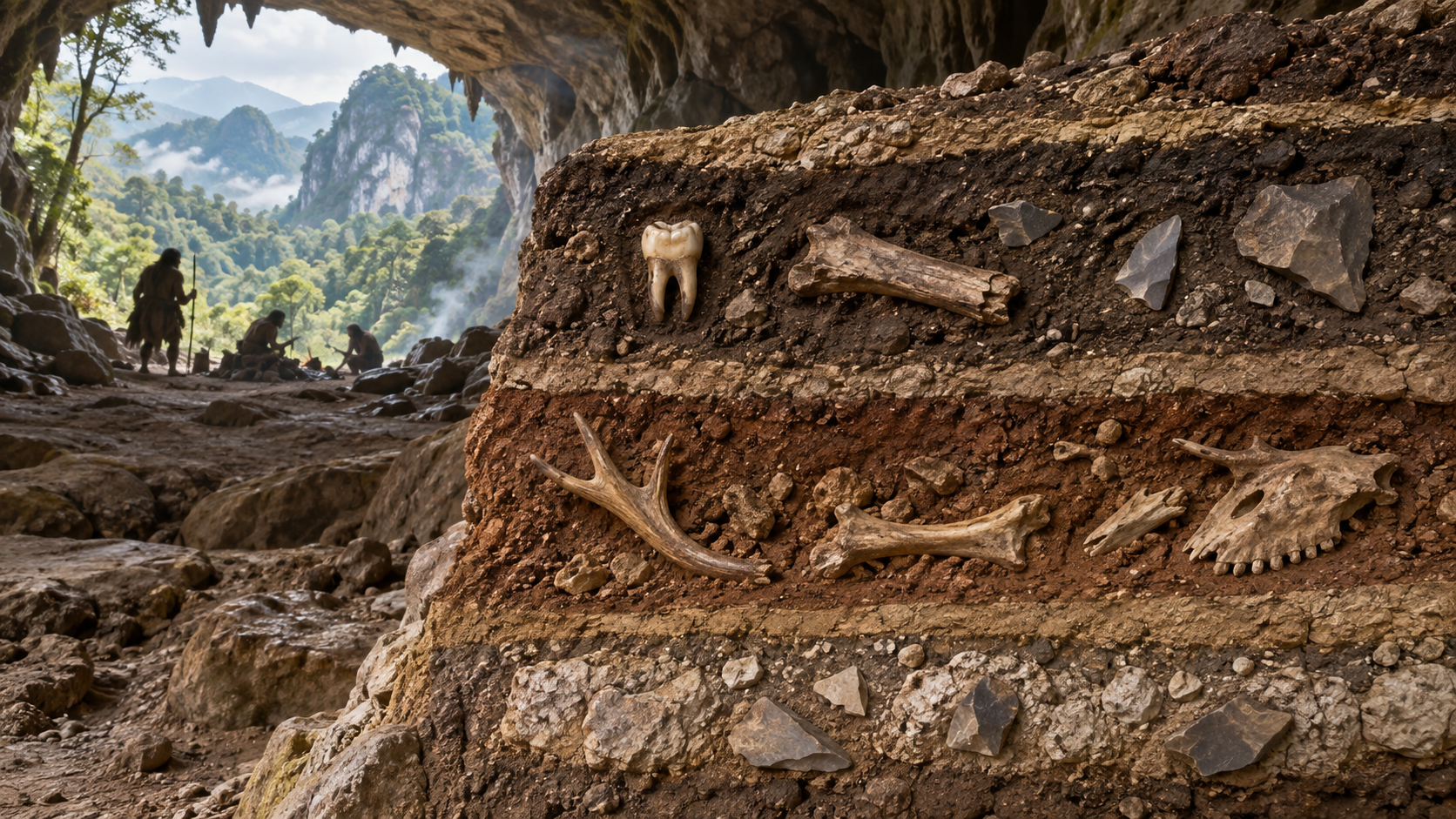
About 1,400 stone artefacts and more than 64,000 mammal bones were recovered. Cut and impact marks indicate hunting and processing medium-to-large deer and bovids.
Technology
Quickly made local-stone flakes and widespread use of unmodified bone may reflect efficient use of available materials, not low ability.
New anatomy
The finds include the only known Denisovan radius fragment. Without a complete skeleton, body size and movement remain uncertain.
Next evidence
Ancient DNA and more long bones are needed, especially in Yunnan’s transition zone between East and Southeast Asia.
Primary source and independent checks
Read in other languages
한국어 · English · Español · 日本語 · Tiếng Việt