WORLD NEWS
A cell model reproduced VEXAS severity differences, nominating RIPK3 and RNASE1
Researchers reproduced differences in inflammation and cell death between acquired UBA1 mutation types in VEXAS syndrome using patient blood and a new human-monocyte model. RIPK3 signalling and blood RNASE1 tracked with severity.
This does not show that a RIPK3 inhibitor treats patients. Inhibition mainly reduced pathological features in cells, while RNASE1 remains a biomarker candidate requiring independent validation.
What is VEXAS?
A rare disease, usually in older men, caused by acquired UBA1 mutations in blood-forming cells, producing systemic inflammation and marrow problems.
What was compared?
The team analysed deep data from 79 patients and mutation-specific expression, then introduced variants into human monocytes to test whether differences reappeared.
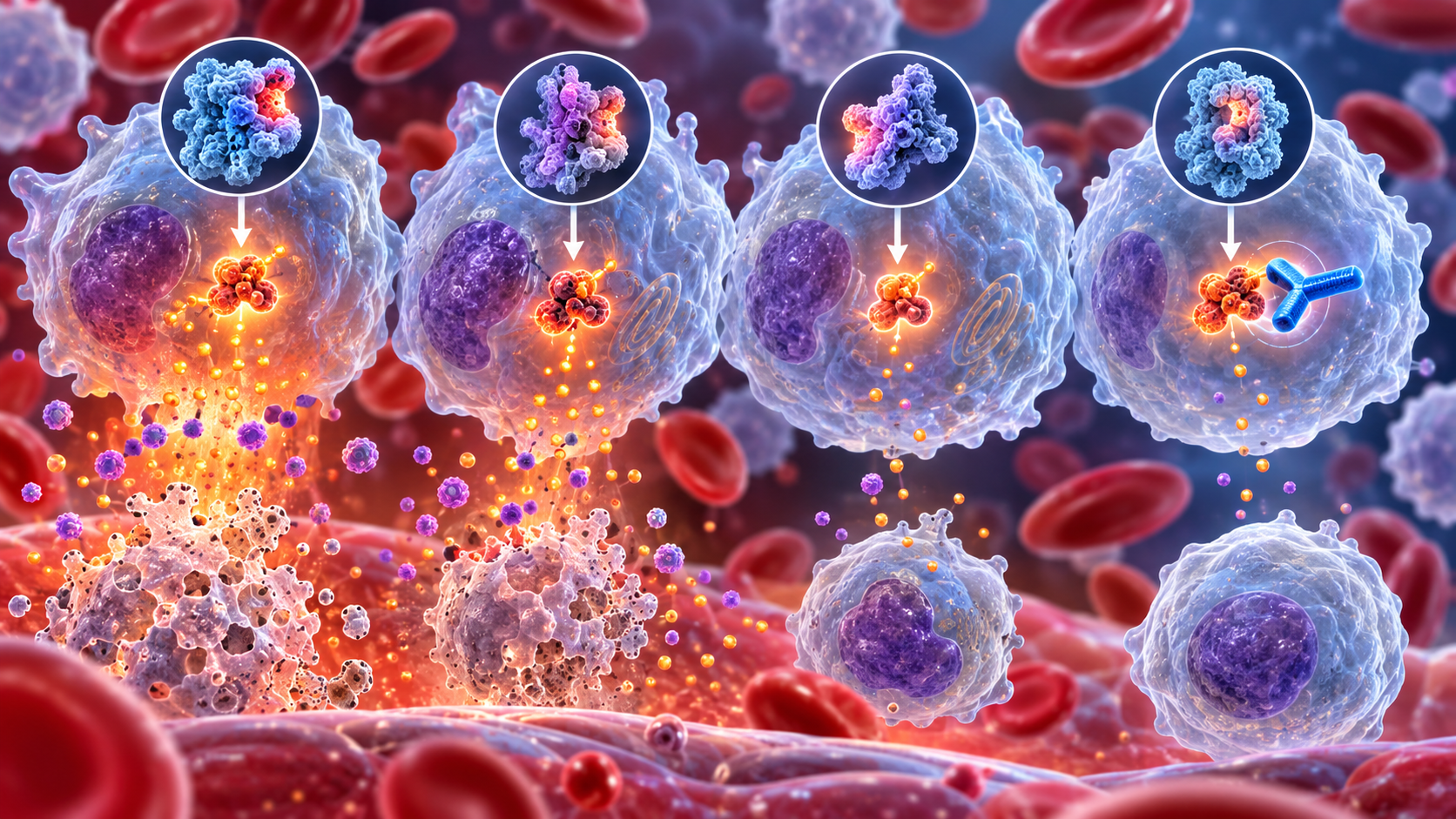
RIPK3
Blocking the pathway sharply reduced inflammatory signalling and cell death in the model. Cell experiments cannot establish dose, adverse effects or whole-body benefit.
RNASE1
Blood expression correlated strongly with an activity score. Correlation supports a candidate marker, not a stand-alone test or proof of cause.
Next steps
Prospective independent cohorts, comparison with current care and safety testing of RIPK3 targeting are needed. Patients should not change treatment from this study alone.
Primary source and independent checks
Arthritis & Rheumatology 게재 서지
Read in other languages
한국어 · English · Español · 日本語 · Tiếng Việt