WORLD NEWS
A “purple” commensal shrimp reappeared red and white after a 45-year record gap
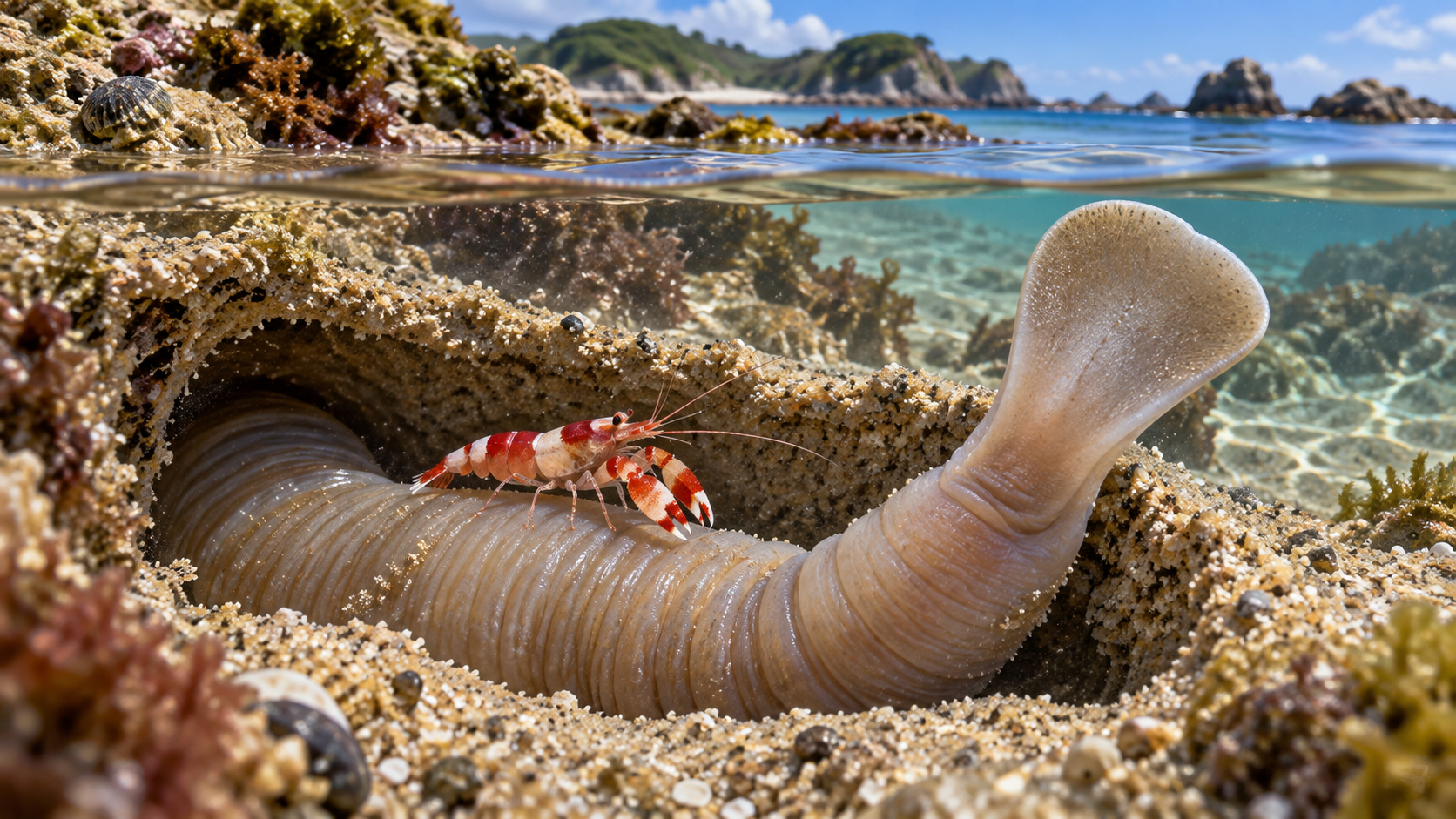
Athanopsis dentipes, a snapping-shrimp relative, was rediscovered in the intertidal zone of southern Wakayama about 45 years after its original description. Despite a Japanese name suggesting purple, the animal is vividly red and white.
It did not return from extinction. Its tiny size and life hidden with spoon worms left a long observation gap; researchers compared genetics and anatomy with historical descriptions and specimens.
Where does it live?
The shrimp uses spoon-worm burrows and body surfaces in intertidal sand. Observations suggest it may eat mucus, but the degree of nutritional dependence needs testing.
One host?
Genetics and field records found use of at least four spoon-worm species in two genera, broadening the earlier picture of strict specialisation.
Why was it missed?
A tiny burrow-dwelling commensal is easy to overlook unless surveys inspect the host. This is more about sampling hidden partnerships than a “ghost species.”
Conservation meaning
Loss of hosts or burrow habitat could affect the shrimp too. The commensal network and microhabitat may be better conservation units than one species alone.
Next questions
Researchers need direct tests of range, breeding season, host-use rates and mucus feeding. Unrecorded populations may exist elsewhere around Japan.
Primary source and independent checks
Read in other languages
한국어 · English · Español · 日本語 · Tiếng Việt