WORLD NEWS
A 20-metre dinosaur found eight metres below a Brazilian construction site had its closest kin in Spain
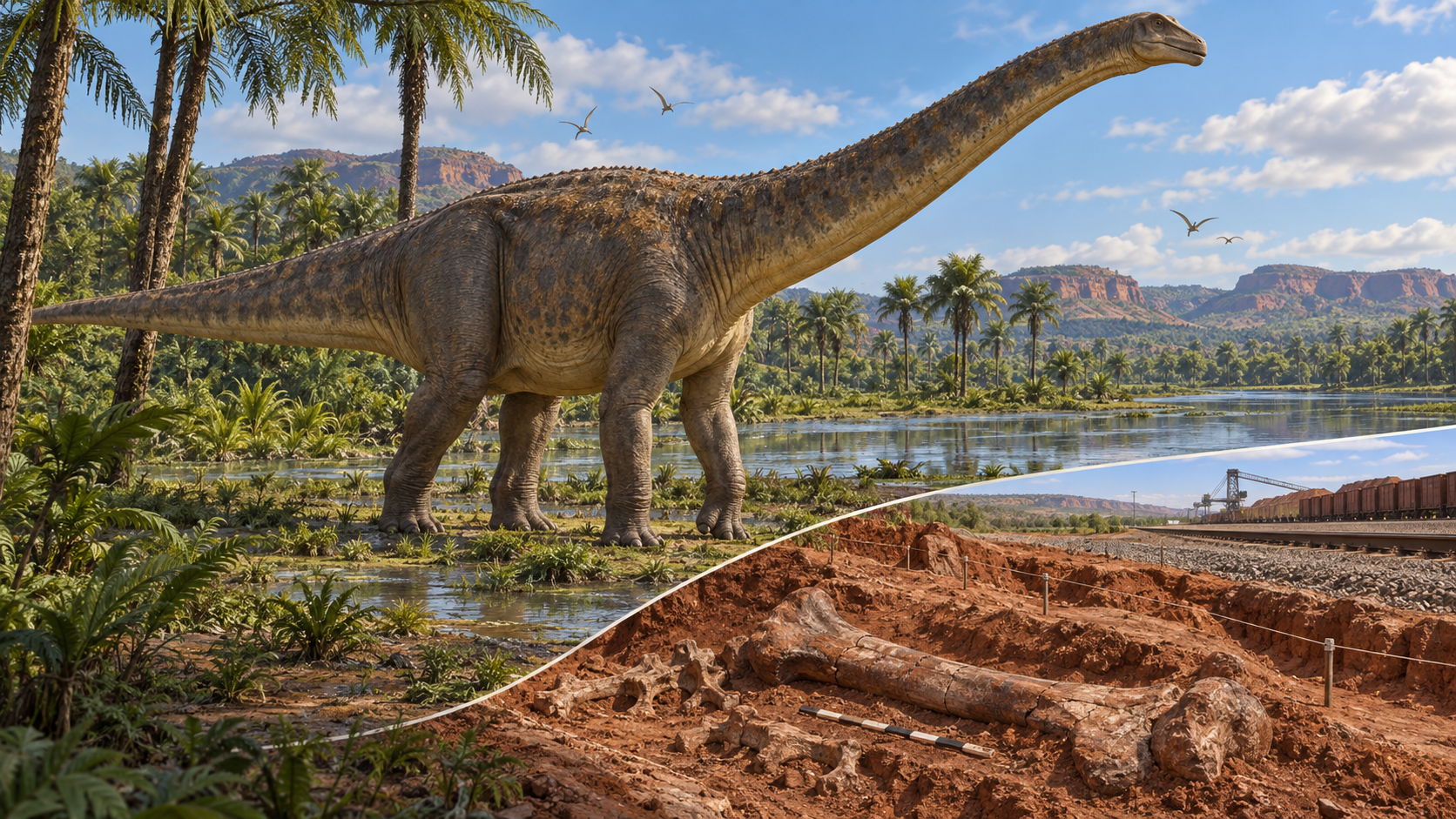
Bones found about eight metres below a road–rail terminal construction site in Maranhão, Brazil, have been identified as a new roughly 20-metre sauropod, Dasosaurus tocantinensis. Tail vertebrae, ribs, limb bones and a femur about 1.5 metres long make it the largest dinosaur yet known from the state.
This does not mean the animal swam directly from Europe. Phylogenetic analysis places its closest known relative with Spain’s Garumbatitan, and researchers infer that ancestors may have dispersed from Europe through northern Africa into South America between about 140 and 120 million years ago.
How was it found?
Archaeologists monitoring the licensed construction found the bones in 2021. Depth and formation age redirected the initial mammal interpretation toward a Cretaceous dinosaur.
Why a new species?
A distinctive trio of elongated ridges on middle and rear tail vertebrae plus femur traits separated it from known sauropods.
How certain is 20 metres?
Length comes from the partial skeleton and proportions of relatives. Exact height, mass and growth stage remain uncertain.
Why does Spain matter?
Before the South Atlantic fully opened, the continents were closer. The family tree supports a dispersal hypothesis, not a fossil trail of the route itself.
What does construction teach?
Excavation exposes hidden rock but can destroy fossils; specialist monitoring, reporting and preservation are essential.
Primary source and independent checks
Read in other languages
한국어 · English · Español · 日本語 · Tiếng Việt