WORLD NEWS
One hard-to-explain event in a detector 1.5 km underground — not a dark-matter discovery
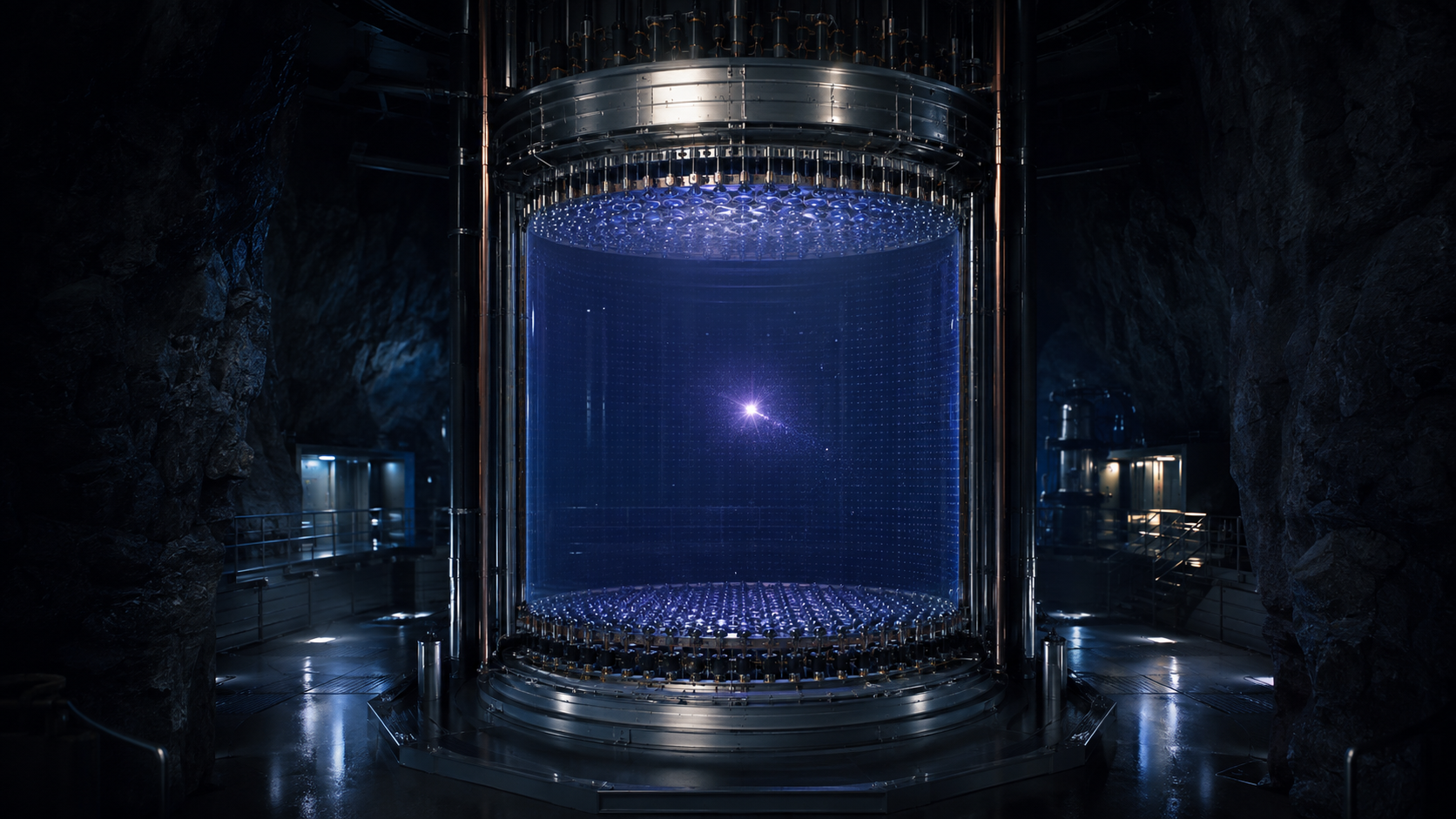
The LUX-ZEPLIN detector in South Dakota recorded one high-energy interaction that is difficult to explain with known backgrounds. In 2.84 tonne-years of exposure, it matched a nuclear recoil of 248±23 statistical ±23 systematic keV, with a global significance of 2.6 sigma.
This is not a discovery of dark matter. There is only one event, and 2.6 sigma is far below the five-sigma discovery standard used in particle physics, so more data must distinguish a rare background from new physics.
What did LZ measure?
LZ reads light and electrons released when nuclei recoil in about seven tonnes of liquid xenon. The new search extended the recoil window to roughly 270 keV and found one event near 248 keV.
What does 2.6 sigma mean?
After accounting for the many models examined, the team estimates about a 0.5% chance of such tension from background alone. That is interesting, but rare coincidences occur across many searches.
Why is one event attracting attention?
It lies where known radioactive and neutron backgrounds were expected to be low and resembles a nuclear recoil. New theory papers can fit it, but a possible model is not evidence that dark matter caused it.
What remains unknown?
An unmodelled detector effect or rare background may be responsible. One event cannot establish a spectrum, repetition or seasonal pattern.
What evidence comes next?
The collaboration’s peer-reviewed paper and more exposure are the first checks. High-energy analyses from CRESST, PandaX and future xenon detectors will provide independent tests.