WORLD NEWS
Hail could become bigger even if it comes less frequently, with up to 47% increase in large hail storms expected.
A study suggests that as the Earth warms, the total number of hail storms may decrease, but the number of storms that produce large, damaging hail could increase by up to 47% by the end of the century.
This is not a forecast of increased hail in all regions, but rather a global model projection using multiple climate scenarios, with actual changes depending on region and emissions.
Why does hail change when it’s warm?
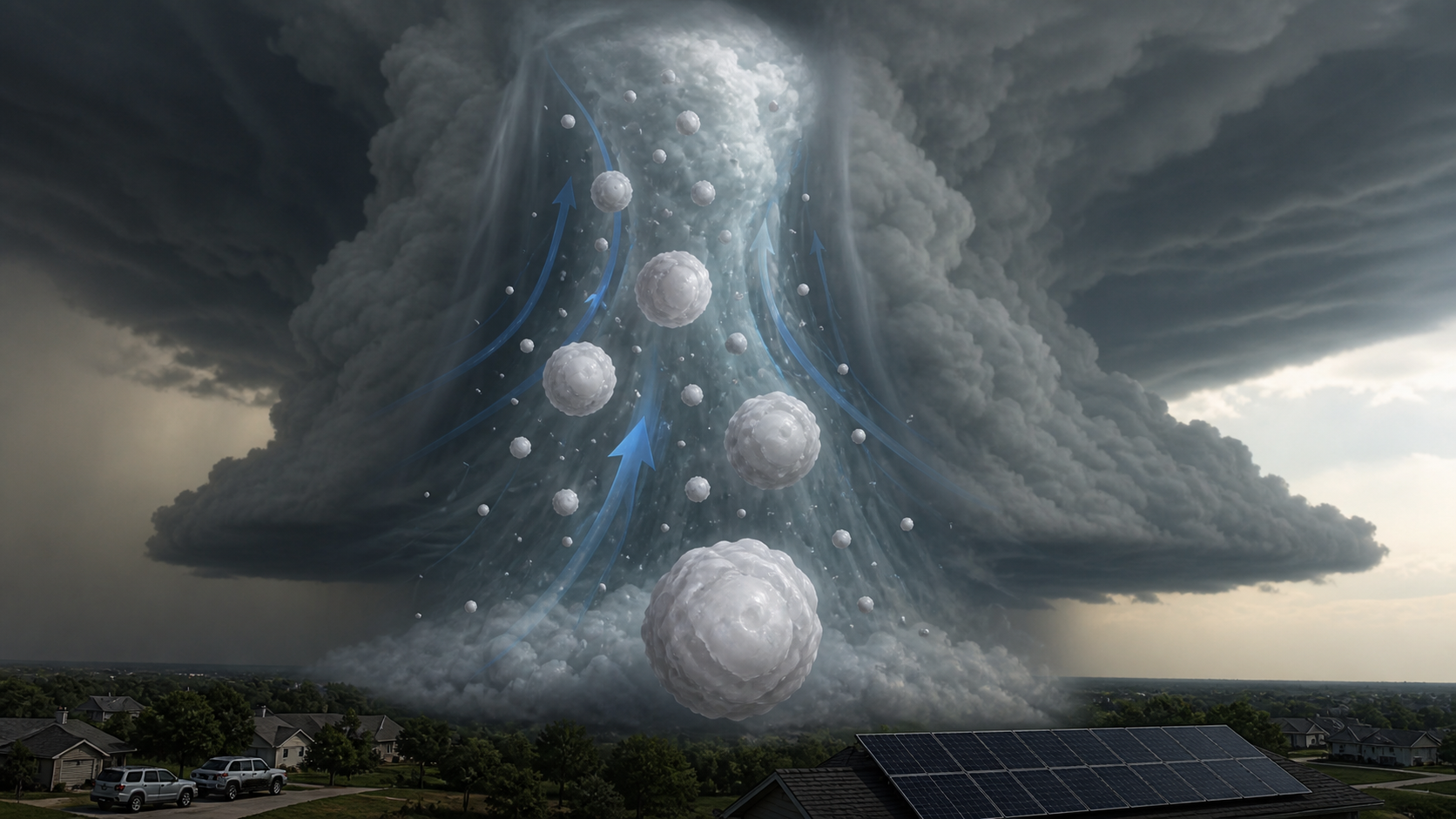
Warm air holds more water vapor and fuels strong updrafts. The longer updrafts hold ice grains within a cloud, the longer they can grow. On the other hand, as freezing altitude increases, small hail becomes more likely to melt before it reaches the ground.
What is the increase of 38-47%?
The researchers compared the frequency of storm environments that produced hail over 30 millimeters in diameter. Depending on the emission pathway, there was a global increase of 38-47% by the end of the century. Storms producing small hail have decreased by 4 to 8 percent. These are storm conditions calculated by the model, not by manually counting actual hailstones each time.
Which is more dangerous?
The extent of change varies greatly by region and can even shift between seasons. Agriculture, automobiles, roofs and solar installations suffer significant damage from a single large hailstone. You can’t calculate a city’s insurance premiums or next year’s damage based on global averages alone.
What are the limitations of the model?
Hail falls in short bursts over small areas and the observation record is patchy. Ice growth and melting processes in clouds are also sensitive to computational resolution and assumptions. Researchers compared several models, but were unable to predict the exact location and date of occurrence.
What should I prepare?
Short-term warnings from meteorological agencies are of utmost importance for personal action. In the long term, this will serve as a basis for reviewing roof and window standards, crop protection nets, and impact resistance standards for aircraft and solar power facilities in light of the risk of large hail.