WORLD NEWS
If the solar storm gets stronger, does the Earth’s response stop at its limit? It could have been a statistical illusion
A study has shown that the existing saturation observation that the response of the Earth’s magnetic field does not grow larger at a certain level even when a strong solar wind comes may be a statistical illusion.
This does not confirm that there is no upper limit to solar storm damage, but rather concludes that there is insufficient statistical evidence to support a fixed saturation limit in existing data.
What was considered saturated?
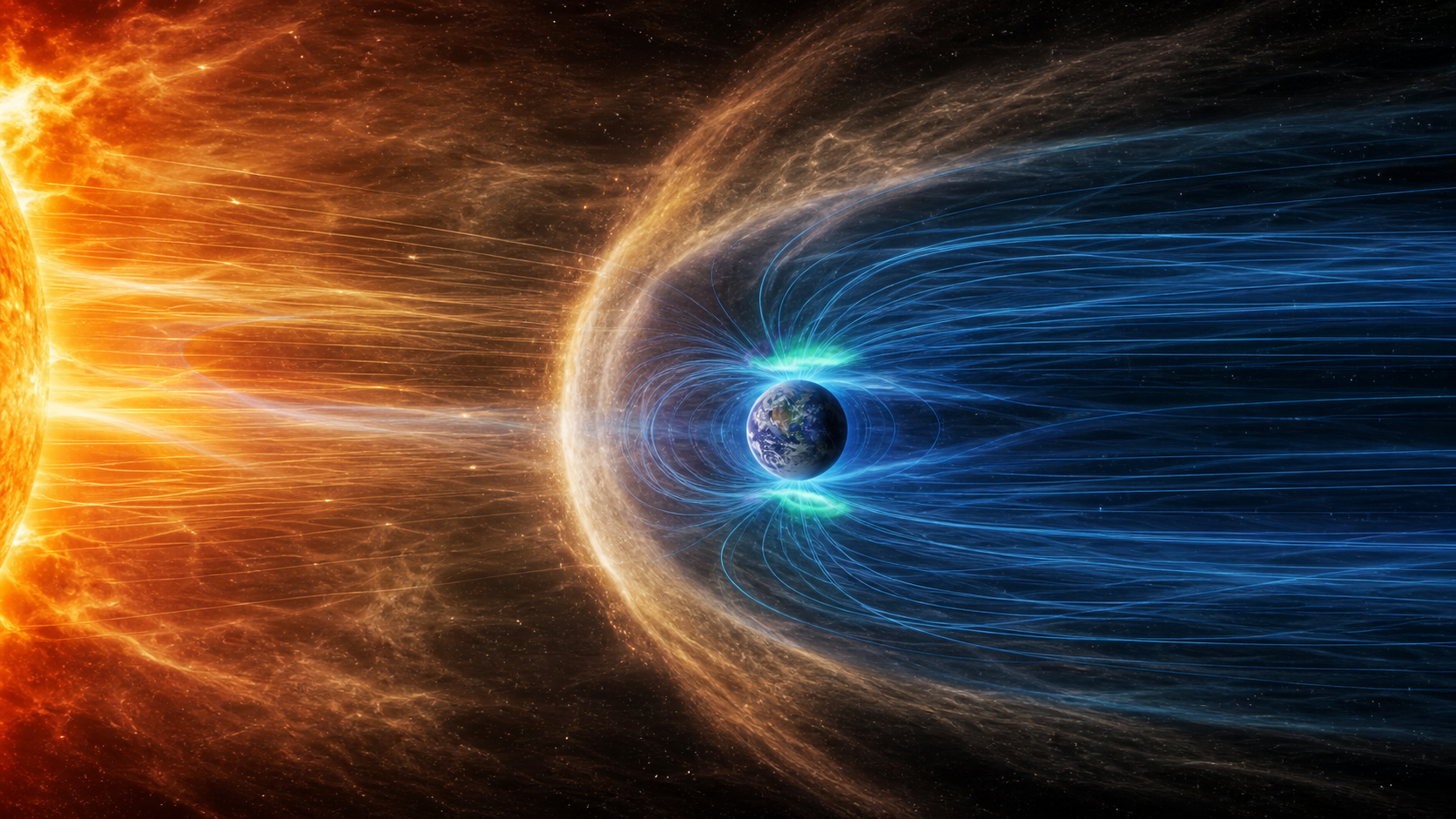
When particles and magnetic fields flying from the sun collide with the Earth, a geomagnetic storm occurs. Past observations have shown that even when the solar wind drive becomes very strong, the Earth’s geomagnetic index appears to increase less at some point. This was an important assumption in estimating the maximum grid and satellite risks.
What did the researchers change?
The researchers reflected the uncertainty in solar wind measurement time and intensity in the statistical model. When extreme values are mixed with measurement error, they have a strong mean-reversion effect, which makes them appear to gravitate towards the mean. The key point is that once this was corrected, the evidence of a fixed saturation curve disappeared.
Does this mean there is really no upper limit?
no. This means that saturation has not been demonstrated in the observed range, but it does not mean that it physically becomes infinitely large. Data on extreme solar storms are rare, and observations from space and on the ground are limited. The new model also does not directly measure the actual outcome of larger events.
What meaning does life have?
This means that extreme risks in satellite operations, navigation, wireless communications and power grids should not be underestimated based solely on past saturation assumptions. However, this does not mean that individuals should prepare for radiation evacuation on a daily basis. The operating agency responds using solar observations and space weather forecasts.
What is the next verification?
More accurate solar wind measurements and comparisons of various geomagnetic indices are needed. A real risk assessment must look not only at solar wind strength but also magnetic field direction, duration and power grid structure.