WORLD NEWS
Empty space may filter light like a prism, confirming a 90-year idea
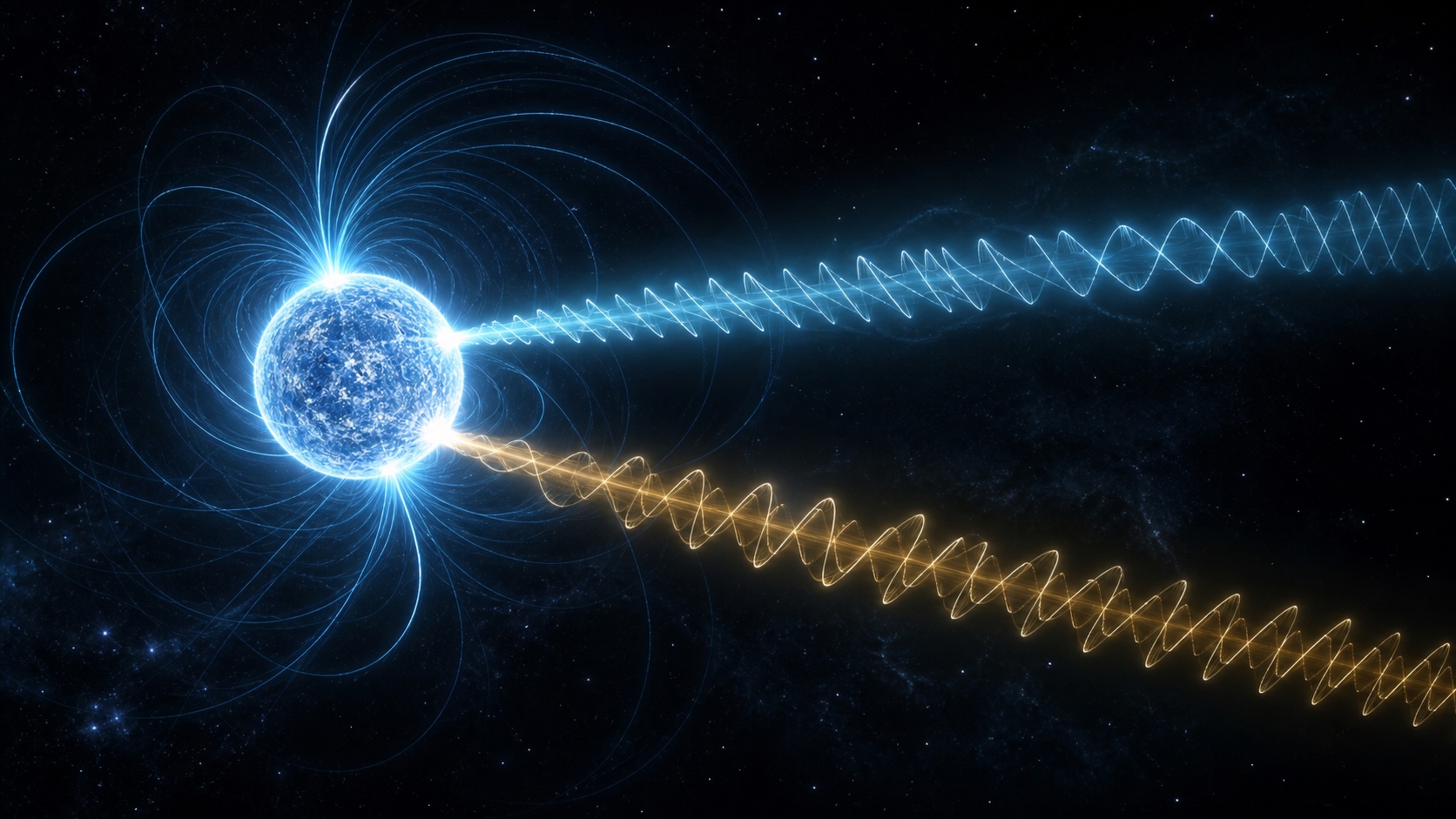
Empty space around an ultra-magnetic star appears to filter light like a prism. The signal may be the first direct detection of vacuum birefringence, predicted in 1936.
It is the strongest evidence yet, not a final confirmation. The team says more observations of this and other magnetars are required.
How can empty space act like a prism?
Quantum electrodynamics predicts that an extreme magnetic field changes how light travels through a vacuum, depending on its orientation.
What was measured?
NASA IXPE watched magnetar 1E 1547-5408 for over 140 hours. Its X-ray polarization was nearly three times higher than in similar sources and changed smoothly during each 2.1-second rotation.
Could something else explain it?
Standard surface-emission models could not produce the large alignment. Simulations constrained by radio data reproduced it only when vacuum birefringence was included.
Why is the wording cautious?
The measurement and model agree strongly, but space is not a controlled laboratory. Repeated signals from more IXPE observations are still needed.
Official primary sources
Primary source: NASA IXPE official science release