WORLD NEWS
A new Great Barrier Reef atlas maps more than 800,000 microbial genomes
Nature published a paper on 22 July 2026 mapping the planktonic microbiome of the Great Barrier Reef. The key point is that seawater samples from 48 reefs produced a reference database with 5,283 prokaryotic genomes and 808,585 viral genomes, creating a baseline for reading reef health through invisible microbial change.
AIMS and the University of Queensland say the work includes 362,802 distinct viruses and more than 500 new bacterial species. This briefing separates what the 24 July 2026 source material confirms from what still needs field validation.
What Was Found
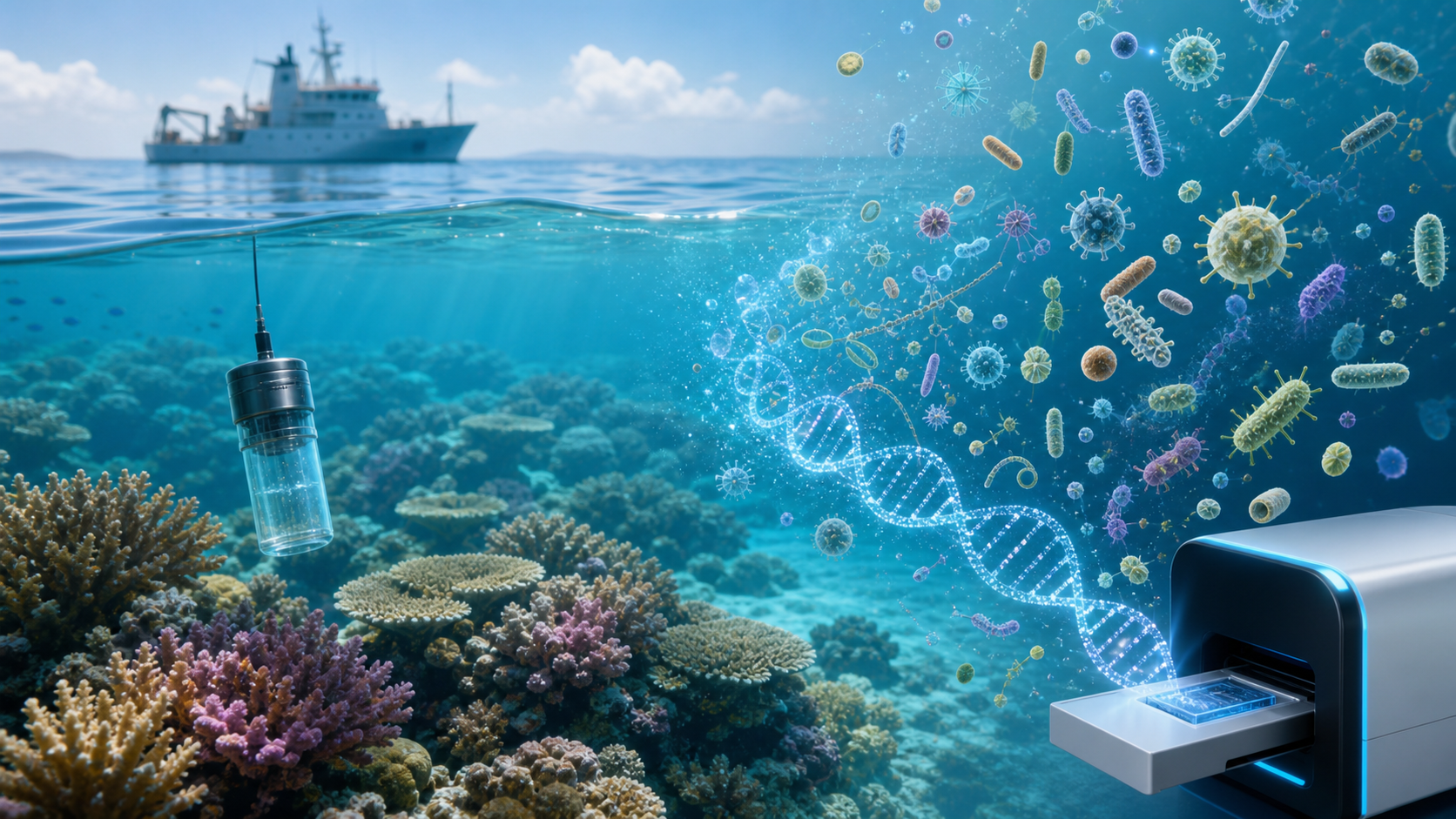
The team analysed seawater metagenomes from 48 reefs across the Great Barrier Reef and built the Great Barrier Reef Microbial Genomes Database, or GBR-MGD. It gives reef monitoring a layer that is not coral cover, fish abundance, or water temperature, but the microbial life moving through open reef waters.
The Nature paper lists 5,283 prokaryotic genomes, 20 chromosome-level picoeukaryote genomes, and 808,585 viral genomes. AIMS highlights 362,802 distinct viruses and more than 500 newly identified bacterial species within the same research program.
How It Was Confirmed
The core method was DNA sequencing from seawater, followed by genome assembly and comparison with known databases. The researchers linked microbial communities with sample locations, management settings, and environmental conditions.
The paper reports that some indicator taxa can help predict management practice and environmental state. That matters because a microbial signal could appear before reef stress becomes obvious in coral bleaching or visible ecosystem change.
Why It Changes The View
The Great Barrier Reef is one of the most studied ecosystems on Earth, yet the open-water reef microbiome has been a comparatively thin data layer. This atlas lets reef health be read through microbial networks as well as through visible coral and water conditions.
The important shift is that microbes are not treated as background noise. They become a measurable layer of reef function and stress, making repeated sampling useful for distinguishing normal variation from potential warning signs.
What Is Still Unknown
This is not proof of a reef recovery tool. It is a DNA-based baseline from particular samples, and researchers still need to show how quickly and accurately microbial indicators work in real management decisions.
The phrase new bacterial species is also genome-based. Culture work, functional studies, and repeated monitoring are needed before specific microbes can be tied confidently to reef resilience or decline.
Next Checks And Source Material
The next test is whether GBR-MGD gives stable signals across seasons, reef locations, and stress events. Readers should use Nature for the sample scope and genome counts, AIMS and UQ for the conservation framing, and Zenodo for the public data record.
Official Sources
Nature article: publication date, 48 reef samples, genome counts, and database scope
AIMS release: 362,802 distinct viruses, 500-plus new bacterial species, and management relevance
UQ release: research team, open-water reef microbiome, and early-indicator framing