WORLD NEWS
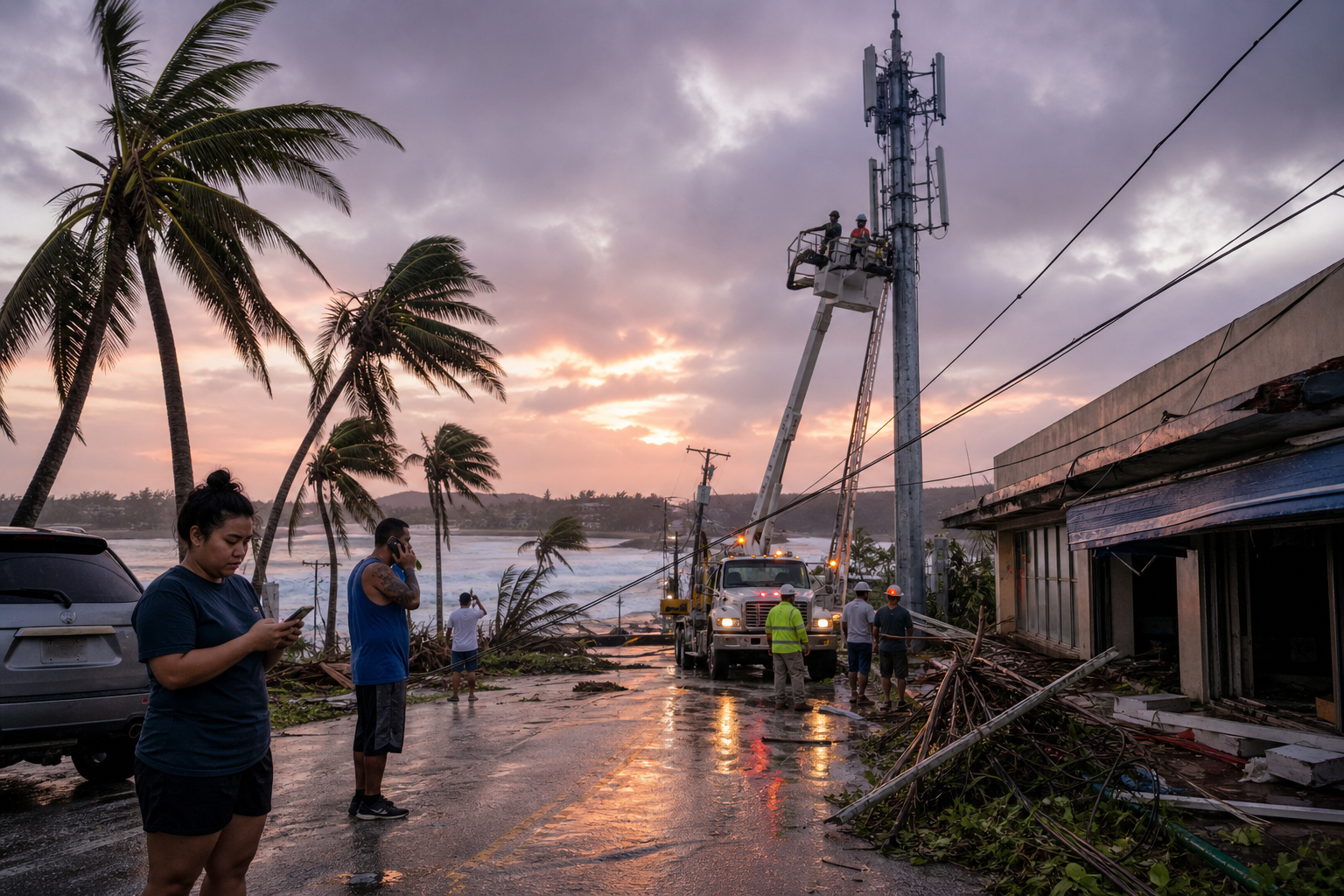
Bavi has passed, but Guam is still living with major telecom disruption
- Checked: 2026-07-09 11:55 KST
- Source set: FCC July 8, 2026 Bavi communications report and NWS Guam radar-status update
The storm headline is fading, but the disruption is not. The FCC said on July 8, 2026 that 35.9% of cell sites in the affected area were still out of service. In Guam alone, 36.6% of cell sites were out. Cable and wireline providers also reported 15,478 subscribers out of service.
That matters because telecom damage changes daily life long after the wind passes. Phone trouble quickly becomes payment trouble, navigation trouble, family-contact trouble, and travel-change trouble. The FCC also said one TV station in Guam was affected and that the Mandatory Disaster Response Initiative had been activated on July 6, 2026, requiring disaster roaming and mutual-aid measures from wireless providers.
There are also signs of partial recovery. NWS Guam said on July 9, 2026 at 04:16:51 that the Guam radar had been returned to service after unscheduled maintenance. The FCC report also noted that SpaceX received temporary authority to provide emergency supplemental coverage to Docomo Pacific. For travelers and families, the practical takeaway is simple: the day after a typhoon can still be a weak-connectivity day.
Who should check now
- Anyone with family or friends in Guam, Saipan, Tinian, or Rota
- Travelers with hotel, flight, rental-car, or tour bookings in the area
- People depending on app check-ins, online payments, or text-message verification
- Anyone assuming the communications problem should already be over
What to do today
- Do not rely on one contact path. Keep messaging, email, airline apps, and hotel channels ready together.
- Recheck connectivity before airport moves. Rebooking and mobile boarding steps are fragile when service is unstable.
- Do not assume hotel Wi-Fi solves it. Wireline and cable outages were also part of the picture.
- Send short check-in messages first. One line can get through when a voice call does not.
- Keep offline copies of reservations and maps. Weak signal becomes a bigger problem when every step depends on live access.
Official links
Bottom line: This is no longer only a weather story. It is a communications-and-daily-life recovery story.