WORLD NEWS
World Cup heat means checking water, shade, and entry routes before the match
- Checked: 2026-07-05 17:45 KST
- Source set: AP July 4 World Cup heat report and AP heat dome coverage
The 2026 North American World Cup is no longer only a competition story. Extreme heat, crowd safety, travel planning, visa steps, and entry procedures are now part of the event. AP reports that July 4 heat in the eastern U.S. threatened both players and fans.
What is happening
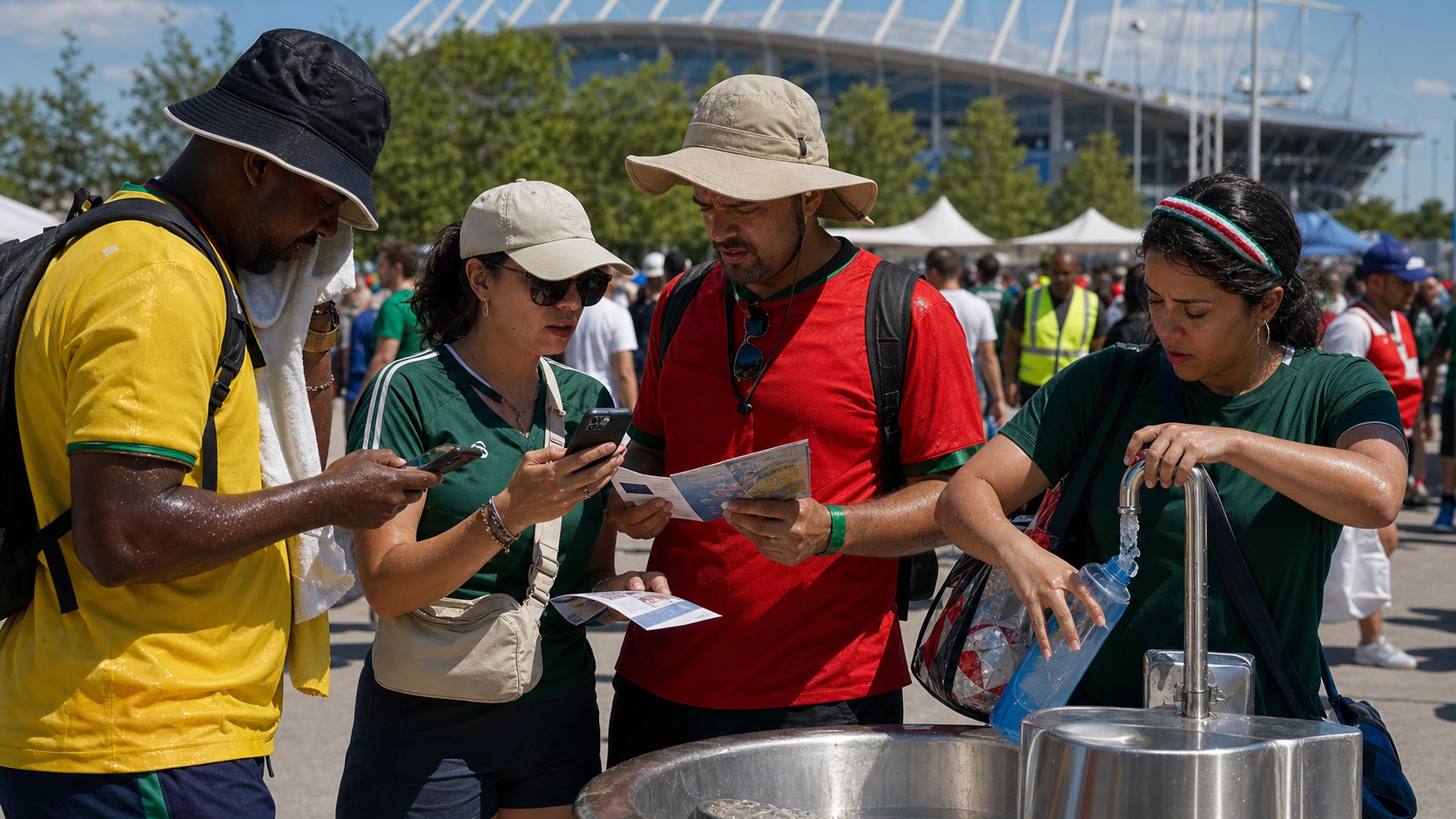
World Cup heat is not only about hydration breaks during play. Fans face heat while traveling, lining up, clearing security, and leaving after the match.
For players it is performance and recovery; for fans it is scheduling and emergency planning.
Why it spills into daily life and markets
Weather is now part of event operating cost: water stations, cooling areas, medical staff, schedule changes, and transit capacity.
For fans, shade, water, bathrooms, and exit routes can matter more than the seat category.
Signals to watch this week
- Bottle rules and refill points by stadium.
- Entry waiting time and post-match transport, not only kickoff.
- Heat alerts, humidity, feels-like temperature, and storms together.
- Any organizer move on time changes or added cooling zones.
Common misread
Being inside the stadium is not the whole risk. The longest heat exposure may happen outside in lines, parking areas, shuttles, and fan zones.
How to use the official links
Use AP heat reports for health risk, heat-dome coverage for city weather, and climate-safety reporting for the longer trend.
Why it matters now
- Knockout matches are overlapping with North American summer heat.
- Players, fans, volunteers, and security workers all face heat exposure.
- Lines around stadiums and transit delays can become health risks.
- International fans must also account for visas, entry, and flight disruption.
What to check today
- Look at the three hours before arrival, not only kickoff.
- Check water refill routes and bottle rules in advance.
- For children and older fans, shade and exit routes matter more than seat location.
- Keep offline copies of passports, visas, and tickets.
Official links
- AP July 4 World Cup heat report
- AP heat dome and World Cup report
- AP World Cup climate safety report
Bottom line
For anyone attending, weather, entry rules, water access, and movement routes now matter before team form.