WORLD NEWS
Venice is no longer a city you simply walk into
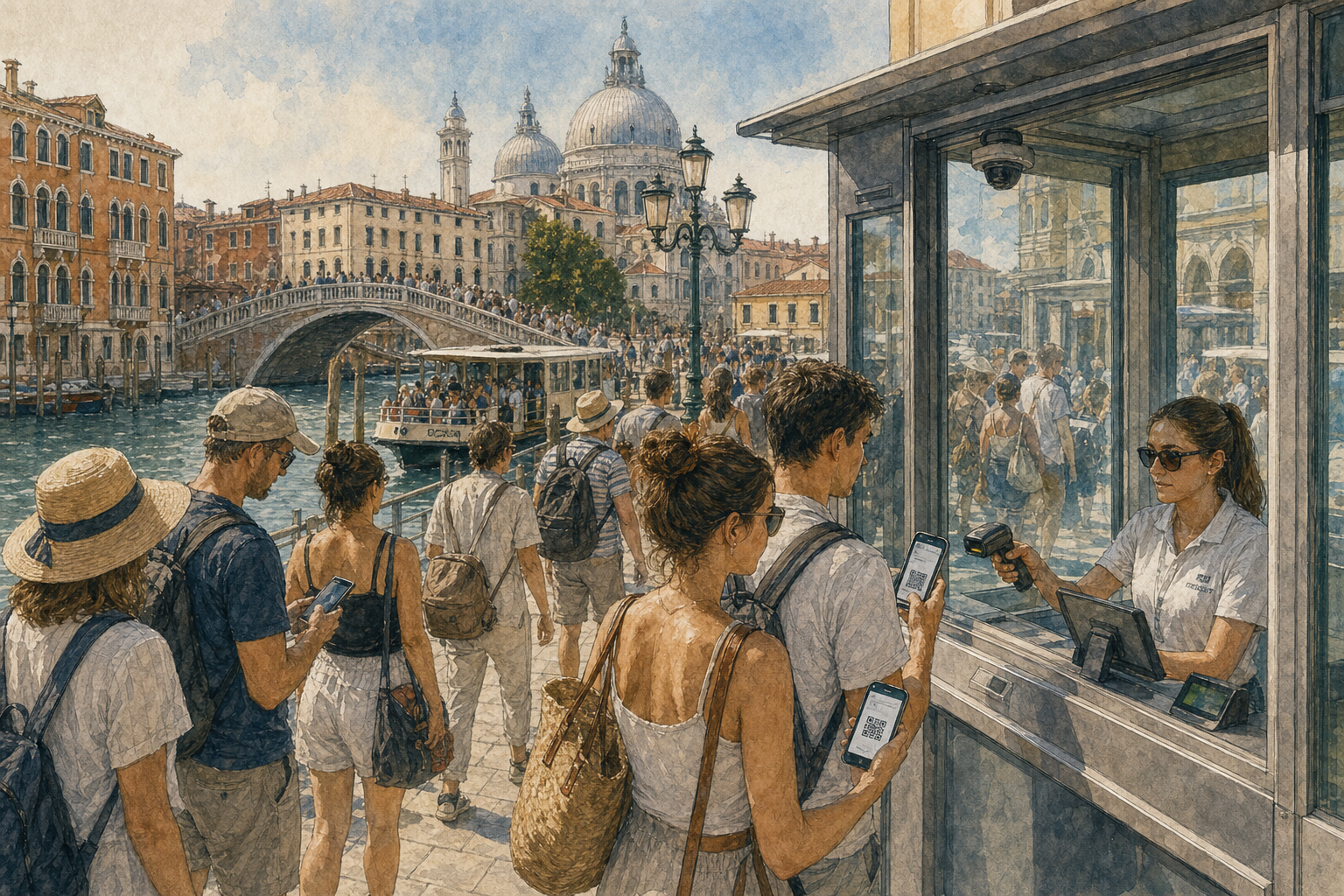
- Checked: 2026-07-01 00:20 KST
- Primary source: Venice Access Fee portal
Venice is still one of the world’s most recognizable tourist cities, but its historic centre is no longer treated as an unlimited walk-in space. The city’s official access-fee system makes a clear distinction between day-trippers and other visitors, and on selected 2026 dates that distinction becomes operational. If you enter the old city during the main daytime window, you may need pre-registration and a QR proof of payment.
The headline number is simple enough: pay early and the access fee is €5; wait until the last few days and it becomes €10. But the stronger story is not the amount. It is the fact that Venice now openly manages how spontaneous a visit is allowed to be. A city once imagined as an open romantic destination is increasingly acting like a controlled-entry zone during periods of pressure.
Why this matters
For travelers, the shift is practical before it is philosophical. Venice is a classic day-trip target, especially for visitors coming from Milan, Florence, Bologna, or cruise-linked itineraries. That means many people are not just choosing where to go, but how lightly they can move. The access-fee system adds friction to the exact kind of travel pattern Venice has been trying to discourage: large volumes of short-stay visitors who arrive, consume the city for a few hours, and leave.
This matters beyond Venice too. The city is effectively testing a model that other overcrowded destinations may copy: separate overnight guests from day visitors, push digital pre-registration, and make last-minute spontaneous entry more expensive. In that sense, this is not only a Venice story. It is a preview of how heavily visited cities may start redesigning the visitor experience itself.
Who should pay attention first
- Travelers planning same-day Venice visits without overnight lodging.
- Families or groups where one person usually handles every ticket and booking.
- European rail travelers fitting Venice into a tightly timed one-day itinerary.
- Anyone assuming city entry still works the way it did a few years ago.
Where people get caught out
The most common mistake is treating the system like a small extra tax that can be solved casually on arrival. In reality, the real risk is timing and proof. If your train is late, your phone signal is weak, your QR is buried in email, or one member of your group never completed payment, a supposedly simple visit becomes a sequence of avoidable delays. In a city often visited under strict time pressure, even minor friction changes the day.
Another mistake is assuming that because Venice remains “open,” the management system is optional in spirit. It is not. The point of the policy is precisely to make certain forms of visit more deliberate and less frictionless. That is why the fee structure rewards earlier decisions and penalizes last-minute behavior.
Practical checks before you go
- Confirm whether your travel date is one of the controlled access dates.
- Confirm whether you are staying overnight or entering as a day visitor.
- Store QR proof somewhere you can open instantly, not only in a live inbox.
- If traveling in a group, confirm that every person is covered before departure.
- Build a little schedule margin if you are arriving by train and leaving the same day.
Sources
In one line: Venice is no longer only charging for entry; it is reshaping the culture of entry itself.