WORLD NEWS
Mt. Fuji is still not a mountain you just walk onto in 2026
- Checked: 2026-07-01 00:20 KST
- Primary sources: Official Mt. Fuji Climbing, Shizuoka Prefecture
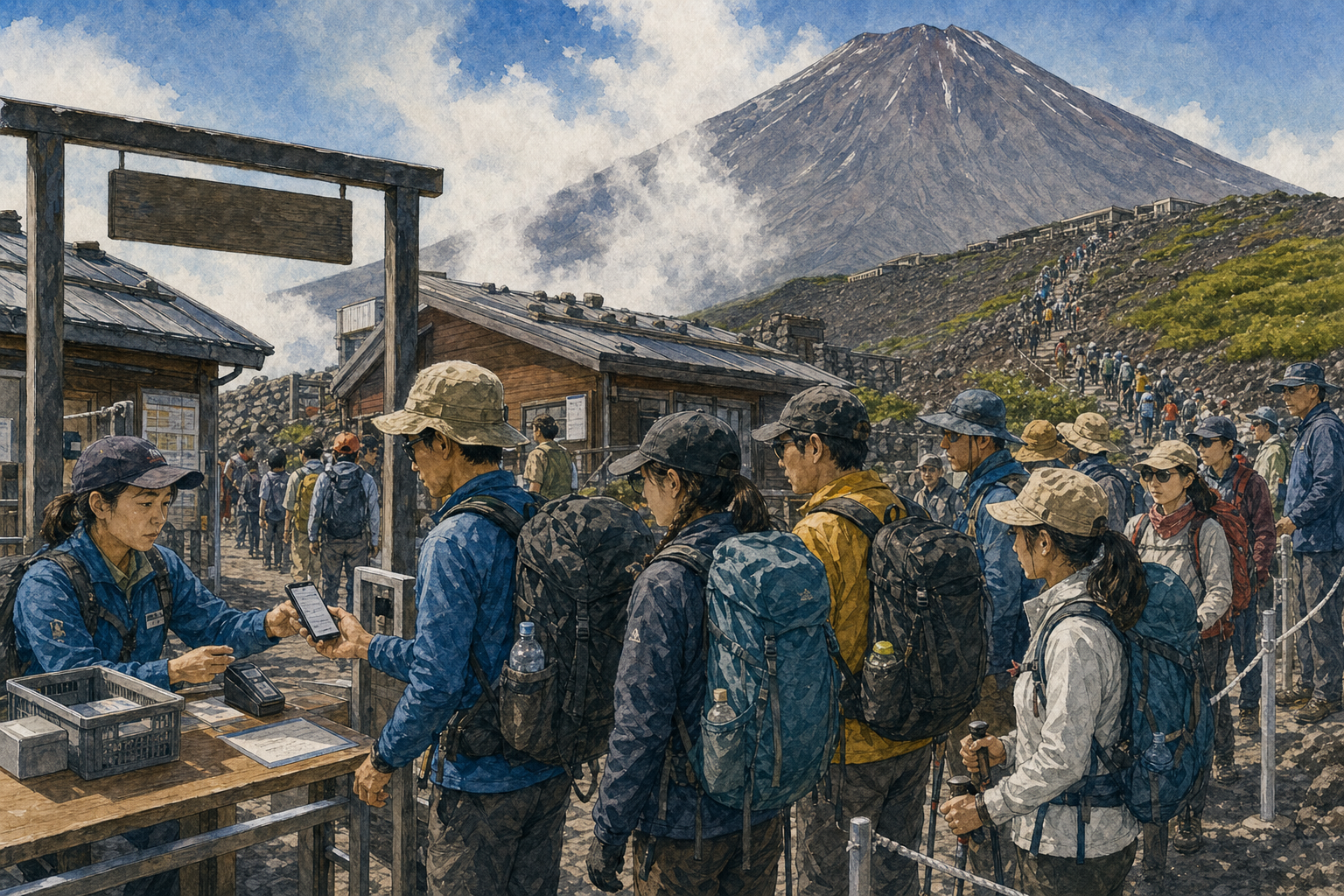
Mt. Fuji remains one of the world’s most recognizable climbs, but in 2026 it is also very clearly a managed entry system. The Yoshida Trail continues with a ¥4,000 fee, a daily cap, and restrictions aimed at limiting reckless overnight rush climbs. On the Shizuoka side, the official guidance also points travelers toward pre-registration and advance rule learning.
The point is not simply that the climb costs more. The point is that access to a natural landmark is now organized more like access to a controlled event. Time matters, route matters, booking status matters, and whether you have mountain hut arrangements can matter. Fuji is no longer only a symbol of beauty and endurance. It is also a case study in what happens when a globally famous natural site becomes too popular to manage casually.
Why this matters
Many travelers still approach Fuji as a once-in-a-lifetime activity they can fit into a Japan trip if the weather looks good. But the current system punishes that mindset. Spontaneity is exactly what the rules are pushing back against. Caps, time-based restrictions and route-specific conditions exist because the mountain has dealt for years with crowding, safety concerns, reckless “bullet climbing,” and strain on rescue and infrastructure.
That makes this more than climbing advice. Fuji is showing how iconic natural attractions can shift from open public symbols to managed access zones. That shift matters because other over-visited natural destinations may move the same way.
Who should look first
- Travelers trying to squeeze Fuji into a wider Japan itinerary.
- People considering a night or dawn ascent without hut reservations.
- Groups mixing experienced and inexperienced hikers.
- Anyone assuming one route works basically like another.
Where people get into trouble
The first mistake is assuming on-site improvisation will solve everything. At Fuji, the more famous the mountain became, the less room there is for improvisation. The second mistake is focusing only on Yoshida and assuming all other routes are simpler. The Shizuoka side has its own conditions and educational expectations. The third mistake is treating the restrictions as environmental messaging rather than operational limits. They are real access rules.
Another practical trap is team planning. One strong hiker does not make the schedule safe for everyone. Gate times, rest pace, descent timing, weather exposure and fatigue all compound on a busy mountain. Fuji’s image is simple. Its current operating reality is not.
What to check before going
- Which route you are actually taking.
- Whether you have hut reservations if timing rules make them relevant.
- When you plan to start, not only when you hope to summit.
- Whether everyone in your party can realistically keep the same pace.
- Whether you completed all route-specific pre-registration or learning steps.
Sources
In one line: Fuji is no longer just a famous mountain; it is a famous mountain with a gate system and behavior rules.