WORLD NEWS
Venezuela is now fighting the rescue clock, not just the death toll
- Checked: 2026-06-27 23:25 KST
- Primary sources: AP and USGS
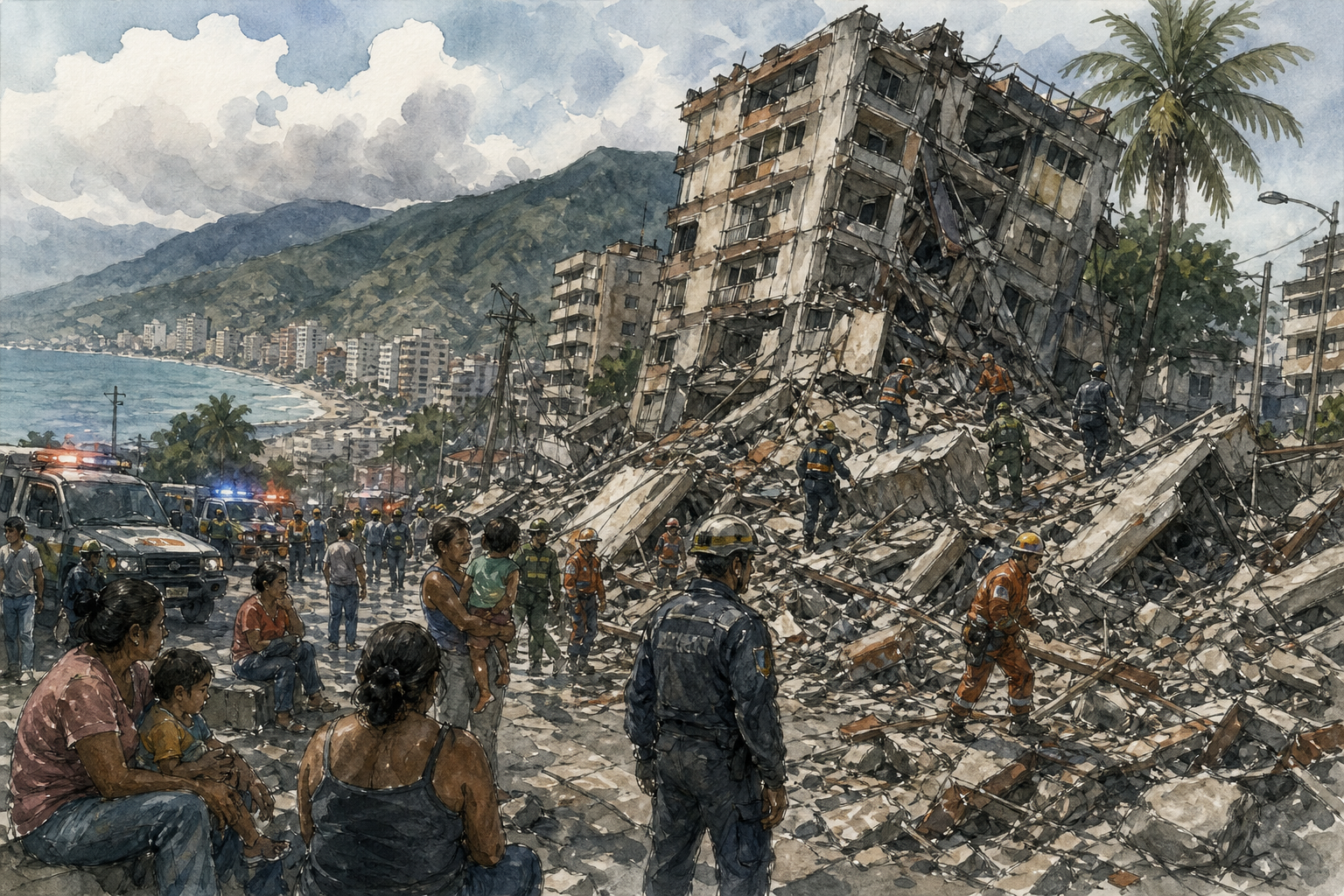
The key fact in Venezuela is no longer just how many people died. It is that the rescue clock is running down. AP reported on June 27, 2026 that the toll had risen to 920 dead and 3,360 injured, while large numbers of missing people remained unaccounted for.
USGS shows this was not a single quake but a double event: a magnitude 7.2 shock followed 39 seconds later by a 7.5 quake on June 24. That matters because the second blow can turn already weakened structures into total collapse and can complicate rescue access almost immediately.
AP said access to La Guaira, near Caracas, has been restricted by chaos and infrastructure damage. That pushes the story beyond a normal disaster headline. It becomes a question of how fast people, equipment and medicine can still get in before survival chances collapse.
User checks
- If you have family, staff or travel plans linked to Caracas or La Guaira, check road access and hospital capacity before anything else.
- Do not treat casualty totals as the full picture. Missing people and blocked rescue routes matter just as much.
- In a repeated-shock setting, aftershocks and unstable buildings remain a live risk even after the first headlines fade.
- Water, charging, medicine, cash and identity copies quickly become more valuable than hotel comfort or itinerary timing.
Source links
- AP: rescue window narrows in Venezuela
- USGS: M7.5 Venezuela earthquake event page
- USGS: M7.2 foreshock executive summary
Bottom line: Venezuela has moved into the hardest stage of a quake disaster: the point where the numbers are still rising and the rescue window is shrinking at the same time.